Table of contents14 sections
- Sea Freight from China to UAE: Real Transit Times, Costs, and Documents Required in 2026
- What sea freight from China to UAE actually requires
- When sea freight is the right call
- Real 2026 transit times by route
- FCL versus LCL: which makes sense at what volume
- What sea freight actually costs in 2026
- The documents that actually matter
- Customs clearance step-by-step
- The five most common failure modes
- How to choose the right freight forwarder
- Sea freight versus air freight: when to switch
- Frequently asked questions
- See your real numbers
- References
Sea Freight from China to UAE: Real Transit Times, Costs, and Documents Required in 2026
Sea freight from China to UAE looks like one number on a quote, but the landed cost actually spans origin charges, ocean freight, destination handling, customs, and last-mile. Sellers who only compare the headline tariff find their landed cost runs 30 to 50 percent higher than expected. The numbers below are the ones to plan around before booking a vessel.
SamVertex publishes a flat sea-freight rate for the China to UAE lane: AED 499 per CBM, LCL via our Guangzhou consolidation facility, no quote form. A full 20ft container (FCL) runs USD 900 to USD 2,200 in ocean freight depending on lane and season; air freight is AED 35 per kg when speed matters. Port-to-port transit is 18 to 30 days, plus 4 to 8 days for LCL consolidation and 1 to 3 days for Mirsal 2 customs clearance at Jebel Ali.
The headline ocean rate is never the landed cost. On top of freight you pay 5% customs duty and 5% VAT on the CIF value, MOFAIC attestation (AED 150 on commercial invoices over AED 10,000, mandatory since September 2024), and last-mile to your Dubai warehouse (about AED 200 to AED 350 from Jebel Ali). SamVertex quotes the door-to-door number, customs clearance included, so the published per-CBM rate is the start of a transparent total, not a teaser. That is the short answer; the rest of this guide breaks down every line.
What sea freight from China to UAE actually requires
A 20ft container from Shanghai to Jebel Ali in 2026 costs USD 900 to USD 2,200 depending on lane and season. Transit is 18 to 30 days port-to-port, plus 4 to 8 days for LCL consolidation and 1 to 3 days for Mirsal 2 customs clearance at Jebel Ali, with 5% duty + 5% VAT on CIF. MOFAIC attestation is mandatory on commercial invoices over AED 10,000 since September 2024.
| Item | Value |
|---|---|
| Transit time, China main ports to Jebel Ali | 18-35 days |
| LCL pricing (market) | USD 30-75 per CBM |
| FCL 20-foot pricing (market) | USD 900-2,200 per container |
| FCL 40-foot pricing (market) | USD 1,200-3,500 per container |
| Destination port (dominant) | Jebel Ali (DP World) |
| Customs clearance (Mirsal 2) | 24-72 hours typical |
| Customs duty | 5% of CIF (standard consumer goods) |
| VAT | 5% on (CIF + duty) |
| SamVertex consolidated rate | AED 499 per CBM (all-in) |
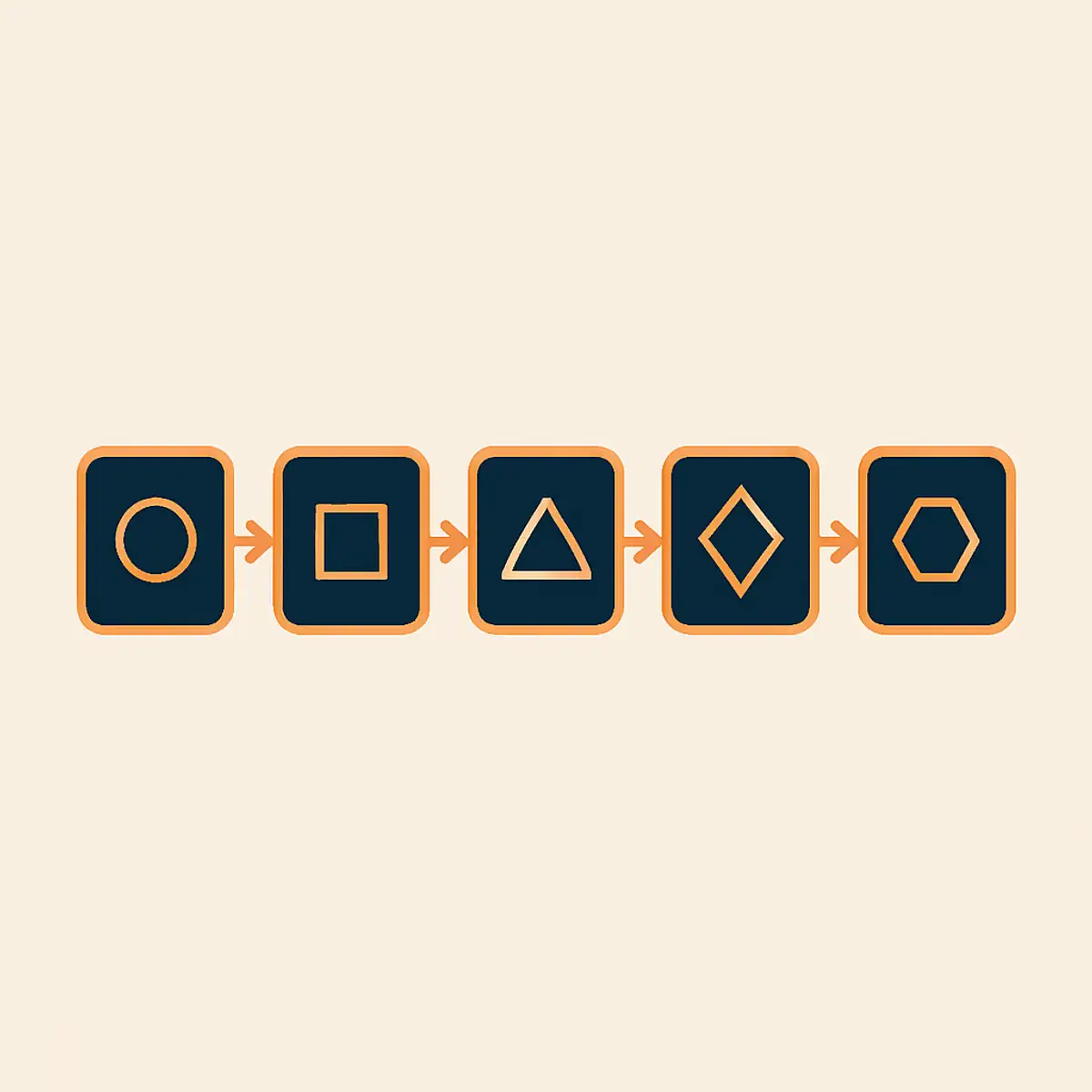
- Origin port loading (China)
- Sea voyage
- Jebel Ali arrival
- Mirsal 2 customs clearance
- Last-mile delivery (UAE)
SamVertex offers consolidated sea freight from China at AED 499 per CBM, all-in, including MOFAIC attestation handling, Mirsal 2 declaration filing, and last-mile delivery to your UAE warehouse.
When sea freight is the right call
Sea freight is the cost-efficient answer for the right cargo profile. The quick decision frame:
Cargo over 2 to 3 CBM. Below this volume, LCL consolidation handling and minimum charges erase the cost advantage. Air freight or express courier typically wins on small shipments because the unit-cost premium is small and the speed gain is large.
Cargo not time-critical. A 25-day total transit from China factory to UAE warehouse is normal for sea. If your stockout window is 14 days, sea is the wrong tool. If your stockout window is 60 days, sea saves real money.
Cargo robust enough for sea conditions. 30+ day exposure to humidity, temperature swings (the Strait of Hormuz hits 45 plus C in summer), and container handling shock. Standard packaging works for most goods. Sensitive electronics, perfumes with high alcohol content, and certain cosmetics may need climate-controlled containers or extra packaging.
Cargo value not extreme. A USD 50 container to USD 500 container saves real percentage points on bulky low-value goods (furniture, household items, basic apparel). On high-value electronics where the freight cost is 1 percent of cargo value, the speed of air may justify itself.
The breakpoint most freight forwarders cite is 2 to 3 CBM as the sea-vs-air threshold. SamVertex's air freight from China at AED 35 per kg becomes more economical than sea freight on shipments under that threshold once consolidation and customs clearance time are factored in.
Real 2026 transit times by route
Transit times depend on origin port, vessel schedule, and whether the route runs direct or via transhipment. Below are realistic 2026 numbers based on current carrier schedules.
Shanghai to Jebel Ali. 20 to 28 days direct service, 28 to 35 days via transhipment (typically Singapore, Colombo, or Port Klang). Shanghai is China's busiest container port and offers the most departure frequency.
Shenzhen (Yantian, Shekou) to Jebel Ali. 18 to 26 days direct, 26 to 33 via transhipment. Yantian-to-Jebel Ali is the most-used Pearl River Delta lane, with weekly departures from major carriers.
Ningbo to Jebel Ali. 22 to 30 days direct, 30 to 38 via transhipment. Slightly slower than Shanghai because of less direct service frequency, but rates are often more competitive.
Guangzhou (Nansha) to Jebel Ali. 22 to 30 days direct. Strong departure frequency for Pearl River Delta cargo. Slightly different transhipment patterns than Shenzhen.
Qingdao to Jebel Ali. 25 to 35 days. Northern China hub. Less direct frequency to UAE; more shipments tranship via Singapore or Shanghai.
These are port-to-port times. Door-to-door adds:
- 2 to 4 days for inland trucking from the Chinese factory to the loading port (assuming a coastal-region factory, longer for inland)
- 1 to 3 days customs clearance at Jebel Ali on a normal documentation profile
- Same-day to 2 days for last-mile delivery from Jebel Ali to your UAE warehouse
Total realistic door-to-door: 25 to 38 days. The difference between 25 and 38 is mostly customs documentation discipline, not vessel speed.
The factor most importers under-weight is vessel cut-off versus departure. Carriers cut off cargo loading 3 to 5 days before sailing date. A factory that ships out on Tuesday for a "Friday departure" misses the boat. The supplier needs to deliver to the loading port a week before the published vessel sailing date, not on it.
FCL versus LCL: which makes sense at what volume
The choice between full container load and less-than-container load is a math problem more than a strategy problem.
FCL (Full Container Load). You book the entire container, you pay one flat rate, you get faster handling at port, your cargo stays sealed from origin to destination. Best for shipments above 12 to 15 CBM where the per-CBM cost of FCL drops below LCL rates.
20ft container holds approximately 28 to 33 CBM (working capacity). Payload up to 22 tonnes. 2026 market rates: USD 900 to USD 2,200 to Jebel Ali, depending on origin port and season.
40ft standard container holds approximately 56 to 67 CBM. Payload up to 26 tonnes. 2026 market rates: USD 1,200 to USD 3,500.
40ft High Cube holds approximately 67 to 76 CBM. Same footprint as 40ft standard but 30 cm taller. Best for lightweight bulky cargo (furniture, plastic products, garments). 2026 market rates: USD 1,500 to USD 4,000.
LCL (Less than Container Load). Your cargo shares container space with other shipments. You pay per CBM. Slower handling because of consolidation and deconsolidation steps. Best for shipments under 12 CBM where booking a full container would mean paying for empty space.
LCL market rates from China to Jebel Ali in 2026 run USD 30 to USD 75 per CBM, depending on origin port, route disruption, and season. SamVertex's published consolidated sea freight rate is AED 499 per CBM (roughly USD 136), which includes destination handling and inland delivery to our Ras Al Khor warehouse, a fuller service scope than the bare per-CBM rates quoted by some China-side forwarders that exclude UAE-side costs.
The rough breakeven point is 12 to 15 CBM. Below that, LCL almost always wins. Above 15 CBM, FCL almost always wins. Between 12 and 15 CBM, run the math both ways. Some carriers and forwarders offer better LCL rates on certain lanes that push the breakpoint up to 18 or 20 CBM.
A common LCL trap: chargeable weight versus volume. LCL rates are usually quoted per CBM, but billed on the higher of CBM or chargeable weight (1 CBM equals approximately 1,000 kg for LCL accounting in most carrier rate cards). Heavy dense cargo at 1.2 to 1.5 tonnes per CBM bills on weight, not volume, which can blow up a quote. Always confirm with your forwarder how the rate is structured for your specific cargo density.
What sea freight actually costs in 2026
The headline rate is only part of the total cost. Real all-in costs break down across:
Origin charges (China side): export customs declaration, terminal handling at the loading port, document fees, inland trucking from factory to port. Typically USD 50 to USD 200 per shipment for LCL, USD 200 to USD 500 for FCL, depending on factory location and origin port.
Ocean freight (the headline number): the per-container or per-CBM rate the carrier charges. This is what gets quoted in market reports. 2026 rates fluctuate weekly based on global supply-demand and lane disruptions (the Strait of Hormuz situation affected rates significantly through Q1 2026, with surcharges of USD 1,200 to USD 4,000 per container during peak disruption periods).
Bunker / fuel surcharges: Bunker Adjustment Factor (BAF) added to base rates, typically 10 to 20 percent on top, depending on fuel oil prices.
Destination charges (UAE side): terminal handling at Jebel Ali, deconsolidation (LCL only), document processing, port storage if delays occur. Typically USD 200 to USD 600 per FCL container, USD 25 to USD 75 per CBM for LCL.
Customs duties: standard 5 percent on CIF value (Cost + Insurance + Freight). Some categories attract 0 percent (food staples, certain pharmaceuticals, some machinery) and a few attract higher rates (luxury goods, specific protected sectors).
VAT: 5 percent on the customs-cleared value. Recoverable for VAT-registered importers but still a cash-flow line.
MOFAIC attestation: AED 150 per commercial invoice for shipments over AED 10,000. Mandatory since September 2024. AED 500 fine for non-compliance.
Last-mile delivery to your UAE warehouse: AED 100 to AED 600 depending on distance from Jebel Ali, typically AED 200 to AED 350 to a Dubai warehouse.
For a typical SME importing 5 CBM of consumer electronics from Shenzhen to Dubai in 2026, expect:
- LCL ocean freight at USD 60 per CBM: USD 300
- Origin charges: USD 100
- Destination charges: USD 200
- Subtotal freight: USD 600
- Customs duty (5 percent on CIF, assume USD 10,000 cargo value plus USD 600 freight, plus insurance): roughly USD 530
- VAT (5 percent on cleared value, recoverable): roughly USD 530
- MOFAIC attestation: AED 150 (USD 41)
- Last-mile to Dubai warehouse: AED 250 (USD 68)
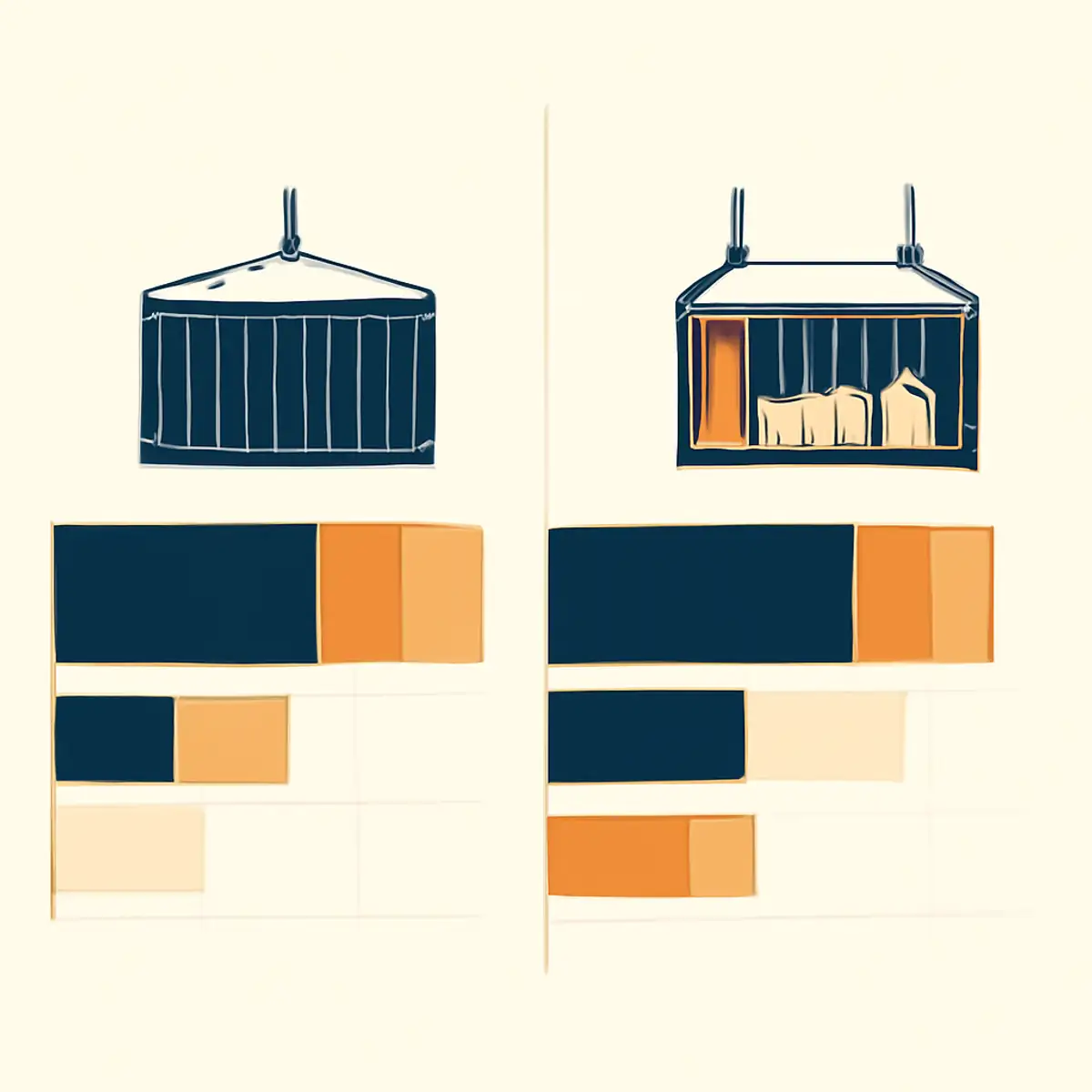
Total landed cost on USD 10,000 of cargo: roughly USD 11,800 (USD 11,270 if VAT is recoverable for the importer). The freight and clearance cost is approximately USD 1,800, or 18 percent of cargo value, which is high because the cargo is small. Same calculation on USD 50,000 of cargo (still 5 CBM but higher unit value) drops the freight cost to approximately 4 percent of cargo value. The lesson: freight costs scale with volume, not with cargo value, so per-percent freight burden is highest on low-value bulky goods.
The documents that actually matter
UAE customs runs on documentation. Get the documents right, clearance is 1 to 3 days. Get them wrong, you sit at the port until you fix them. Below is the complete document set for a standard sea freight import in 2026.
Commercial Invoice. The single most important document. Must be on supplier letterhead, signed and stamped, in English (or English plus Chinese is fine). Must include: full buyer and seller names with addresses, full goods description (not just "electronics", specify model, material, intended use), HS codes for each line item, quantity per line, unit price, total value, currency, payment terms, country of origin, Incoterms.
The most common rejection cause: vague goods descriptions. "200 cartons of accessories" gets flagged. "200 cartons of silicone phone cases, model XYZ-500, retail packaging, HS code 3926.90.99, USD 1.50 per unit, total USD 300" clears. UAE customs uses the description to verify the HS code; vague descriptions invite physical inspection.
Packing List. Separate document from the invoice (same supplier letterhead). Lists the number of packages, dimensions, gross weight, net weight per package, and which products are in which carton. Quantities must reconcile to the invoice. A packing list that says "200 cartons" but the invoice says "180 cartons" is a same-day delay until the discrepancy is resolved.
Bill of Lading (B/L) for sea freight, or Air Waybill (AWB) for air. The transport document issued by the shipping line or freight forwarder. Original bills of lading for sea freight may be required at clearance; many shipments use telex release or surrendered B/L to avoid the original-document handoff. Confirm with your forwarder which type they will use; an importer waiting for the original B/L to be couriered from China is an importer paying port storage fees.
Certificate of Origin. Issued by the China Council for the Promotion of International Trade (CCPIT) or another recognized chamber of commerce in China. Confirms the country of manufacture. UAE customs uses it to determine the applicable duty rate, particularly under GCC preferential trade agreements (which do not apply to China-origin goods, so for China imports the certificate establishes the origin for duty purposes rather than for preferential treatment).
The certificate of origin must match the goods on the commercial invoice. If your invoice describes "phone cases manufactured in Guangzhou" but the certificate says "consumer electronics," that is a same-day delay.
Trade License (Importer side). A valid UAE trade license, mainland or free zone. The license number is recorded on the import declaration. Expired or unrenewed licenses pause all customs transactions linked to your company.
MOFAIC Attestation. Mandatory since 1 September 2024 for all imports over AED 10,000 in value. The commercial invoice must be attested through the EDAS 2.0 system on the MOFAIC website. Cost: AED 150 per invoice. Fine for non-compliance: AED 500 per violation, with repeat violations escalating. The attestation must be filed within 14 days of the customs declaration, but practically, most importers attest before the shipment arrives so clearance is not held up.
Exemptions: shipments under AED 10,000, GCC-origin goods (which China is not), goods entering free zones, charitable goods, diplomatic goods, transit goods being re-exported.
MPCI Filing (Sea freight only). Manifest filing to UAE customs at least 72 hours before vessel departure from the origin port. Filed by the freight forwarder, not the importer, but the importer must provide accurate consignee details (full address, UAE Tax Number) for the filing. Inaccurate MPCI data triggers fines.
Import Permit (specific goods only). Pharmaceuticals, telecom equipment, medical devices, food products, electronics meeting certain criteria, and chemicals require pre-approval from the relevant UAE authority before importation. Examples: MOIAT (Ministry of Industry and Advanced Technology) for electronics and consumer products, MoCCAE for food, EDE for pharmaceuticals. Check whether your product category requires a pre-approval permit before booking the shipment.
Delivery Order. Issued by the shipping line or freight forwarder once duties are paid and the cargo is cleared. Authorizes pickup of the cargo from the port. The delivery order has an expiry date; cargo not picked up before expiry incurs port storage fees.
Customs clearance step-by-step
The Dubai Trade portal handles customs declarations digitally. The full clearance flow:
Step 1: Pre-arrival document preparation. The freight forwarder files MPCI 72 hours before vessel departure. The importer attests the commercial invoice through MOFAIC. The certificate of origin and packing list are prepared by the supplier. All documents are ready in digital form before the vessel arrives.
Step 2: Vessel arrival and manifest registration. The vessel arrives at Jebel Ali. The shipping line files the cargo manifest with Dubai Customs. The cargo is placed in port storage (free time typically 5 to 7 days, then storage fees apply).
Step 3: Import declaration filing. The importer or their licensed customs broker files the import declaration through Dubai Trade. All documents are uploaded: commercial invoice (MOFAIC-attested), packing list, B/L, certificate of origin, trade license copy, any required permits.
Step 4: Risk assessment and inspection decision. Dubai Customs runs the declaration through the risk-based clearance system. Most low-risk shipments clear on documentation alone. High-risk indicators include: high-value electronics (often inspected), goods declared as miscellaneous categories, first-time importers, suppliers with prior compliance issues.
Step 5: Physical inspection (if flagged). If the shipment is flagged, customs officers physically inspect the cargo. Inspection typically takes 1 to 2 days from the time the shipment is presented. The importer pays the inspection fee.
Step 6: Duty and VAT calculation. Once customs is satisfied with the documentation and (if applicable) the inspection, duties are calculated on CIF value at the applicable rate (5 percent standard, 0 percent for some categories, higher for protected categories). VAT is calculated on customs-cleared value (CIF plus duty) at 5 percent.
Step 7: Payment and release. Importer pays the duties and VAT through Dubai Trade (e-Dirham, credit card, or bank transfer). Customs issues the import declaration. The shipping line releases the delivery order. The importer or their nominated trucker collects the cargo from the port.
Total elapsed time on a clean documentation profile: 1 to 3 days from vessel arrival to cargo collection. Inspections add 1 to 2 days. Document corrections add 1 to 5 days depending on what needs to be fixed and how fast the supplier can issue corrected paperwork.
The five most common failure modes
After tracking failure patterns across recent SamVertex shipments and what other UAE 3PLs report:
1. HS code mismatches between invoice and customs declaration. The supplier writes one HS code; the customs broker uses another. Customs flags the discrepancy. Fix: use the same HS code throughout. If you do not know your HS codes, look them up on the Dubai Customs HS code database (dubaitrade.ae) before the supplier issues the invoice. Spending 30 minutes on HS codes upfront saves 3 days of clearance delay.
2. Vague goods descriptions. "Accessories", "products", "gifts", "general merchandise" all flag for inspection. The fix is product-specific descriptions: material, intended use, model number where applicable.
3. Packing list discrepancies. Carton count or weight on the packing list does not match the invoice or the actual shipment. Customs cross-checks. Fix: have the supplier reconcile the documents before the cargo leaves the factory.
4. Missing or wrong MOFAIC attestation. The most common 2025-2026 failure mode for first-time UAE importers. Many suppliers and freight forwarders are unfamiliar with the requirement; the importer assumes their forwarder is handling it; nobody actually does it; clearance gets fined. Fix: confirm in writing with your forwarder who is responsible for MOFAIC attestation. Default assumption: the importer is responsible.
5. Expired trade license. The trade license shows as expired on the day the cargo arrives, all customs transactions for the company are paused until renewal. Fix: track license renewal dates. Free zone licenses and mainland licenses have different renewal cycles.
The pattern across all five: documentation discipline is the variable. Customs is fast when documents are right. The "customs is slow" perception is usually a documentation problem the importer did not catch in time.

How to choose the right freight forwarder
Sea freight from China to UAE involves at minimum a Chinese freight forwarder (origin side) and a UAE customs broker (destination side). Some operators provide both ends of the service; others specialize at one end.
Three operating models worth understanding:
Single-source door-to-door (DDP). One operator handles factory pickup, export clearance, ocean freight, import clearance, and last-mile delivery in the UAE. Single point of contact, single invoice, single accountability. Best for importers who do not want to manage two operators in two countries. Typical UAE-end providers: SamVertex (consolidated sea freight at AED 499 per CBM, all-in), Aramex, DHL Supply Chain, CEVA. Some Chinese forwarders also offer DDP to UAE (DDPCHAIN, DocShipper, Winsky Freight).
Two-operator split (FOB or EXW Incoterms). A Chinese forwarder handles the China side; a UAE customs broker handles the UAE side. The importer manages the handoff. Lower coordination cost, more importer responsibility, more control over individual lines.
Direct shipping line booking. The importer books directly with the shipping line (Maersk, MSC, Evergreen, COSCO, CMA CGM, Hapag-Lloyd) and arranges customs clearance separately. Cheapest if you have the volume to negotiate direct rates and the in-house expertise to handle customs. Practical only at full-container volumes for established importers.
Questions to ask any forwarder:
- What is the door-to-door transit time on this lane in the current month, not theoretical?
- What is the all-in cost including origin charges, ocean freight, destination charges, customs clearance, and last-mile?
- Who is responsible for MOFAIC attestation?
- What happens if the shipment is delayed at port for documentation reasons, do you bear the storage fees or do I?
- How do you handle the Strait of Hormuz disruption pattern: do you have alternate routing options?
- Can you provide a recent reference (last 90 days) for a shipment of similar size and origin?
A clear answer pattern in writing within 48 hours separates a real operator from a sales pipeline.
Sea freight versus air freight: when to switch
Most UAE importers eventually need both modes. The decision frame:
Sea (FCL or LCL): above 2 to 3 CBM, 25 to 35 days door-to-door, USD 0.06 to USD 0.30 per kg landed (cargo dependent), best for non-urgent bulk goods.
Air freight: below 2 to 3 CBM, 5 to 12 days door-to-door, USD 4 to USD 9 per kg, best for urgent restocks or high-value goods where freight cost is small as a percent of cargo value. SamVertex's air freight rate is AED 35 per kg (roughly USD 9.50 per kg) all-in to UAE.
Express courier (DHL, FedEx, UPS): below 200 kg, 3 to 7 days door-to-door, premium pricing per kg but covers everything end-to-end including customs. Best for samples, urgent small parcels, or high-value low-volume cargo.
Hybrid pattern. Many established UAE importers run sea freight for the bulk of their inventory and air freight for emergency restocks. The math: sea freight at low USD per kg covers 80 percent of normal demand; air freight at high USD per kg covers stockout emergencies. The blended rate is competitive, and the air freight option keeps shelf-loss low.
Frequently asked questions
How long does sea freight from China to UAE actually take in 2026?
18 to 30 days port-to-port for FCL on direct services from Shanghai, Shenzhen, Ningbo, or Guangzhou to Jebel Ali. LCL adds 4 to 8 days. Door-to-door (factory to UAE warehouse) totals 25 to 38 days on a clean documentation flow. Customs clearance is 1 to 3 days when paperwork is correct.
What does it cost to ship a 20ft container from China to UAE?
USD 900 to USD 2,200 in 2026 market rates depending on origin port, season, and any active route disruptions. Add USD 200 to USD 500 origin charges, USD 200 to USD 600 destination charges, plus duties and VAT. Total all-in for a 20ft container averaged USD 2,000 to USD 4,500 in the first half of 2026.
What is LCL sea freight, and how is it priced?
LCL (Less than Container Load) means your cargo shares container space with other shipments. It is priced per CBM (cubic meter), typically USD 30 to USD 75 per CBM in 2026 market rates from China to Jebel Ali. SamVertex's published consolidated sea freight rate is AED 499 per CBM, which includes destination handling and inland delivery.
What documents do I need for UAE customs clearance on China imports?
Commercial invoice (MOFAIC-attested for shipments over AED 10,000), packing list, bill of lading or air waybill, certificate of origin from a recognized chamber of commerce in China, valid UAE trade license, and any required pre-import permits for regulated goods. The MPCI filing is handled by the freight forwarder 72 hours before vessel departure.
What is MOFAIC attestation and when do I need it?
MOFAIC (Ministry of Foreign Affairs and International Cooperation) attestation is mandatory on all commercial invoices for UAE imports over AED 10,000, in force since 1 September 2024. Costs AED 150 per invoice, must be filed within 14 days of the customs declaration. Non-compliance is AED 500 per violation. File through EDAS 2.0 on the MOFAIC website. Most importers attest before shipment arrival to avoid clearance delays.
Does the UAE charge customs duty on goods from China?
Yes, standard 5 percent on the CIF value (Cost + Insurance + Freight) for most goods. Some categories attract 0 percent (basic food staples, certain pharmaceuticals, specific machinery). A few categories attract higher rates. China-origin goods do not qualify for GCC preferential rates (which apply only to GCC-member-state-origin goods). VAT of 5 percent is calculated on customs-cleared value (CIF plus duty) and is recoverable for VAT-registered importers.
Should I use FCL or LCL for shipping from China to UAE?
FCL above 12 to 15 CBM, LCL below 12 CBM. Between 12 and 15 CBM, run the math both ways; some lanes have unusually competitive LCL rates that push the breakpoint up to 18 to 20 CBM. FCL handling is faster at port and more secure (cargo sealed origin to destination). LCL handling involves consolidation and deconsolidation, which adds 4 to 8 days to transit.
What is the best port in China for shipping to UAE?
Shanghai for general cargo and Yangtze River Delta sourcing. Shenzhen (Yantian or Shekou) for Pearl River Delta sourcing, especially electronics and consumer goods. Ningbo for cost-competitive rates. Guangzhou (Nansha) for Pearl River Delta with different transhipment patterns than Shenzhen. Qingdao for North China sourcing. The "best port" for your shipment is whichever one is closest to your supplier; inland trucking from a distant Chinese factory to a "preferred" port often costs more than just using the local port.
Can I ship from China to free zones in the UAE without paying customs duty?
Yes, goods entering UAE free zones (JAFZA, DAFZA, Dubai South, Hamriyah Free Zone, etc.) are exempt from UAE import duty as long as they remain in the free zone or are re-exported. Duty becomes payable only when the goods cross from the free zone into the UAE mainland for local consumption. This is a major advantage for re-export operations and is one reason Jebel Ali handled approximately 15.5 million TEU in recent years, much of which is re-export volume.
See your real numbers
Sea freight from China to UAE works well when documentation is disciplined, the route is well-chosen, and the operator is one you can hold accountable. SamVertex offers consolidated sea freight at AED 499 per CBM with full UAE-side handling: customs clearance, MOFAIC attestation, last-mile delivery to your warehouse or directly to our Ras Al Khor fulfillment center for sellers running our Dubai 3PL service.
Send your shipment specifics (volume, origin port, cargo type, target arrival date) to /contact/ and we will share a no-form quote within 24 hours, including all-in cost across freight, customs, and last-mile. No discovery calls required unless you want one.
References
- SamVertex sea freight service page for the AED 499 per CBM rate detail
- SamVertex air freight service page for the AED 35 per kg rate
- SamVertex customs clearance service page for VAT and duty handling
- SamVertex 3PL pricing guide for Dubai 2026 for the full UAE storage and fulfillment rate card
- Dubai Trade portal, https://www.dubaitrade.ae for HS code lookup and import declaration filing
- MOFAIC EDAS 2.0 system, https://www.mofaic.gov.ae for commercial invoice attestation
- Delta Global Cargo, "Shipping from China to Dubai 2026 Guide," https://deltaglobal.ae/shipping-china-to-dubai/
- DDPCHAIN, "Shipping from China to UAE: Air, Sea & DDP Costs (2026)," https://ddpchain.com/uae/
- Sino-Shipping, "Freight Shipping from China to UAE, Updated April 2026," https://www.sino-shipping.com/country-guides/freight-from-china-to-uae/
- Ripple LLC, "UAE Import Export Documents List 2026 Complete Guide," https://ripplellc.ae/uae-import-export-documents-list-2026/
Ready to stop reading and start shipping?
We run a real warehouse in Dubai and answer every message. Free consultation, no pressure, no commitment.
We reply within 4 hours during business hours.