
Table of contents14 sections
- Why UAE Sellers Lose Money on Returns and the 4 Fixes That Actually Work
- How a profitable fashion brand became unprofitable in eight months
- Answer summary
- What returns actually cost in the UAE in 2026
- Why the math feels worse than it looks
- Fix 1: Better product pages reduce fit-driven returns
- Fix 2: Post-purchase confirmation reduces impulse-buy regret
- Fix 3: Tighter restocking and resale workflows recover margin
- Fix 4: Returns-friendly policy paired with operational discipline
- How to implement the four fixes in 90 days
- How SamVertex returns service works
- Frequently asked questions
- See your real numbers
- References
Why UAE Sellers Lose Money on Returns and the 4 Fixes That Actually Work
How a profitable fashion brand became unprofitable in eight months
A Dubai-based women's fashion brand selling through Shopify, Amazon UAE, and Noon hit AED 1.4 million monthly revenue in their first year. Margins looked fine on paper: 42 percent gross margin, AED 35 average COGS on AED 95 average selling price, 14,700 orders monthly. Profitable, growing, the kind of brand UAE Vision 2030 paperwork loves to celebrate.
Eight months in, the founder ran a proper P&L for the first time. Returns were 26 percent of orders. Each return cost AED 38 in handling, reverse logistics, inspection, and restocking. Forty-eight percent of returned items got resold at full price; the rest sold at 60 percent of full or got written off. The math on the apparently-42-percent gross margin: AED 14.5 contribution margin per gross order, multiplied by 14,700 orders, minus AED 38 × 3,822 returns (AED 145,000) minus AED 31 average write-down × 1,988 unrecoverable units (AED 61,600) equaled an actual contribution margin of 8.4 percent, not 42.
The brand was burning cash to grow. Every new customer cost more in return-side leakage than they generated in margin. The fix was not stopping returns; it was changing the unit economics of the ones that happened. Eight weeks of operational discipline, the four fixes below, took the return rate to 17 percent, the per-return cost to AED 22, the resale-at-full-price rate to 71 percent. Contribution margin recovered to 19 percent. Same revenue, same product, structurally different business.
This article is the playbook.
Answer summary
UAE ecommerce returns silently kill margin. The average return rate across all categories is 18-20 percent, with apparel hitting 26 percent and footwear above 30 percent. Each return costs USD 10 to USD 65 to process (reverse logistics, labor, restocking, write-downs), and only 48 percent of returned items resell at full price. A 25 percent return rate typically reduces contribution margin by 70 percent, not 25 percent, most UAE sellers underestimate this catastrophically.
Four operational fixes that move the number: (1) better product pages with size guides and consistent photography reduces fit-driven returns by 8-12 percent, (2) post-purchase confirmation flows that catch impulse-buy regret before dispatch reduce refusal-at-door by 4-6 percent, (3) tighter restocking and resale workflows recover 15-20 percentage points of returned inventory at full price, (4) returns-friendly policy paired with operational discipline (free returns, fast refunds, clear instructions) actually lowers return rates by reducing the rage-return phenomenon.
SamVertex includes returns processing at no extra fee in our standard 3PL service. The hidden lever for most UAE sellers: switching from per-return-fee operators to free-returns operators removes the dollar incentive to skip operational fixes that would lower the return rate at the source.
What returns actually cost in the UAE in 2026
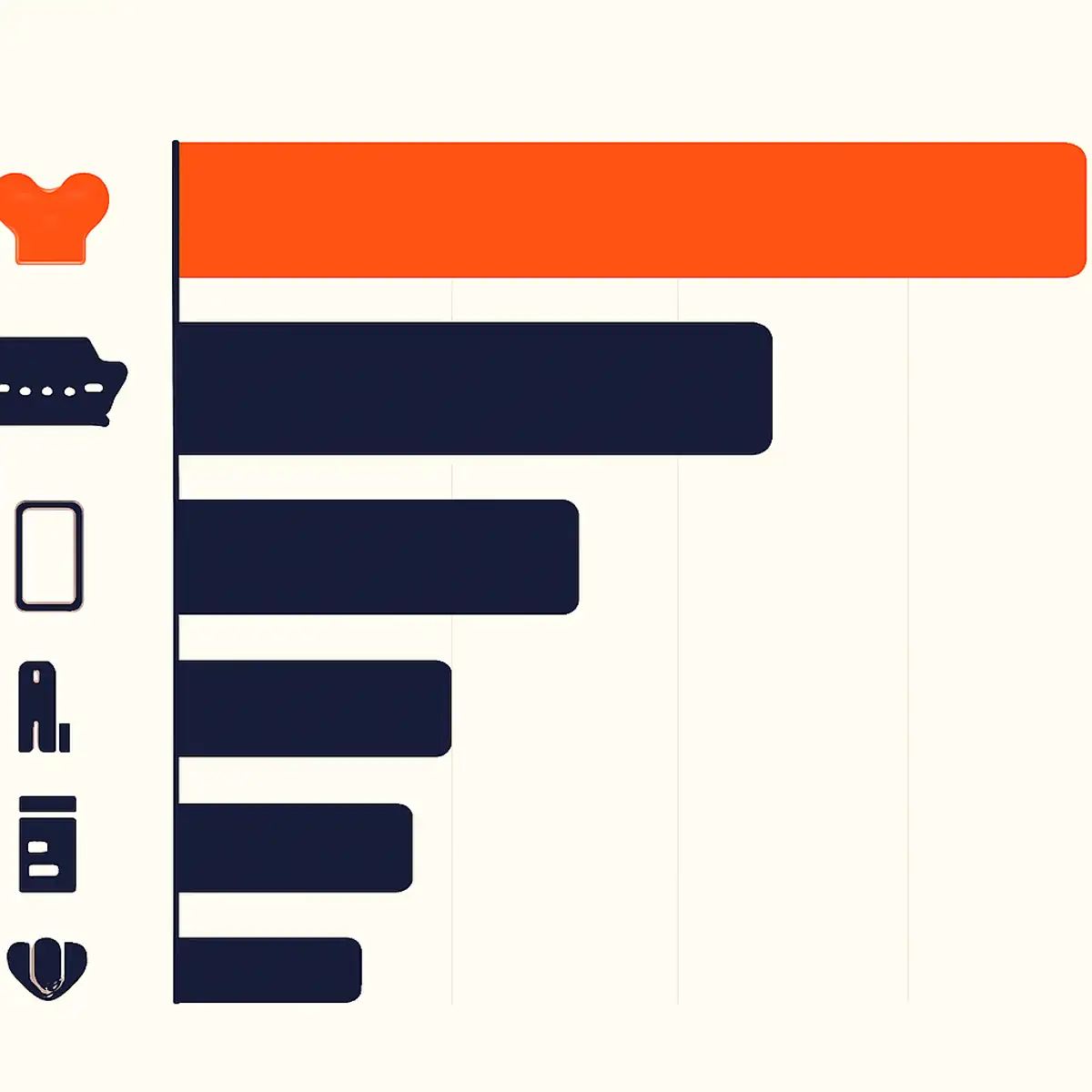
The headline category averages, with UAE-specific context where it varies:
| Category | Global return rate | UAE adjusted | Primary driver |
|---|---|---|---|
| Apparel and fashion | 25-30% | 26% | Fit, size, expectation |
| Footwear | 30-35% | 31% | Fit, comfort |
| Electronics | 11-15% | 12% | Defect, buyer's remorse |
| Beauty and personal care | 4-12% | 8% | Shade, skin reaction (hygiene barrier limits returns) |
| Home and furniture | 15-20% | 17% | Color, size, assembly |
| Supplements | 7-9% | 7% | Effect mismatch |
| Pet products | 8-12% | 9% | Sizing, preference |
| Jewelry (reputable sellers) | 4% | 4% | Defect, quality |
The UAE adjustments are small. Returns behavior is mostly category-driven, not geography-driven. The exception: UAE has higher COD share than most markets, which adds a separate refusal-at-door layer (different from a customer-initiated return) that compounds the cost.
The cost per return in 2026:
Per-return processing cost breakdown (industry average, USD):

Reverse logistics:           $5-15
Inspection and grading:      $3-8
Cleaning/refurbishment:      $0-12
Restocking labor:            $2-5
Repackaging if needed:       $1-3
Write-down vs original:      $5-22 (when not resold at full price)
─────────────────────────────────────────
Total per return:            $10-65

Plus indirect costs:
- Lost margin on the original sale (if refunded in full)
- Tied-up working capital during the return cycle
- Customer service time
- Increased credit-card chargeback risk on disputed refunds
UAE-specific cost adders: AED 5-15 per return on operators that charge handling fees (most UAE 3PLs do; SamVertex does not), additional last-mile delivery cost on the inbound return leg (AED 25-40 if the courier returns the parcel separately).
The math sellers usually get wrong: a 25 percent return rate does not reduce gross margin by 25 percent. It reduces contribution margin by something closer to 70 percent because every return triggers the full per-return cost stack PLUS the original cost of getting the item to the customer in the first place. The fixed costs of the original sale (picking, packing, outbound delivery) are sunk regardless of the return outcome.
Why the math feels worse than it looks
Most UAE sellers underweight returns because the cost shows up in places that look like other line items. The full picture:
Worked example: AED 95 average selling price,
                AED 35 COGS,
                AED 60 gross margin per sale,
                26% return rate.

Per-100-orders math:
─────────────────────────────────────────
Revenue (100 × AED 95):          AED 9,500
COGS (100 × AED 35):             AED 3,500
Gross margin:                    AED 6,000

Returns (26% × 100 = 26 orders):
  Refunded revenue:              AED 2,470
  Reverse logistics + handling:  AED 988 (26 × AED 38)
  Original outbound costs sunk:  AED 754 (26 × AED 29 last-mile)
  Write-downs (52% of returns at AED 31): AED 419

Net after returns:               AED 1,369 contribution
Contribution margin:             14.4% (vs 63% gross)
─────────────────────────────────────────
The drop from 63% to 14.4% is the cost
of running 26% returns without operational fixes.
A few notes on the math: refunded revenue and original outbound costs sunk would happen separately for COD-refused orders (where the customer never paid in the first place but the brand still incurred the outbound), so the calculations split slightly. In aggregate the contribution-margin number is in the right ballpark for a typical mid-volume UAE fashion seller without operational discipline.
Now the same math with the four fixes (return rate 17 percent, per-return cost AED 22, restocked-at-full-price 71 percent):
Per-100-orders math after fixes:
─────────────────────────────────────────
Revenue (same):                  AED 9,500
COGS (same):                     AED 3,500
Gross margin (same):             AED 6,000

Returns (17% × 100 = 17 orders):
  Refunded revenue:              AED 1,615
  Reverse logistics + handling:  AED 374 (17 × AED 22)
  Original outbound costs sunk:  AED 493 (17 × AED 29)
  Write-downs (29% of returns at AED 31): AED 153

Net after returns:               AED 3,365 contribution
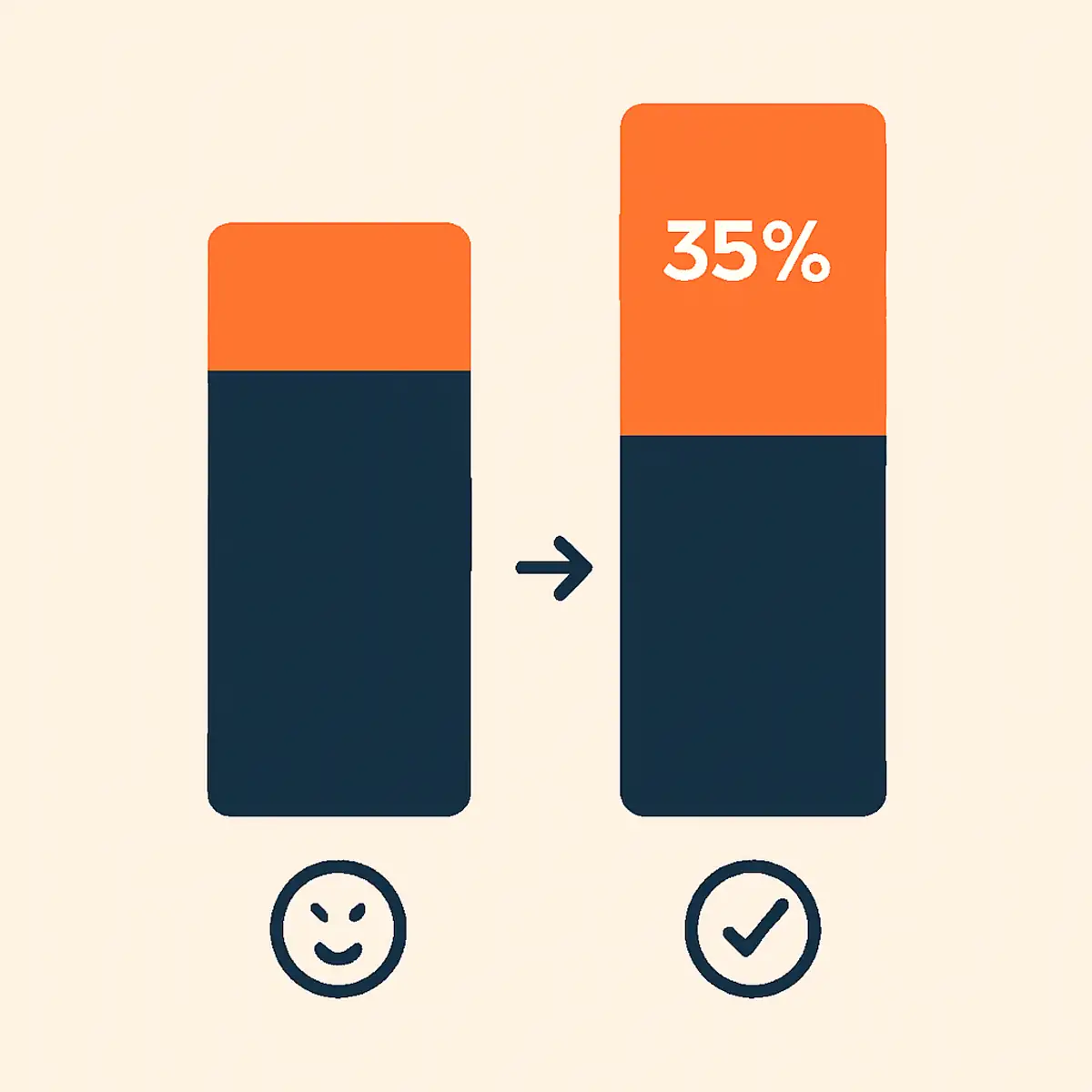
Contribution margin:             35.4% (vs 14.4% before)
─────────────────────────────────────────
Doubled contribution margin
without changing pricing or COGS.
This is the operational lever most UAE sellers miss because returns get categorized as "logistics costs" or "fulfillment costs" rather than as a strategic profit lever.
Fix 1: Better product pages reduce fit-driven returns
The single highest-leverage intervention for fashion, footwear, and home goods. About 50 percent of returns globally are size or fit driven, and the UAE skews higher because of the bracketing behavior (customers ordering 2-3 sizes intending to keep one).
What works:
Detailed size guides per SKU. Not "S/M/L" abstractions. Actual chest, waist, hip, sleeve, inseam measurements in cm. Plus a model-stats reference: "model wears size M, height 175 cm, chest 89 cm." Sellers who ship size guides at this level of detail see 8-12 percent fewer fit-driven returns within 60 days.
Consistent photography across sizes. Shoot the same garment on models of different body types (small, medium, large) so customers see how the product fits a range. Add a back view, side view, detail shots. Inconsistent product photos across SKUs in the same line trigger surprise-on-arrival returns more often than any other single factor.
Live size recommendation tools. "What size am I?" widgets that ask 4-5 questions (height, weight, usual size in another brand) and return a recommendation. These cost USD 50-200 per month in tools like Find My Fit or Sizely, and they typically deliver 15-25 percent reduction in size-driven returns when implemented properly.
Customer review surfacing. Reviews that mention sizing patterns ("runs small," "true to size," "long in the torso") help future buyers self-correct. Surface review snippets that include sizing context near the product page size selector. Most Shopify themes do not do this by default; it is a small front-end change with measurable return-rate impact.
Returns-data feedback loop. Track which SKUs return most often and why. Cancel or rework SKUs with persistent fit problems. SKUs in the top 10 percent of return rate within a brand often account for 30-40 percent of total return volume; trimming those alone shifts the average.
The cost of these fixes is modest (a few hundred dirhams per month in tooling, a few hours per week in product-page maintenance). The return reduction typically pays for itself within 30 days.
Fix 2: Post-purchase confirmation reduces impulse-buy regret
About 18 percent of UAE COD returns and 12 percent of prepaid returns trace to "customer changed their mind." The window between order placement and dispatch is where the buyer's regret happens, and the fix is to interrupt the dispatch when the regret is detectable.
What works:
Same-day shipping cutoffs. Orders received before 14:00 dispatch same-day in the UAE for typical 3PL operations. The longer between order and dispatch, the more time for buyer regret. Same-day removes most of the regret window. SamVertex same-day dispatch cuts off at 14:00; orders received earlier ship faster.
Order confirmation + delivery window flow. A 30-second confirmation experience: customer orders, receives an SMS or WhatsApp confirmation with delivery window, optionally confirms or modifies. The 5-10 percent of customers who would have refused at the door instead self-cancel pre-dispatch, saving the full cost of dispatch + return.
SMS or WhatsApp pickup-time confirmation on COD orders. Same flow but specifically for COD: "Your order is being prepared for delivery today between 16:00 and 19:00. Reply Y to confirm or N to reschedule." About 8-12 percent of COD customers reschedule; about 3-5 percent cancel. Both outcomes are better than refusal-at-door because the brand avoids the outbound cost.
Wishlist nudge for over-consideration. When a customer is browsing for 30+ minutes without checkout, a soft nudge ("Save these for later in your wishlist?") reduces the impulse-purchase regret rate by funnelling deliberation customers away from same-session checkout. This is a Shopify app-level intervention; sellers see 4-8 percent reduction in impulse-buy returns when they implement it.
The post-purchase confirmation flows are nearly free in software (most order management systems support them out-of-the-box). The lift comes from actually using them.
Fix 3: Tighter restocking and resale workflows recover margin
The hidden cost in returns is not the return itself; it is the gap between what the returned item is worth versus what the seller can recover.
Industry benchmark: 48 percent of returned items resell at full price. Best-in-class operators move that to 70-80 percent through better workflows.
What works:
Inspection within 24 hours of inbound return. The longer a return sits in the inspection backlog, the more it depreciates. A returned item inspected and restocked within 24 hours typically resells at full price; the same item inspected after 14 days often misses the seasonal window or gets soft-discounted.
Photo documentation at inbound. A photo of the item's condition at inbound creates an audit trail. If the customer claimed the item was defective but the photo shows it in good condition, the brand has evidence for the chargeback dispute and the operational data to refine future returns acceptance criteria.
Three-tier sorting at inspection. Tier 1 (resaleable as-is), Tier 2 (resaleable after light refurbishment such as repackaging or minor cleaning), Tier 3 (write-off or liquidation). Industry benchmarks: 65-75 percent of returns should be Tier 1, 15-20 percent Tier 2, the remainder Tier 3. Operators who do not sort tightly default everything to Tier 1 or Tier 3, missing the middle tier where 15-20 percentage points of recoverable margin lives.
Liquidation channels for Tier 3. Returned items that cannot be resold at full price still have residual value. Outlet sections on the brand's own site, marketplace liquidation lots, and specialized B2B liquidation buyers all recover 30-50 percent of original value on Tier 3 inventory. Most UAE sellers either write off Tier 3 entirely (losing all recovery) or hold it indefinitely (tying up working capital). Both are wrong.
Returns-data feedback loop into product development. SKUs with persistent return reasons (consistent size mismatch, recurring defect pattern) get reworked or discontinued. The data is right there in the inspection notes; most brands do not aggregate it into product decisions.
SamVertex's returns workflow includes inspection within 24 hours of inbound, photo documentation, three-tier sorting, and direct restock-to-inventory or hand-off to designated liquidation channels per merchant instructions. Returns processing is bundled into the standard 3PL service at no per-return charge.
Fix 4: Returns-friendly policy paired with operational discipline
This sounds counterintuitive: making returns easier reduces return volume. The mechanism is the rage-return phenomenon.
When customers feel a brand is making returns difficult, they rage-return everything. They stop trusting the brand on subsequent purchases. They leave negative reviews. They use disputes and chargebacks instead of the brand's own returns process. The total cost-of-friction is higher than the cost of an easy returns policy.
What works:
Free returns when operationally feasible. SamVertex includes returns processing at no extra fee in standard 3PL service. The merchant decides whether to charge customers for return shipping; many UAE brands offer free returns under AED 200 spend and charge AED 15-25 above that.
7-day window minimum, 30-day window better. UAE Federal Decree-Law No. 15 of 2020 mandates a 7-day minimum return window for ecommerce. Brands that offer 30 days have lower return abuse rates because customers do not rush to return and end up keeping items they would have returned within a 7-day rush.
Fast refunds. Refunds processed within 48 hours of inbound inspection (faster on prepaid orders, slower on cash-handling COD reconciliation). Slow refunds correlate with chargebacks and negative reviews.
Clear, plain-language returns policy. No legal-speak. A customer should understand the policy in 30 seconds. Most UAE brands have policies written by lawyers that drive returns to customer service phone calls instead of self-service portals; the customer service load is the hidden cost.
Exchange-first messaging. When customers initiate a return, the system offers exchange before refund. Industry benchmarks: 30-40 percent of return-initiated customers will accept an exchange if offered, recovering the original revenue while still solving the customer's underlying problem. Most UAE return portals jump straight to refund as the default.
Returns abuse policy enforcement. Customers who return more than 50 percent of their orders over a 90-day window get flagged. Subsequent orders receive prepay-only treatment (no COD), or the brand restricts free returns. UAE return abuse rose 13 percent year-over-year in 2025 per Signifyd; light enforcement deters abuse without alienating the rest of the customer base.
The combination of these five sub-fixes typically reduces return volume by 4-8 percent net (volume reduction from less rage-returning, partly offset by easier process) while improving customer lifetime value by 12-20 percent (better retention, more repeat purchases, fewer disputes).
How to implement the four fixes in 90 days
A sequencing recommendation for a typical UAE seller running 1,000-15,000 orders per month:
Days 1-15: Audit and instrumentation.
- Pull 90 days of returns data: by SKU, by reason, by customer, by channel
- Calculate true contribution margin including return costs
- Identify the top 10 SKUs by return rate and the top 5 customers by return frequency
- Set up reporting that tracks return rate, per-return cost, and resale-at-full-price rate weekly
Days 16-45: Fix 1 (product pages) and Fix 2 (post-purchase).
- Update size guides on top-20 SKUs by volume
- Re-shoot or re-photograph the top-5 SKUs with the highest return rate
- Implement post-purchase SMS/WhatsApp confirmation flow
- Move dispatch cutoff to same-day if not already
Days 46-75: Fix 3 (restocking).
- Establish the three-tier inspection workflow
- Photograph all inbound returns at receipt
- Set up Tier 3 liquidation channel (outlet section, marketplace lots, or designated buyer)
- Audit the 24-hour inspection turnaround
Days 76-90: Fix 4 (policy).
- Rewrite returns policy in plain language
- Implement exchange-first messaging in returns flow
- Set up returns abuse flagging
- Move return shipping to free where feasible
Day 90: Re-baseline.
- Calculate return rate, per-return cost, and resale-at-full-price rate
- Compare against day-zero baseline
- Iterate on the fixes that did not move
Most sellers see meaningful margin improvement by day 45 (Fixes 1 and 2 are the fastest to ship). Full impact lands by day 90.

How SamVertex returns service works
The operational specifics:
Free returns processing. No per-return handling fee. Inbound receiving, three-tier inspection, photo documentation, restock to merchant inventory or liquidation per merchant instructions, all bundled into the standard 3PL service.
Same-day inbound to inspection. Returns received before 14:00 are inspected the same day. After 14:00 are inspected the next morning. The inspection backlog is kept within 24 hours.
Three-tier sorting with photo evidence. Every returned item is graded Tier 1 (resaleable as-is), Tier 2 (refurbishable), or Tier 3 (write-off candidate), with a photo at receipt and a photo at sort. The merchant sees the grading and can override if needed.
Direct restock to inventory. Tier 1 items go straight back into the merchant's available inventory. Tier 2 items go to the refurbishment queue. Tier 3 items wait for merchant instructions (write-off, liquidation, or destruction).
Reporting transparency. Daily reports show return volume, by SKU, by reason. Weekly reports aggregate the trends. Monthly reports include cost-per-return and resale-at-full-price benchmarks.
Compliance with UAE Federal Decree-Law No. 15 of 2020. Standard 7-day return window honored automatically; the merchant can extend to 14 or 30 days for their own policy without operational change.
For sellers comparing SamVertex against UAE 3PLs that charge AED 5-15 per return, the SamVertex zero-fee structure is one of the operational positioning differences that compounds at volume. A seller running 500 returns per month at AED 10 per return on a competitor saves AED 5,000 per month with SamVertex on the returns line alone.
Frequently asked questions
What is the average return rate for UAE ecommerce in 2026?
Approximately 18-20 percent across all categories, with apparel at 26 percent, footwear at 31 percent, electronics at 12 percent, beauty at 8 percent, and home goods at 17 percent. UAE return behavior is mostly category-driven, with the COD-refusal layer adding 4-6 percentage points to the effective return-equivalent rate for sellers with high COD share.
How much does processing a return actually cost in the UAE?
USD 10 to USD 65 per return depending on category complexity, including reverse logistics, inspection, restocking labor, and write-down on items not resold at full price. UAE-specific cost adders include AED 5-15 per return on operators that charge handling fees (SamVertex does not) and AED 25-40 inbound delivery cost when the courier returns the parcel separately.
Why does a 25 percent return rate cut my margin by more than 25 percent?
Because every return triggers the full per-return cost stack PLUS the original cost of getting the item to the customer in the first place. The fixed costs of the original sale (picking, packing, outbound delivery) are sunk regardless of the return outcome. A typical UAE seller running 25 percent returns sees contribution margin reduced by approximately 70 percent versus zero returns, not 25 percent.
What is the cheapest way to reduce returns in UAE ecommerce?
Better product pages. Detailed size guides, consistent photography across sizes, customer review surfacing, and returns-data feedback into product decisions. Cost is modest (a few hundred dirhams per month in tooling), and 8-12 percent reduction in fit-driven returns within 60 days is typical. This is the highest-ROI intervention for fashion, footwear, and home goods.
Should I offer free returns in the UAE?
For most categories, yes, when operationally feasible. Free returns reduce the rage-return phenomenon (customers who feel friction return everything), improve customer lifetime value by 12-20 percent, and lower chargebacks. SamVertex includes returns processing at no extra fee, making free returns operationally cheaper for the merchant. Many UAE brands offer free returns under AED 200 and charge AED 15-25 above that.
What is the UAE law on returns for ecommerce?
UAE Federal Decree-Law No. 15 of 2020 on Consumer Protection mandates a minimum 7-day return window for ecommerce purchases. Unfair contract terms are prohibited. The 2023 amendments extended specific obligations to ecommerce platforms. Most established UAE brands offer 14-30 day windows beyond the legal minimum because the longer window reduces return rage and improves customer experience.
How do I tell if my SKU has a structural returns problem?
If the SKU's return rate is in the top 10 percent of your catalog, the problem is structural (sizing inconsistency, defect pattern, or photography mismatch). The top 10 percent of return-rate SKUs typically account for 30-40 percent of total return volume. Trimming those alone moves the average meaningfully. Always pair the data with the inspection notes to understand the why.
What is bracketing and how do I prevent it?
Bracketing is when customers order 2-3 sizes of the same item intending to keep one and return the rest. About 63 percent of online apparel shoppers practice bracketing globally. The operational fixes: better size recommendations (Find My Fit-style tools), customer review surfacing on sizing, return abuse flagging for customers who repeatedly bracket, and exchange-first messaging in the return flow. UAE brands that surface size confidence on the product page see 15-25 percent reduction in bracketing.
Can I get returns data integrated with my Shopify store?
Yes, most modern UAE 3PLs (including SamVertex) integrate with Shopify for two-way data flow: order data flows to the warehouse, return data flows back to the merchant dashboard. This eliminates manual reconciliation and gives the merchant real-time visibility into return rates, reasons, and per-SKU patterns.
See your real numbers
UAE returns are quieter than RTO but more expensive over time. The four fixes (product pages, post-purchase confirmation, restocking workflows, returns-friendly policy) double contribution margin on a typical UAE fashion P&L without changing pricing or COGS. Each fix is independently valuable; combined, they are the operational lever most UAE sellers underweight.
SamVertex includes returns processing at no extra fee in our standard 3PL service. Send your monthly return rate, average return cost, and category mix to /contact/ and we will share a 90-day return-reduction projection at SamVertex's published rates, including the projected margin recovery from the four fixes implemented in your specific category.
For sellers running parallel COD operations, our COD logistics UAE guide covers the refusal-at-door layer that compounds with returns. For sellers running marketplace operations, our Amazon FBA prep guide and Noon NFC prep guide cover the marketplace-specific return economics.
References
- SamVertex direct-sales fulfillment service page for the AED 29 per order rate with free returns
- SamVertex 3PL pricing guide for Dubai 2026 for full UAE 3PL rate context
- SamVertex COD logistics UAE guide for the parallel refusal-at-door economics
- Eightx, "Average eCommerce Return Rate by Category 2026," https://eightx.co/blog/average-ecommerce-return-rate
- TrackVid, "Ecommerce Return Statistics 2026," https://trackvid.in/blogs/ecommerce-return-statistics.html
- Quiqup, "Ecommerce Returns UAE: 2026 Costs and Decree 15 Guide," https://www.quiqup.com/post/ecommerce-returns-uae-2025
- Signifyd, "Ecommerce Return Policy Best Practices 2026," https://www.signifyd.com/blog/ecommerce-return-policy/
- WiserReview, "30 Ecommerce Return and Refund Statistics 2026," https://wiserreview.com/blog/ecommerce-return-and-refund-statistics/
- Synctrack, "Ecommerce Return Rates 2026 Data: Guide by Category and Country," https://synctrack.io/blog/ecommerce-return-rates/
- Shipway, "How to Effectively Reduce Ecommerce RTO Percent in 2026," https://blog.shipway.com/how-to-effectively-reduce-e-commerce-rto/
Need help putting this into practice?
We run a real warehouse in Dubai and answer every message. Free consultation, no pressure, no commitment.
We reply within 4 hours during business hours.