
Table of contents12 sections
- COD Logistics in the UAE: How Cash on Delivery Actually Works for E-commerce Sellers in 2026
- Answer summary
- What COD actually means in UAE operations
- UAE COD by the numbers in 2026
- The RTO problem and where it actually comes from
- How COD reconciliation actually works
- The five operational fixes that move COD success from 70 to 85 percent
- How SamVertex COD compares to UAE market norms
- When COD is and is not the right choice for your operation
- Frequently asked questions
- See your real numbers
- References
COD Logistics in the UAE: How Cash on Delivery Actually Works for E-commerce Sellers in 2026
Cash on delivery still represents about 30 percent of UAE e-commerce orders in 2026, even after a 37 percent drop over four years. The orders that come in via COD have a 20 percent return-to-origin rate compared to 6 to 8 percent for prepaid orders. The cash flow lag from courier collection to seller bank account is typically 7 to 14 days. Most UAE 3PLs charge between 1.5 and 3 percent of the order value as a COD handling fee. The math says COD costs you somewhere between 5 and 15 percent of revenue depending on how you operate it.
Most UAE merchants treat COD as a binary choice: offer it or do not. The merchants who are still profitable on COD treat it as an operational discipline. The difference between a 70 percent COD success rate and an 85 percent COD success rate is not the customer mix; it is verification calls, same-day shipping cutoffs, multi-attempt routing, and reconciliation discipline. This article is the operator-side guide to running COD in the UAE without watching margin disappear into refused deliveries and stranded receivables.
Answer summary
COD in the UAE is the ecommerce payment method where customers pay cash (or sometimes card-on-delivery via mobile POS) when their order arrives, instead of paying online during checkout. As of 2026, COD accounts for approximately 30 percent of UAE ecommerce orders, down from over 50 percent a decade ago, with the shift driven by Apple Pay, Tabby, Tamara, and digital wallets. COD orders carry a 20 percent return-to-origin (RTO) rate versus 6 to 8 percent for prepaid orders, plus operational complexity around address verification, multi-attempt delivery, cash collection, reconciliation, and 7 to 14 day cash flow delays.
SamVertex provides COD-enabled last-mile delivery at AED 29 per order with no additional handling fee, daily reports, weekly settlement on Mondays, and daily settlement available for sellers running 300+ orders per month. This compares to UAE market norms of 1.5 to 3 percent COD handling fees on top of the per-delivery rate.
The operational fixes that move COD success from 70 to 85 percent: pre-delivery verification calls (10 percent of order value impact), same-day shipping (8 percent), multi-attempt routing (5 to 7 percent), pickup-point alternatives (3 to 5 percent), and customer blacklisting for repeat refusers (2 to 4 percent). Stack all five and the math works.
What COD actually means in UAE operations
COD is structurally simple. The customer orders online without paying. The merchant ships. The courier delivers and collects cash from the customer at the doorstep. The courier hands cash back to the merchant on a settlement schedule. Operationally, almost every step has a failure mode that erodes margin.
The five operational layers most sellers underweight:
1. Order verification. Before dispatch, the seller (or 3PL) needs to confirm the customer wants the order. The most reliable signal is a phone call answered, not a WhatsApp message read. A merchant who skips verification on COD orders accepts a higher refusal rate at the door.
2. Address validation. UAE addresses are notoriously inconsistent (no postal code system at street level, building names that change, makani codes that customers do not know). Verifying the address against a pinned location before dispatch reduces failed first-attempts dramatically.
3. Same-day or next-day shipping. The longer between order placement and delivery attempt, the higher the refusal rate. Impulse buyers who paid AED 0 to commit at checkout reconsider when the courier arrives 5 days later. Same-day cutoffs (typically 14:00 in UAE 3PL operations) capture morning orders for evening delivery.
4. Multi-attempt routing. Failed first attempts (customer not home, phone unreachable, package refused) get re-attempted on subsequent days. Most operators try 2 to 3 attempts. Each successful re-attempt recovers an order that would otherwise be RTO.
5. Reconciliation discipline. The cash collected at the doorstep needs to match the orders fulfilled. Discrepancies (overpayment, underpayment, partial refusal, courier-reported delivered but customer claims not received) require investigation. A 3PL that publishes reconciliation reports daily catches discrepancies fast; a 3PL that publishes monthly catches them after the cash is gone.
Each of these five layers is where a serious 3PL earns its handling fee.
UAE COD by the numbers in 2026
Real market data, with caveats:
| Metric | Value | Source / context |
|---|---|---|
| COD share of UAE ecommerce orders | ~30% (down from 50%+ a decade ago) | Shorages 30,000-order analysis, June 2024 |
| COD volume change over 4 years | -37% | Checkout.com data |
| RTO rate on COD orders | ~20% | Industry consensus across UAE 3PLs |
| RTO rate on prepaid orders | 6-8% | Same source comparison |
| Customers who default to card if COD vanished | 74% | Checkout.com survey |
| Typical COD handling fee charged by UAE 3PLs | 1.5-3% of order value | Market range |
| SamVertex COD handling fee | 0% (free) | Published rate |
| Typical reconciliation cycle (UAE) | 7-14 days | Industry norm |
| SamVertex weekly settlement | Mondays | Daily for 300+ orders/month sellers |
| Cash-handling delay impact on cash flow | 14-day lag for typical cycle | Working capital implication |
The 30 percent COD share is an average. Specific category and demographic patterns:
- Fashion and beauty: 35-45 percent COD (impulse buyers test before committing)
- Electronics and tech: 20-25 percent (higher unit value, more digital-native buyers)
- Home and kitchen: 30-40 percent
- Food and groceries: 40-55 percent (older demographics, suspicion of digital payment for perishables)
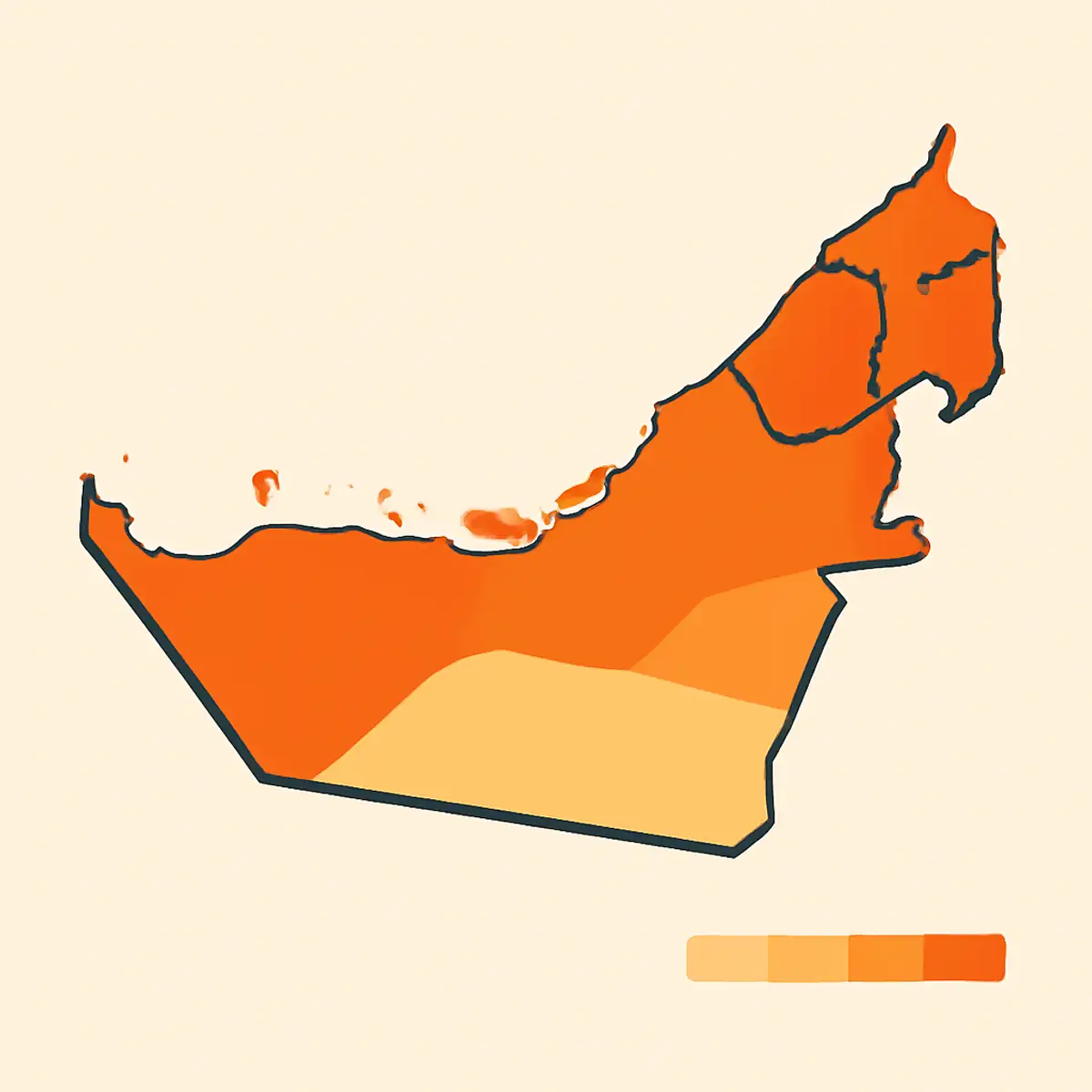
- Tier-1 Dubai (DIFC, Downtown, Marina): 15-25 percent COD (urban, digital-native)
- Northern emirates (Ras Al Khaimah, Fujairah, UAQ): 50-65 percent COD (rural, older population, lower digital adoption)
- Sharjah and Ajman: 35-45 percent COD (mixed demographics)
The COD share matters for SKU-level economics. A fashion seller with 40 percent COD share running 20 percent RTO carries an 8-percent-of-revenue overhead just from COD failures. The same seller pushing customers toward Tabby or Tamara might cut that to 3-4 percent.
The RTO problem and where it actually comes from
Return-to-origin is the single biggest operational cost on COD. A 20 percent RTO rate means one in five orders never gets delivered, but the seller still pays for outbound shipping, packaging, the picker's labor, the courier's time, and often inbound shipping for the return. Some sellers reuse the inventory; some discard it.
The five most common RTO causes, ranked by frequency from UAE 3PL operational data:
| RTO cause | Approximate share | Operational fix |
|---|---|---|
| Customer unreachable / phone unanswered | 30% | Pre-dispatch verification call, valid alternate number |
| Wrong / incomplete address | 22% | Address validation against makani code or pinned location |
| Customer changed mind / refused at door | 18% | Same-day shipping, AOV-aware delivery prioritization |
| Customer not home, no re-attempt success | 14% | Multi-day re-attempt scheduling, pickup-point alternative |
| Wrong product / damage at delivery | 10% | Tighter QC at outbound, photo-confirm condition before dispatch |
| Other (fraud, blacklist, etc.) | 6% | Customer scoring, blacklist enforcement |
The pattern across the top five: RTO is rarely about the courier or the 3PL. It is about the order itself being weak (unverified, unconfirmed, mistyped) before it ever leaves the warehouse. The fixes that work all happen in the first 24 hours after the order arrives in the system.

How COD reconciliation actually works
Reconciliation is the process of matching cash collected at the doorstep with orders fulfilled in the system, then settling the cash from the courier (or 3PL) to the seller's bank account.
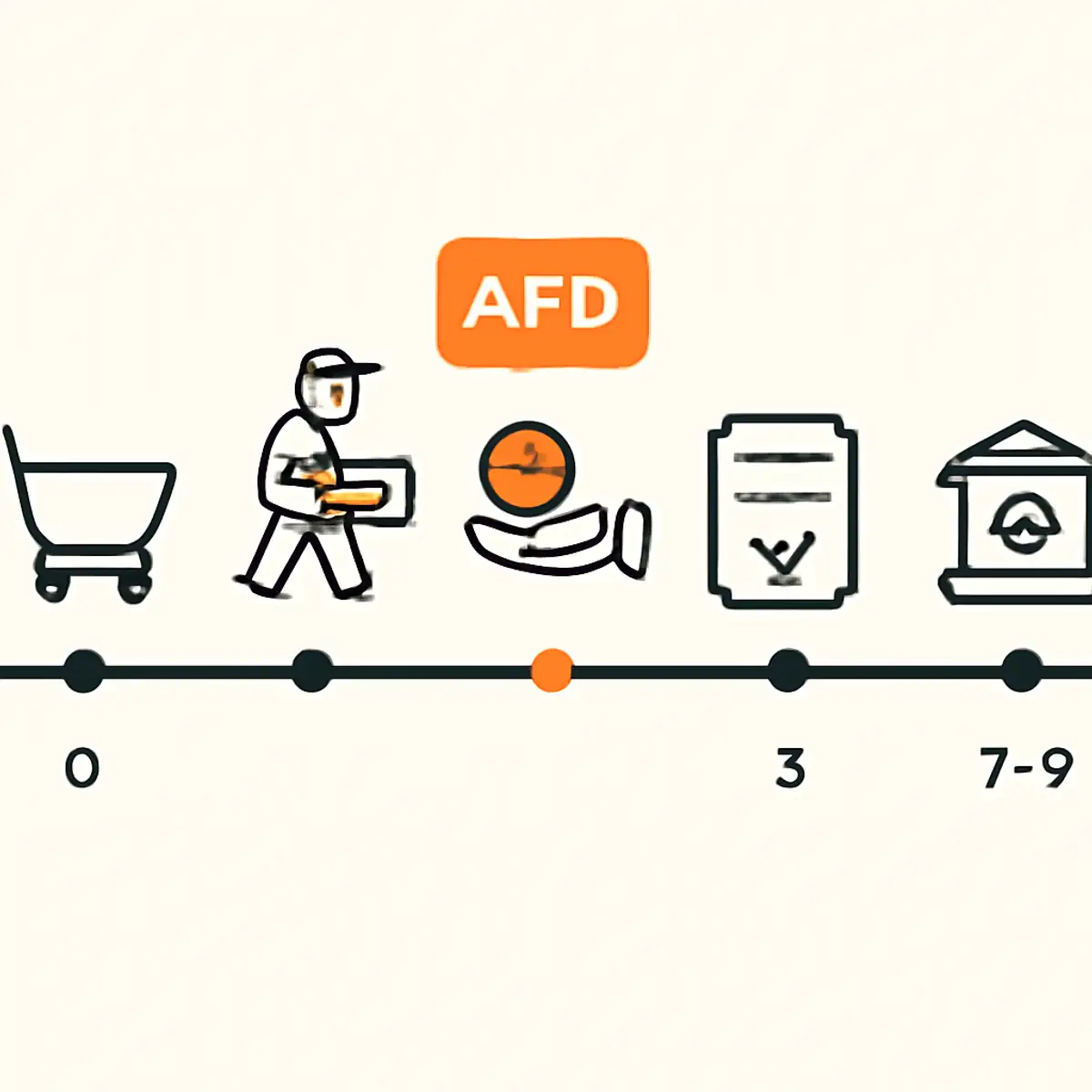
The clean version of the timeline:
Day 0: Customer orders. SKU reserved in inventory.
Day 1: Order picked, packed, dispatched. AED 100 expected at delivery.
Day 1-2: Courier delivers. Customer pays AED 100 cash.
Day 2: Courier reconciles delivery in courier system.
       3PL marks order delivered + cash received.
Day 3: 3PL daily report shows AED 100 collected on this order.
Day 7: Weekly settlement. AED 100 less COD fee transferred to seller bank.
Day 7-9: SWIFT/ACH cycle moves AED 100 to seller's operating account.

Total cash-flow lag: 7-9 days for the seller.
The clean version assumes nothing goes wrong. Real reconciliation has three failure modes:
1. Discrepancies. Customer pays AED 95 instead of AED 100 (claimed they did not have exact change), courier records AED 100, the 3PL settles AED 95. The AED 5 gap shows up on the discrepancy report. If the 3PL publishes daily, you catch this in 24 hours. If monthly, you catch it after the cash is gone. SamVertex publishes daily reports.
2. Refused / failed orders. Customer refuses delivery. Cash is not collected. The order is marked failed. The 3PL initiates RTO logistics (return to origin, sometimes with a re-stocking fee). The seller pays for outbound delivery anyway. Reconciliation here is about visibility: knowing how many failed orders happened and why.
3. Partial reconciliation. Some orders settle, some are pending courier verification, some are RTO-in-progress. Without a daily report and clear status visibility, sellers operate on partial information for 5 to 10 days.
The settlement frequency matters most for cash flow. A seller running 1,000 COD orders per month at AED 100 average value has AED 100,000 of receivables in motion. A weekly settlement cycle means up to AED 25,000 sits in the courier's account at any moment. A daily settlement cycle for high-volume sellers (300+ orders per month) reduces this float dramatically.
The five operational fixes that move COD success from 70 to 85 percent
Each fix is independently valuable. Stacked, they compound.
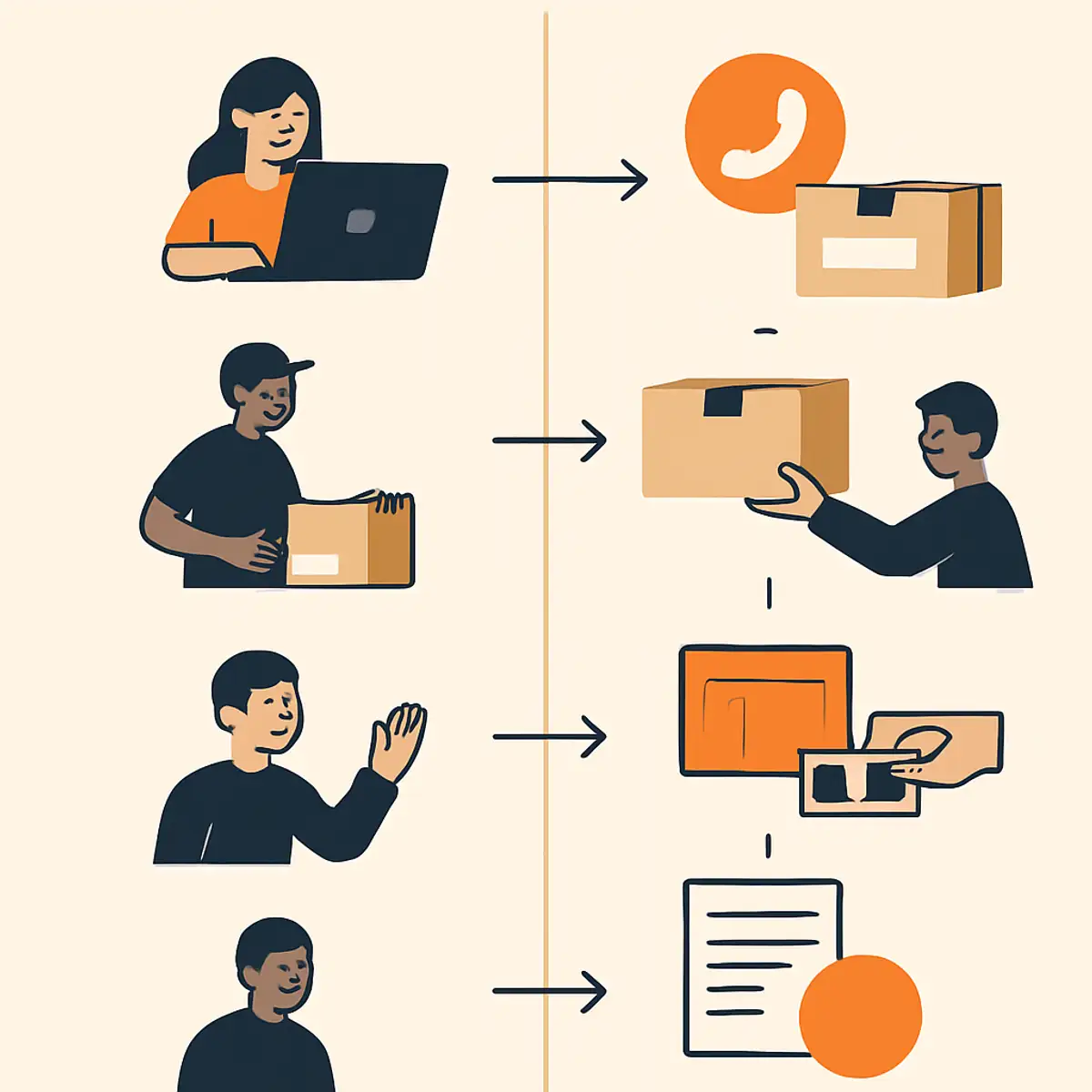
1. Pre-delivery verification calls (4-10 percent improvement). Before dispatch, an automated or live call confirms the customer wants the order. About 5 to 10 percent of customers either confirm with new information (preferred delivery time, alternate address), say no (cancel before dispatch, save the operational cost), or do not answer (defer dispatch until reachable). The orders that get dispatched after verification have a measurably higher success rate.
2. Same-day shipping (5-8 percent improvement). Same-day cutoffs (typically 14:00 in UAE 3PL operations) capture morning orders for evening delivery and afternoon orders for next-morning delivery. The longer between order placement and delivery attempt, the higher the refusal rate. Impulse buyers who paid AED 0 to commit reconsider with time. Same-day delivery removes the reconsider window.
3. Multi-attempt routing (4-6 percent improvement). Failed first attempts get re-attempted on day 2, day 3, sometimes day 4. Each successful re-attempt recovers an order that would otherwise be RTO. The cost of a re-attempt is typically AED 5 to AED 15 in courier labor; the recovered margin from a successful AED 200 order is much higher.
4. Pickup-point alternatives (2-4 percent improvement). Customers who are not home for delivery (working hours, weekend travel, multi-occupant household where nobody can answer) can be offered pickup at a Fodel-style point or 3PL hub. This catches orders that would otherwise RTO from absent-customer failure.
5. Customer scoring and blacklisting (1-3 percent improvement). Customers who refuse 3 or more orders in 90 days are flagged. Subsequent orders from the same number, address, or device get held for verification or routed to prepaid only. This prevents the long-tail of repeat-refuser fraud that erodes margin invisibly.
Stacked, these five fixes typically move COD success rate from 70 percent baseline to 80 to 85 percent. A 10 to 15 percentage point improvement on a seller running AED 1 million monthly COD revenue is AED 100,000 to AED 150,000 of recovered revenue per month, against operational costs of perhaps AED 5,000 to AED 15,000 to implement the fixes.
How SamVertex COD compares to UAE market norms
Three operational features that matter:
Free COD handling. Most UAE 3PLs charge 1.5 to 3 percent of the order value as a COD handling fee, on top of the per-delivery rate. SamVertex's published last-mile rate is AED 29 per order with no COD fee. On a typical AED 200 average order value, the SamVertex rate is significantly lower than the all-in rate of operators charging 2 percent COD handling.
Daily reports, weekly settlement. Daily reconciliation reports show every collection, discrepancy, and exception within 24 hours. Weekly settlement to the seller's bank on Mondays. For sellers running 300+ orders per month, daily settlement is available, reducing the cash-flow lag to 1-2 days instead of 7-9 days.
Re-delivery transparency. Second-attempt deliveries are charged at AED 15 per attempt (added to the original AED 29, not replacing). Sellers know exactly what re-attempts cost so they can decide whether to authorize them per case.
No setup fees, no monthly minimums, no contracts. Same-day onboarding, month-to-month billing, no exclusivity. Sellers can validate the workflow on a small batch before committing volume.
For sellers comparing operators, the right comparison is total all-in cost: per-delivery rate + COD handling fee + reconciliation discipline + retry economics + settlement speed. Most UAE merchants who run the math discover the headline rate is the smallest part of the comparison.
When COD is and is not the right choice for your operation
The decision frame:
Offer COD when:
- Target audience is north of Dubai (Sharjah, Ajman, RAK, Fujairah, UAQ) where COD is still 50-65 percent of preference
- Product category is fashion, beauty, food, or other impulse-purchase categories
- Average order value is AED 100-400 (higher AOVs face lower COD acceptance)
- Margin per order can absorb 8-15 percent operational overhead from COD-specific costs
Restrict or eliminate COD when:
- Target is Dubai/Abu Dhabi urban customers under 35 who default to digital payment
- Product is high-value (above AED 500) where the refusal risk is concentrated
- Margin per order is below 25 percent (COD overhead consumes too much)
- Operating without a 3PL that has real reconciliation discipline (the cost of bad reconciliation is too high to absorb)
Hybrid pattern (most common 2026 pattern):
- Offer COD as one option alongside Tabby, Tamara, Apple Pay, card payment
- Use BNPL incentives to push customers toward Tabby on first checkout
- Keep COD available for customers who refuse to pay digitally
- Restrict COD on orders above AED 500 or for new customer accounts
The merchants who do well in 2026 are not the COD-purists or the digital-purists. They are the merchants who route the right customer to the right payment method, capture both, and accept the operational complexity that comes with running a hybrid payment stack.
Frequently asked questions
What does COD mean in UAE ecommerce?
COD (cash on delivery) is the payment method where customers pay cash (or sometimes card via mobile POS) when their order is delivered, instead of paying online during checkout. In 2026 it represents approximately 30 percent of UAE ecommerce orders.
How much do UAE 3PLs charge for COD handling?
Most UAE 3PLs charge 1.5 to 3 percent of the order value as a COD handling fee, on top of the per-delivery rate (typically AED 18 to AED 35 per order across the market). SamVertex publishes last-mile at AED 29 per order with no COD fee.
What is the typical RTO rate on COD orders in the UAE?
Approximately 20 percent of COD orders result in return-to-origin (RTO) failure. Prepaid orders run 6 to 8 percent failure. The 12-14 percentage point gap is the operational cost of COD that most sellers underweight.
How long does it take to receive cash from COD orders?
Standard UAE reconciliation cycles are 7 to 14 days from delivery to bank deposit, depending on the 3PL or courier. SamVertex offers weekly settlement on Mondays for typical sellers and daily settlement for sellers running 300+ orders per month, reducing the cash-flow lag.
What are the main reasons COD orders fail in the UAE?
The five most common RTO causes: customer unreachable or phone unanswered (30 percent), wrong or incomplete address (22 percent), customer changed mind or refused at door (18 percent), customer not home with no re-attempt success (14 percent), and wrong product or damage at delivery (10 percent). Most of these have operational fixes that happen before the order leaves the warehouse.
Should I offer COD on my UAE Shopify store?
Yes if your audience is mixed-demographic, your product is impulse-purchase, your AOV is AED 100 to AED 400, and you have a 3PL with real reconciliation discipline. No if your audience is urban Dubai/Abu Dhabi under 35, your product is high-value, or your margins are below 25 percent. Most 2026 sellers run a hybrid: COD as one option among Tabby, Tamara, Apple Pay, card payment.
How do BNPL services like Tabby and Tamara compare to COD?
Tabby and Tamara are buy-now-pay-later services that let customers split payment into 4 installments, with the merchant getting paid upfront (minus 3 to 5 percent merchant fee). They convert the COD audience to a digitally-paid audience without requiring full upfront payment from the customer. UAE BNPL is growing 32 percent annually and is often the right alternative to COD for customers who want flexibility but not refusal-risk.
What is the SamVertex weekly settlement schedule?
Weekly settlement to the seller's bank account on Mondays for orders delivered the prior week. Daily reports throughout the week show every collection, discrepancy, and exception. Sellers running 300+ orders per month qualify for daily settlement, reducing cash-flow lag from 7-9 days to 1-2 days.
How do I reduce COD failures on my UAE orders?
Stack five operational fixes: pre-dispatch verification calls (4-10 percent improvement), same-day shipping cutoff (5-8 percent), multi-attempt re-routing (4-6 percent), pickup-point alternatives (2-4 percent), and customer scoring with blacklisting for repeat refusers (1-3 percent). Combined, these typically move COD success rate from 70 percent baseline to 80-85 percent.
See your real numbers
COD operational economics are nuanced and seller-specific. The COD logistics service that runs all of this publishes last-mile delivery at AED 29 per order with free COD handling, daily reports, and weekly (or daily) settlement. The published rate plus the operational discipline is the configuration that lets UAE merchants run COD without watching margin disappear.
Send your monthly COD volume, average order value, and target emirate mix to /contact/ and we will share a 90-day cost projection at SamVertex's published rates, including the projected cash flow timeline and the operational uplift from stacking the five fixes. No quote form, no minimum-volume gating, no follow-up sales calls.
For sellers also running marketplace orders, our Amazon FBA prep guide and Noon NFC prep guide cover the parallel marketplace economics. For sellers managing inbound from China, our sea freight and air freight guides cover the upstream side.
References
- SamVertex direct-sales fulfillment service page for the AED 29 per order rate
- SamVertex last-mile delivery service page for delivery operational details
- SamVertex 3PL pricing guide for Dubai 2026 for full UAE 3PL rate context
- Shorages, "The State of Cash on Delivery in the UAE" (30,000-order analysis), https://www.shorages.com/blog/the-state-of-cash-on-delivery-in-the-uae
- Mordor Intelligence, "UAE Ecommerce Market Industry Report 2026," https://www.mordorintelligence.com/industry-reports/united-arab-emirates-ecommerce-market
- Checkout.com, COD volume trend data referenced via industry analyses
- EasySell, "Cash on Delivery Is Dying Faster Than You Think: The MENA Merchant's Guide 2026," https://easysellapp.com/blogs/wiki/cod-dying-mena-merchant-payment-shift-2026
- Swftbox, "Cash on Delivery: Still Useful or Outdated 2026," https://www.swftbox.com/swftblogger/cash-on-delivery-ecommerce
- DocShipper, "COD Cash on Delivery: Definition & Guide for 2026," https://docshipper.com/glossary/cod-cash-on-delivery-definition-logistics/
- ClickPost, "10 Best COD Courier Service Companies (UAE/Saudi 2026)," https://www.clickpost.ai/blog/top-10-best-cod-cash-on-delivery-courier-service-companies-in-saudi-arabia
Need help putting this into practice?
We run a real warehouse in Dubai and answer every message. Free consultation, no pressure, no commitment.
We reply within 4 hours during business hours.