Table of contents14 sections
- Free Zone vs Mainland Warehousing in the UAE: Customs, VAT, and the Decision Frame for E-commerce Sellers in 2026
- Answer summary
- What is actually classified as a Designated Zone
- How customs duty actually works in each setup
- The cost-per-CBM math across setups
- When mainland is the right call
- When a Designated Zone makes sense
- The hybrid pattern: Designated Zone storage + mainland fulfillment
- How VAT actually applies in each scenario
- Setup timeline and operational considerations
- How SamVertex handles the structural decision
- Frequently asked questions
- See your real numbers
- References
Free Zone vs Mainland Warehousing in the UAE: Customs, VAT, and the Decision Frame for E-commerce Sellers in 2026
There are two big myths about UAE free zones. The first is that all free zones suspend customs duty and VAT on incoming goods. They don't. Only Designated Zones (a specific subset listed in UAE Cabinet Decisions) get that benefit. The second is that mainland warehousing always costs more in customs and tax than free zone warehousing. Also wrong. The math depends entirely on where the goods are headed: domestic UAE consumers, GCC re-export, international re-export, or some mix.
Understanding the distinction is worth real money. A seller storing AED 5 million of inventory in a regular free zone (not Designated) and assuming duty deferral would face a surprise audit and a backdated 5 percent duty plus 5 percent VAT bill. A seller storing the same inventory in a Designated Zone, then re-exporting to Saudi Arabia, would legitimately avoid both. The structural setup decides the tax outcome.
This is the operator-side guide for 2026: which zones actually qualify, what duty and VAT treatment applies in each scenario, the real cost-per-CBM comparison, and a decision frame for picking the right setup based on your target market mix.
Answer summary
UAE warehousing in 2026 splits across three structural options with different customs and VAT treatment:
Mainland warehousing (Al Quoz, Ras Al Khor, Dubai Industrial City, Dubai Investment Park, etc.): full 5 percent customs duty and 5 percent VAT applied at import. Suitable for goods sold within the UAE domestic market. Standard mainland trade license required. Direct access to UAE consumers, businesses, and government tenders.
Designated Zone warehousing (JAFZA, Dubai Airport Free Zone, Dubai South, Hamriyah Free Zone, certain others on the FTA's Cabinet Decision list): duty and VAT suspended on goods entering the zone. Goods can be stored, assembled, or re-exported without triggering tax. Duty and VAT become payable only when goods cross into the UAE mainland for local consumption. This is the structural advantage most ecommerce articles overstate by attributing it to all free zones.
Regular Free Zone warehousing (most of the 45+ UAE free zones not on the Designated Zone list): VAT generally treated like mainland for goods purposes. Customs duty suspension may apply during storage but VAT-side benefits are limited. Many free zones the FTA does not classify as Designated Zones offer business-setup advantages (100% foreign ownership, simpler licensing, sector clusters) without the full duty/VAT relief.
For a UAE ecommerce seller selling 100 percent to UAE customers, mainland warehousing is usually the cleanest setup. For a seller doing meaningful GCC re-export or international re-export, Designated Zones offer real cash flow advantage. For a seller running a hybrid (60 percent UAE domestic, 40 percent GCC re-export, for example), the math gets specific and the right answer depends on your specific volumes.
SamVertex operates from Ras Al Khor (mainland) at AED 85 per CBM dry storage and AED 120 climate-controlled. For sellers needing Designated Zone setup, separate consultative arrangements exist; the decision is structural, not just operational.
What is actually classified as a Designated Zone
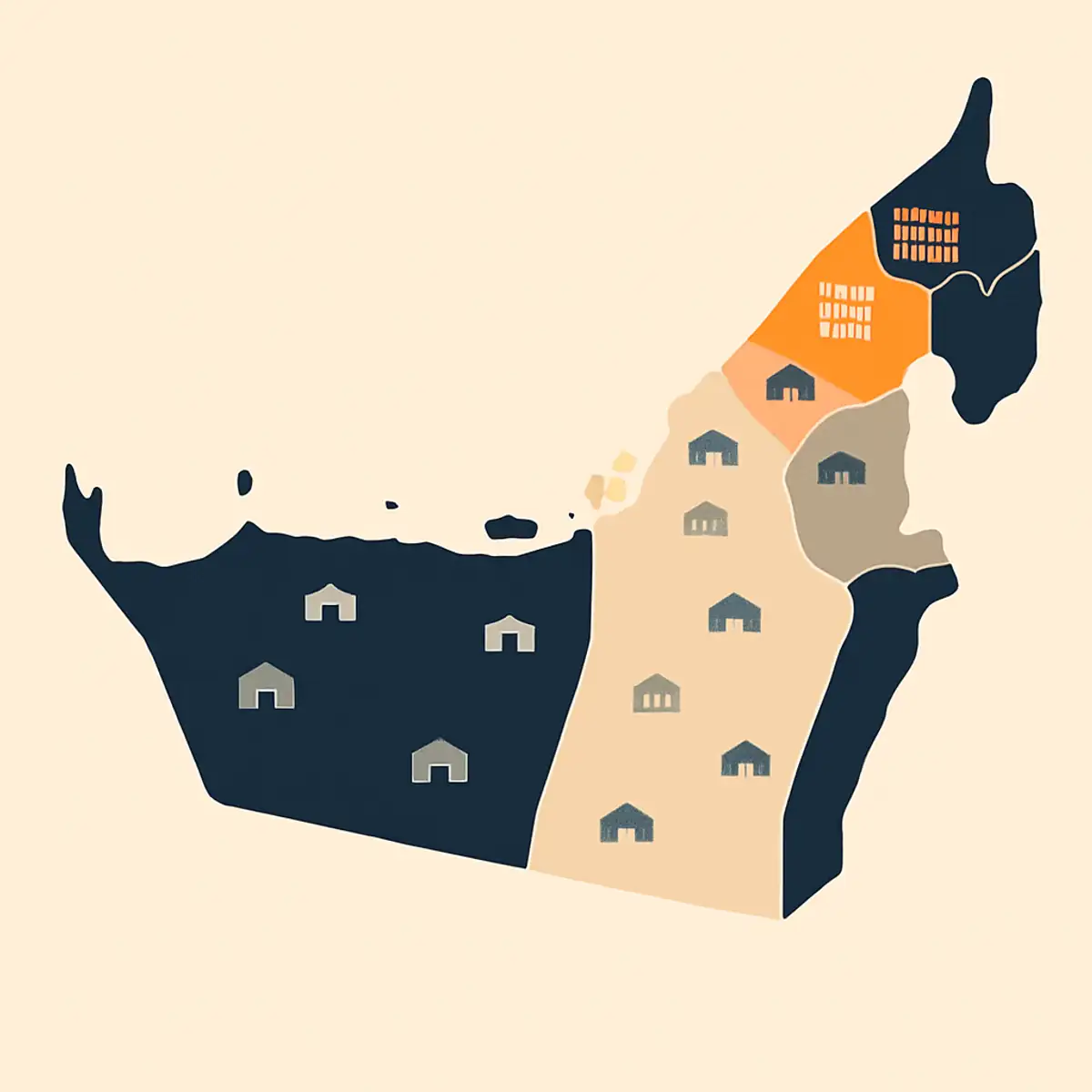
This is the distinction that most UAE warehousing articles get wrong. Out of 45+ UAE free zones, only a smaller subset is classified as Designated Zones for VAT purposes under Article 51 of the UAE VAT Executive Regulations.
The qualifying criteria for Designated Zone status:
- The zone must be a specific fenced geographic area
- Movement of goods, people, and vehicles in and out is monitored and controlled
- Strict customs procedures apply at the boundary
- Internal procedures regulate the storage and movement of goods
- The operator must comply with FTA Cabinet Decision listing requirements
Zones that meet these criteria and appear on the official Designated Zone list (representative, not exhaustive):
- Jebel Ali Free Zone (JAFZA)
- Dubai Airport Free Zone (DAFZA)
- Dubai Cars and Automotive Zone (DUCAMZ)
- Dubai Textile City
- Free Zone Area in Al Quoz
- Free Zone Area in Al Qusais
- Hamriyah Free Zone (Sharjah)
- Sharjah Airport International Free Zone
- Khalifa Industrial Zone Abu Dhabi (KIZAD)
- Abu Dhabi Airport Free Zone
- Dubai South (Dubai Aviation City)
- Khalifa Port Free Trade Zone
Free zones NOT on the Designated Zone list (representative examples):
- Most "freelancer" or virtual office free zones
- Many newer specialty zones focused on services rather than goods
- Several smaller sector-specific zones
Always verify against the current FTA Cabinet Decision before structuring around Designated Zone benefits. The list updates periodically and zones can be added or removed based on compliance reviews.
The distinction matters for VAT specifically. A "regular" free zone provides:
- Business setup advantages (100 percent foreign ownership, simplified licensing)
- Customs duty suspension while goods remain in zone (in many cases)
- Sector-cluster benefits (proximity to similar businesses, infrastructure)
But VAT treatment for goods follows mainland rules. Goods sold from a regular free zone to UAE mainland customers are VAT-applicable at 5 percent. Goods sold from a Designated Zone to UAE mainland customers also become VAT-applicable when they cross the boundary, but the VAT-suspended storage period is meaningfully different from a working-capital perspective.
How customs duty actually works in each setup
Customs duty in the UAE follows a layered logic. The 5 percent standard rate applies on CIF value at the point goods enter UAE customs territory for domestic consumption. What changes between mainland and free zone is the timing and conditions of when that "for domestic consumption" trigger fires.
Mainland warehousing. Goods arrive at Jebel Ali (or other UAE port). Customs declaration filed. 5 percent duty paid on CIF value. 5 percent VAT calculated on the customs-cleared value (CIF + duty). Goods cleared for domestic use. Stored in mainland warehouse. Sold to customers. Standard, clean, predictable.
The timing matters: full duty + VAT due upfront at import, regardless of when the goods actually sell. A seller importing AED 1 million of inventory pays AED 50,000 duty + AED 52,500 VAT upfront, before a single SKU sells. The cash flow impact is real, especially for slow-moving categories.
Designated Zone warehousing. Goods arrive at JAFZA (or other Designated Zone). Customs declaration filed as "Free Zone import." Duty deferred. VAT deferred. Goods stored in zone, assembled, repackaged, or held for export.
Three subsequent paths trigger different tax outcomes:
- Re-export to international destinations: No UAE duty or VAT applies. Goods leave the country untaxed. Use case: a brand sourcing from China, holding inventory in JAFZA, fulfilling orders to Saudi Arabia, Kuwait, and Egypt customers.
- Transfer to UAE mainland for domestic consumption: Duty and VAT become payable at the time of transfer. The seller files a "Free Zone to Local" import declaration and pays the 5 percent duty plus 5 percent VAT on the released portion. Use case: a seller who imports bulk to JAFZA, then releases monthly batches to mainland fulfillment as orders trigger.
- GCC re-export: Goods exported to other GCC member states. Under the GCC Common Customs Law and the Makasa System, duty already paid in the originating member state is credited or reconciled, preventing double taxation.
The cash flow advantage on Designated Zone setup is real for high-volume operations. A seller importing AED 5 million of inventory and selling 60 percent to UAE customers and 40 percent to GCC customers gradually over 6 months pays mainland-rate duty + VAT only on the UAE 60 percent, and only at the time of mainland transfer. The 40 percent never enters UAE mainland and never triggers UAE duty. Working capital stays intact.
Regular Free Zone warehousing. The picture gets nuanced. For VAT purposes, most regular free zones are treated like mainland: VAT applies on imports at 5 percent. Customs duty may be suspended during storage in certain free zones (depends on zone-specific arrangements with UAE customs), but the VAT side typically follows mainland rules. The benefits are mostly on the corporate-tax side (0 percent on qualifying free zone activities for income up to AED 375,000 threshold) and on the business-setup side, not on import-time duty/VAT.
The cost-per-CBM math across setups
Real 2026 cost numbers, for inventory storage specifically:
| Setup | Storage cost per CBM | Operational notes |
|---|---|---|
| Mainland 3PL (SamVertex) | AED 85 dry / AED 120 climate | All-emirates last-mile, customs handled, integrated fulfillment |
| Mainland direct lease (Al Quoz Grade-B) | ~AED 12-18 per CBM (vertical stacking) | Operations-management overhead borne by seller |
| Mainland mover storage | AED 25-40 per CBM | Storage only, no operational services, 24-48hr access cycle |
| Designated Zone 3PL (JAFZA, Dubai South) | AED 90-150 per CBM | Higher zone rents, duty/VAT-suspension benefit, customs-controlled facility |
| Designated Zone direct lease | AED 25-50 per CBM (vertical stacking) | Higher zone rents than mainland, but full duty deferral |
| Regular Free Zone storage | AED 70-130 per CBM | Premium for zone benefits, may not provide duty/VAT suspension |
Two patterns stand out in the table.
First, Designated Zone storage costs more per CBM than mainland 3PL storage on a like-for-like basis. The premium reflects higher zone rents (typically 30-60 percent above mainland industrial rents) plus the customs-controlled facility overhead. For sellers without meaningful re-export volume, this is a structural cost increase that the duty/VAT suspension cannot recover.
Second, the duty/VAT cash flow benefit from Designated Zones only materializes when:
- The merchant is importing inventory regularly (not just once)
- A meaningful portion of the inventory does not eventually enter UAE mainland (re-export rate of 30 percent or more typically tips the math)
- The merchant has the operational scale to manage the dual-tracking required (Designated Zone records, customs declarations, FTA reporting)
A worked comparison for two seller profiles:
Scenario A: 100% UAE-domestic seller, AED 1.2M annual inventory turnover
─────────────────────────────────────────
Mainland 3PL: AED {PRICING.storage.dry.amount} per CBM × 8 CBM × 12 months = AED {PRICING.storage.dry.amount * 8 * 12}
Plus full duty + VAT paid upfront on each import: ~AED 120,000 over the year
TOTAL annual cost: ~AED 128,160

Designated Zone 3PL: AED 130 per CBM × 8 CBM × 12 months = AED 12,480
Plus duty + VAT paid as goods transfer to mainland (timing benefit only): ~AED 120,000
TOTAL annual cost: ~AED 132,480

Mainland advantage: AED 4,320 (3 percent), plus operational simplicity
Scenario B: 50/50 UAE-domestic and GCC re-export seller, AED 4M annual turnover
─────────────────────────────────────────
Mainland 3PL: AED {PRICING.storage.dry.amount} × 30 CBM × 12 months = AED {PRICING.storage.dry.amount * 30 * 12}
Plus duty + VAT on full AED 4M inventory: AED 400,000
TOTAL annual cost: ~AED 430,600
Designated Zone 3PL: AED 130 × 30 CBM × 12 months = AED 46,800
Plus duty + VAT on UAE 50%: AED 200,000
GCC 50% re-exported with no UAE duty/VAT: AED 0
TOTAL annual cost: ~AED 246,800
Designated Zone advantage: AED 183,800 (43 percent)The Scenario B case is where Designated Zones earn their premium. The cash flow advantage compounds because the GCC-bound 40-50 percent never triggers UAE duty/VAT at all.
When mainland is the right call
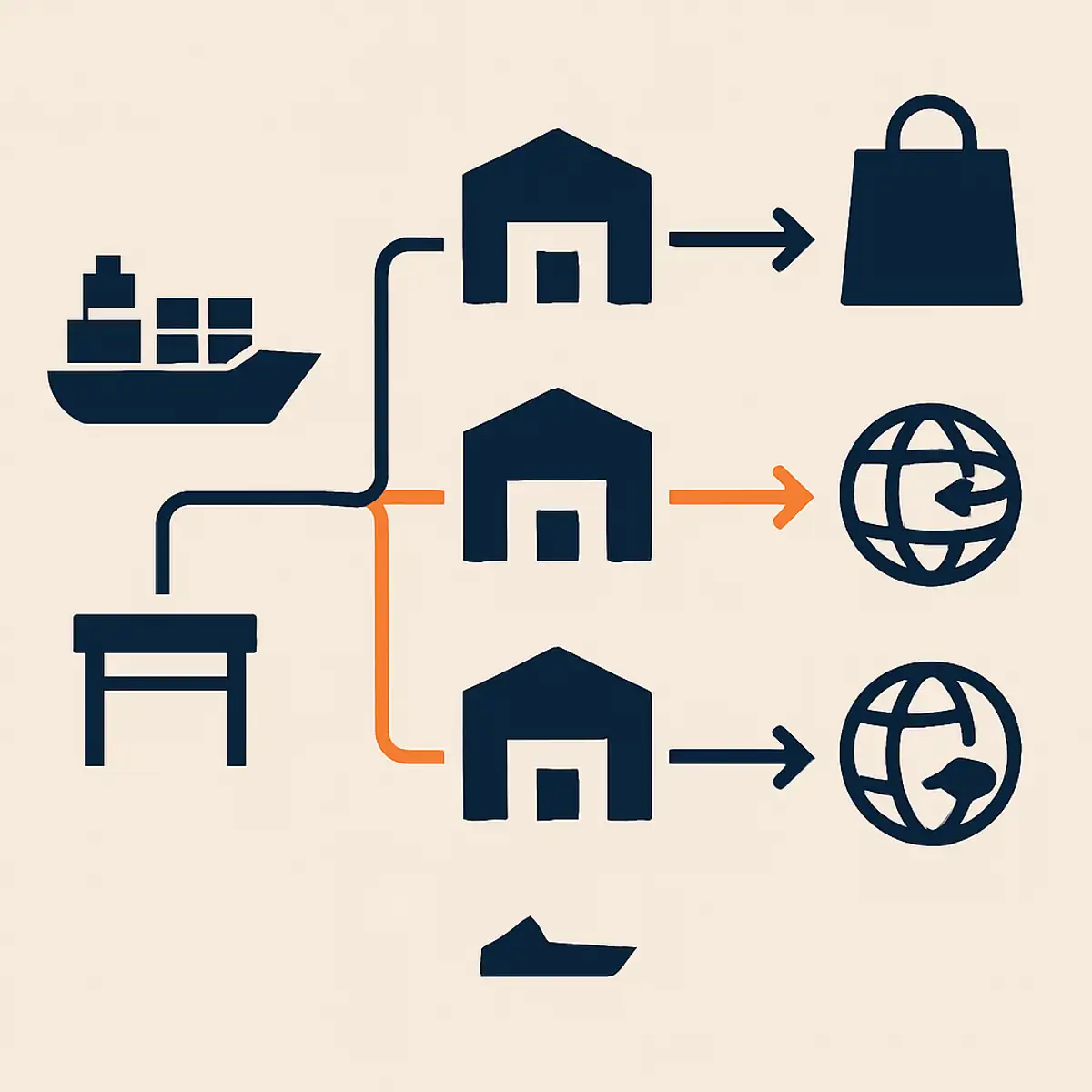
A practical rule of thumb. Mainland warehousing fits when:
- 100 percent or near-100 percent of sales are to UAE customers
- Inventory turns relatively fast (under 90 days from import to sale)
- Operational simplicity matters (single license, single warehouse, single customs flow)
- The seller wants direct access to UAE government procurement or regulated industry sales
- The cash flow impact of upfront duty + VAT is manageable (high-margin products absorb it; low-margin commodity items struggle)
Mainland advantages:
- Fastest setup (mainland trade license + warehouse lease typically 2-4 weeks)
- Simplest customs flow (one declaration at import, done)
- Direct access to UAE consumers, businesses, and government tenders without local agent requirements
- Lowest storage cost per CBM (cheapest absolute storage)
- Cleanest VAT recovery for VAT-registered importers
Mainland disadvantages:
- Full upfront cash outlay on duty + VAT at import time
- No re-export advantages (goods are already UAE-cleared)
- Less competitive for sellers serving the broader GCC market
Most UAE ecommerce sellers, especially those with under AED 5 million annual revenue and primarily UAE-customer focus, find mainland warehousing the right answer. The structural complexity of Designated Zone setup adds operational overhead that small-to-medium sellers rarely recover.
When a Designated Zone makes sense
Designated Zone warehousing fits when:
- Meaningful portion of sales go to GCC or international re-export markets (30 percent or more)
- Inventory holds for longer periods (90+ days from import to sale)
- Working capital constraint is real (deferred duty/VAT improves cash position)
- Operational scale supports the dual-tracking complexity
- Free Zone licensing benefits (100 percent foreign ownership, sector cluster, etc.) align with the business model
Designated Zone advantages:
- Duty and VAT deferred until goods cross into mainland
- Re-exports leave UAE duty-free and VAT-free
- 100 percent foreign ownership without local agent
- Sector-specific cluster benefits (logistics adjacency, regulatory expertise)
- Long-term corporate tax incentives (0 percent on qualifying activities up to AED 375,000)
Designated Zone disadvantages:
- Higher per-CBM storage cost (typically 30-60 percent above mainland)
- More complex setup process (4-8 weeks vs 2-4 for mainland)
- Customs-controlled facility limits operational flexibility
- Direct sales to UAE consumers require additional Free Zone-to-Local declarations
- Some Designated Zones require minimum facility size or commitment levels
A seller hitting 40 percent GCC re-export with AED 5M+ annual inventory turnover will usually find Designated Zone math wins. Below those thresholds, the math gets less convincing.
The hybrid pattern: Designated Zone storage + mainland fulfillment
A pattern increasingly common in 2026: storing bulk inventory in a Designated Zone (taking the duty/VAT deferral on the wholesale import quantity) while operating fulfillment from a smaller mainland facility (handling the daily pick/pack/ship for UAE customers).
The operational logic:
- Bulk import lands at JAFZA or Dubai South. AED 2M of inventory clears as Free Zone import. No duty, no VAT.
- Inventory sits in zone storage. Cost: ~AED 130 per CBM per month.
- Monthly batches transfer to mainland warehouse based on velocity. AED 200K transfers in March, AED 180K in April, etc.
- Each transfer triggers Free Zone-to-Local declaration. Duty + VAT calculated on the released portion only.
- UAE customer fulfillment runs from the mainland warehouse with same-day or next-day delivery as needed.
- GCC re-export orders ship directly from the Designated Zone facility, never entering UAE mainland.
The advantage compounds:
- Duty + VAT cash flow smoothed across the year
- GCC re-export volume never triggers UAE tax
- Mainland fulfillment retains operational simplicity and last-mile speed
- Bulk storage cost optimized in the cheaper zone
The complexity is real. The seller maintains two warehouse operations, two licensing structures, and two customs profiles. For sellers under 5,000 orders per month or AED 5M annual turnover, the operational overhead typically erodes the cash flow benefit. Above those thresholds, the hybrid pattern often becomes the optimal setup.

How VAT actually applies in each scenario
Quick reference for the key transactions:
| Transaction | Mainland | Designated Zone | Notes |
|---|---|---|---|
| Goods imported to warehouse | 5% VAT applied | VAT suspended | Designated Zone benefit |
| Goods sold to UAE customer (domestic) | 5% VAT (already paid at import) | 5% VAT applied at transfer | DZ converts to mainland transfer |
| Goods exported to GCC | Reverse charge mechanism for buyer | Same RCM treatment | GCC Makasa System reconciliation |
| Goods exported internationally (non-GCC) | Zero-rated export | Zero-rated export | Both: VAT-free |
| Warehouse leasing services (location) | 5% VAT | 5% VAT | Services taxable regardless of location |
| Inter-company goods transfers within DZ | VAT-suspended | VAT-suspended | If both parties in same DZ |
The warehouse leasing fee specifically is worth flagging. Many sellers assume Designated Zone storage is fully VAT-free; it's not. The warehouse rent, handling, and logistics services are taxable services at 5 percent VAT regardless of where the warehouse is located. Only the goods themselves enjoy the duty/VAT suspension treatment in the zone.
Setup timeline and operational considerations
A practical sequencing for the two paths.
Mainland setup timeline:
- Trade license (mainland DED): 2-4 weeks
- Warehouse lease + Ejari registration: 1-2 weeks (often parallel)
- Customs registration / Importer Code: 1 week
- 3PL agreement (if outsourcing fulfillment): 1-3 days for SamVertex onboarding
- Total ready-to-receive-inventory: 4-6 weeks
Designated Zone setup timeline:
- Free zone license: 2-4 weeks (varies by zone; JAFZA typically faster, smaller zones slower)
- Warehouse lease in zone: 2-4 weeks (limited inventory of available units; some zones require minimum size commitments)
- Customs registration with FTA + zone authority: 2-3 weeks
- Establishment cards, e-signatures, employee visas (if hiring locally): 2-4 weeks
- Fulfillment partner integration: 1-2 weeks
- Total ready-to-receive-inventory: 8-12 weeks
The 8-12 week setup timeline for Designated Zones is the practical barrier for many sellers. A seller wanting to move quickly typically goes mainland first, then transitions to a Designated Zone setup once volume justifies the operational complexity.
How SamVertex handles the structural decision
The operational specifics:
Default: mainland 3PL from Ras Al Khor. AED 85 per CBM dry, AED 120 climate. Same-day onboarding. No minimums. Full UAE customs handling, MOFAIC attestation, last-mile delivery, COD handling. The right answer for 70 percent of UAE ecommerce sellers in 2026.
For sellers with meaningful re-export volume: SamVertex partners with Designated Zone operators (JAFZA, Dubai South, others) to support hybrid storage setups. The bulk inventory lives in the Designated Zone; daily fulfillment runs from Ras Al Khor; releases happen in batches based on velocity. Customs documentation handled across both facilities. Available on consultation, not a published rate card item, because the right structure depends on specific re-export volumes and SKU economics.
For sellers in the decision frame: We can run the math both ways on your actual numbers. Send your monthly inventory turnover, UAE-vs-GCC sales mix, and average order value to /contact/. Within 24 hours we share a 12-month cost projection across mainland-only, Designated Zone-only, and hybrid setups, with the specific operational implications of each.
For the full UAE customs and import duty context, our customs clearance guide covers the documentation and 12-digit HS code transition specifics. Our 3PL pricing guide covers the broader rate context.

Frequently asked questions
What is the difference between a Free Zone and a Designated Zone in the UAE?
A Free Zone is a special economic area offering business-setup advantages like 100 percent foreign ownership and simplified licensing. A Designated Zone is a specific subset of Free Zones (listed in UAE Cabinet Decisions under Article 51 of the VAT Executive Regulations) where the FTA grants special VAT treatment on goods. Designated Zones must be fenced, monitored, and meet strict customs criteria. JAFZA, DAFZA, Dubai South, and KIZAD are Designated Zones; many smaller and newer free zones are not.
Do all UAE free zones offer customs duty and VAT exemption?
No. This is a common misconception. Only Designated Zones (a specific subset of free zones) provide goods-side VAT and customs duty deferral. Most regular free zones treat goods like mainland for VAT purposes. Customs duty suspension during storage may apply more broadly across free zones, but the VAT-suspension benefit is specific to Designated Zones.
Is mainland or free zone better for an ecommerce business in the UAE?
It depends on your sales mix. Mainland is better for sellers focused 100 percent on UAE customers (simpler setup, faster license, lower storage cost). A Designated Zone is better for sellers with meaningful re-export volume to GCC or international markets (30 percent or more re-export typically tips the math). Many established UAE ecommerce operators run a hybrid: bulk storage in a Designated Zone, daily fulfillment from mainland.
What is the JAFZA vs mainland warehouse cost difference?
Mainland 3PL storage runs AED 85 per CBM dry, AED 120 climate-controlled. Designated Zone 3PL storage (JAFZA, Dubai South) typically runs AED 90-150 per CBM, reflecting higher zone rents and customs-controlled facility overhead. Direct lease costs differ similarly: Al Quoz Grade-B mainland at AED 58 per sq ft annually, JAFZA at AED 65-95 per sq ft depending on facility type. The cost premium is real; whether it pays for itself depends on re-export volume.
Can I sell to UAE customers from a Designated Zone warehouse?
Yes, but it requires a Free Zone-to-Local declaration each time goods cross to mainland. Duty (5 percent) and VAT (5 percent) become payable at the time of mainland transfer. This works operationally but adds a customs filing step compared to selling directly from mainland inventory. Most Designated Zone operators handle these declarations automatically with their fulfillment partners.
What is the GCC Makasa System?
The GCC Common Customs Law's reconciliation mechanism that prevents double payment of customs duties when goods move between GCC member states. If duty was paid in the originating GCC country, the receiving GCC country credits or refunds it. This makes GCC-wide trade more efficient and is one reason free zones with re-export focus structure their operations to leverage GCC member-state arrangements.
What products manufactured in UAE mainland get GCC tariff preferences?
UAE-mainland-manufactured products with proper industrial licenses can enter other GCC countries duty-free under the GCC Common Customs Law, provided they meet the Rules of Origin requirements (typically 40 percent or more local value addition). This is a meaningful advantage for UAE-based manufacturing operations exporting to Saudi Arabia, Kuwait, Oman, and other GCC markets.
How long does Designated Zone setup take versus mainland?
Designated Zone setup typically takes 8-12 weeks (license, warehouse lease, customs registration, establishment cards). Mainland setup runs 4-6 weeks. Mainland is faster mostly because the licensing volume in DED is higher and processes are more streamlined. Designated Zone setups have more steps and lower operator throughput.
What is the corporate tax difference between Free Zone and mainland?
UAE corporate tax (effective June 2023) is 9 percent on profits above AED 375,000. Mainland businesses pay this. Free Zones (designated and regular) can qualify for 0 percent corporate tax on qualifying free zone income, subject to substance and compliance conditions. Income from sales to UAE mainland customers is generally taxable at the standard 9 percent regardless of zone. The 0 percent rate primarily applies to free zone-to-free zone transactions and qualifying re-exports.
What is a Free Zone-to-Local declaration?
The customs declaration filed when goods move from a UAE free zone (Designated or otherwise) to the UAE mainland for domestic consumption. At this point, customs duty (5 percent on CIF value) and VAT (5 percent on customs-cleared value) become payable. The filing is done through Mirsal 2 (Dubai customs) or the relevant emirate portal. Most Designated Zone operators handle this automatically with their fulfillment workflow.
See your real numbers
The right warehousing structure depends on specific economics: your monthly inventory turnover, UAE-vs-GCC-vs-international sales mix, average order value, and operational scale. SamVertex publishes mainland 3PL storage at AED 85 per CBM dry, AED 120 climate-controlled, with same-day onboarding and full UAE customs handling.
For sellers evaluating Designated Zone setups, send your specific numbers to /contact/ and we will share a 12-month cost projection across mainland-only, Designated Zone-only, and hybrid configurations. Honest comparison, no quote form, no minimum-volume gating.
For sellers managing UAE customs flow more broadly, our customs clearance guide covers the documentation set and 12-digit HS code transition. For sellers running parallel marketplace operations, our Amazon FBA prep guide and Noon NFC prep guide cover the marketplace-specific operations.
References
- SamVertex warehousing service page for the AED 85 per CBM dry and AED 120 per CBM climate rates
- SamVertex 3PL pricing guide for Dubai 2026 for full UAE 3PL rate context
- SamVertex customs clearance guide for the UAE customs documentation set
- UAE Federal Tax Authority, VAT Executive Regulations (Article 51 on Designated Zones)
- UAE Cabinet Decision listing Designated Zones (current version)
- AA Consultancy, "UAE Import Tax 2026 Complete Guide," https://www.aaconsultancy.ae/uae-import-tax/
- Virtuzone, "How to Import Products into the UAE Free Zone vs Mainland," https://virtuzone.com/blog/how-to-import-products-into-the-uae/
- ClearTax, "VAT on Free Zone Companies in the UAE," https://www.cleartax.com/ae/vat-on-free-zone-companies
- TaxReady, "Designated Zones vs Free Zones VAT Implications for SMEs in the UAE," https://taxready.ae/designated-zones-vs-free-zones-vat-uae/
- 7 Seas Matrix, "Free Zone vs Mainland Customs Duties What Importers Need to Know," https://www.7seasmatrix.com/free-zone-vs-mainland-customs-duties-what-importers-need-to-know/
- Flying Colour Tax, "VAT Rules for Free Zone Companies in UAE 2026," https://www.flyingcolourtax.com/blog/uae-free-zone-vat-rules-2026/
- Henry Club, "Best UAE Free Zone by Business Activity 2026 Guide," https://henryclub.ae/business-setup/best-free-zone-by-business-activity-2026/
- Arnifi, "The Complete Guide to UAE Free Zones 2026," https://arnifi.com/blog/the-complete-guide-to-uae-free-zones-and-the-best-ones-for-each-industry-2026/
- UAQFTZ, "Mainland vs Free Zone in UAE 2026 Which Is Better," https://uaqftz.gov.ae/blogs/mainland-vs-free-zone-in-the-uae-which-is-better-for-your-business-in-2026
Ready to stop reading and start shipping?
We run a real warehouse in Dubai and answer every message. Free consultation, no pressure, no commitment.
We reply within 4 hours during business hours.