Table of contents13 sections
- Dubai Warehouse vs Self-Storage: A Cost and Decision Guide for E-commerce Sellers in 2026
- Answer summary
- The 2026 Dubai storage cost landscape
- What Dubai's climate actually does to inventory
- Self-storage: when it is and is not the right call
- Mover/warehouse storage: the cheapest option (with caveats)
- 3PL fulfillment storage: when storage is part of operations
- How Dubai industrial zones affect the storage decision
- How to think about scale transitions
- How SamVertex storage compares
- Frequently asked questions
- See your real numbers
- References
Dubai Warehouse vs Self-Storage: A Cost and Decision Guide for E-commerce Sellers in 2026
Most Dubai e-commerce sellers reach for self-storage when their garage fills up. It is the most-marketed option, the easiest to book, and the one with the cleanest pricing page. SafeStorage at AED 99 a month, GetSpace from AED 150 per square meter, units available in two minutes. The problem is the math. By cubic meter, self-storage is the most expensive option for inventory in Dubai, often three to four times the price of warehouse storage from a mover or 3PL. The convenience comes at a real per-CBM premium that compounds fast as volume grows.
This article is the cost-and-decision guide. Self-storage versus warehouse storage versus 3PL fulfillment, with real 2026 Dubai numbers, the climate-control fact most sellers miss in the heat of summer, the operational difference that matters once orders start shipping daily, and a decision framework for picking the right option at the right scale. Most sellers eventually move through all three; the question is which one fits today.
Answer summary
Three storage options for Dubai e-commerce sellers in 2026, with very different unit economics:
- Self-storage (SafeStorage, GetSpace, Ruby Self Storage, eSelf Storage): AED 99 to AED 4,000 per month by unit size, with most ecommerce-relevant units (5-15 m²) running AED 300 to AED 1,500. Per CBM equivalent: roughly AED 60 to AED 150 per CBM per month for a typical packed unit.
- Warehouse / mover storage (SAMA Movers, professional movers with shared warehouses in Al Quoz, Ras Al Khor, DIP): AED 25 to AED 40 per CBM per month, paid per actual cubic meter occupied, no separate room, professional handling.
- 3PL fulfillment storage (SamVertex, Aramex, regional 3PLs): AED 85 per CBM per month dry, AED 120 per CBM climate-controlled, plus operational services (pick-pack, last-mile, returns). The "storage" line is part of a fulfillment service, not just storage.
The decision frame, simplified: self-storage for sellers under 200 orders per month with frequent direct access requirements; warehouse/mover storage for sellers between 200 and 2,000 orders per month who do their own picking and shipping; 3PL fulfillment for sellers above 1,000 orders per month who want operational scale, or any seller (any volume) who wants to outsource picking, packing, and last-mile delivery.
The climate-control fact: Dubai summer outdoor temperatures regularly exceed 45°C, and unventilated storage spaces hit 60°C+. At those temperatures, electronics suffer battery damage, leather cracks, cosmetics melt, and wood warps within weeks. Climate-controlled storage is non-negotiable for most ecommerce SKUs. Self-storage units that advertise climate control maintain 18-25°C; warehouse storage from movers typically runs ambient (not climate-controlled by default); 3PL storage offers both options with the climate premium clearly priced.
For sellers in transition between options, SamVertex onboards same-day with no minimums and no contracts at AED 85 per CBM dry storage and AED 120 per CBM climate-controlled, with operational services bundled.
The 2026 Dubai storage cost landscape
Real numbers, with sources where they matter. Industrial real estate context first: JLL Q2 2025 reported average Dubai warehouse rents at AED 46 per sq ft per year, up 19.9 percent year-over-year. Knight Frank H1 2025 placed Al Quoz Grade-A rents at AED 85 per sq ft (up 31 percent YoY), Al Quoz Grade-B at AED 58 per sq ft. Dubai Industrial City runs AED 20-35 per sq ft, 30-40 percent below central locations.
Those numbers are landlord-to-tenant warehouse leasing rates. They matter because they explain why self-storage and 3PL pricing in Dubai is what it is: the underlying real estate is expensive and getting more expensive. The three options below are different ways of accessing that real estate at different price points.
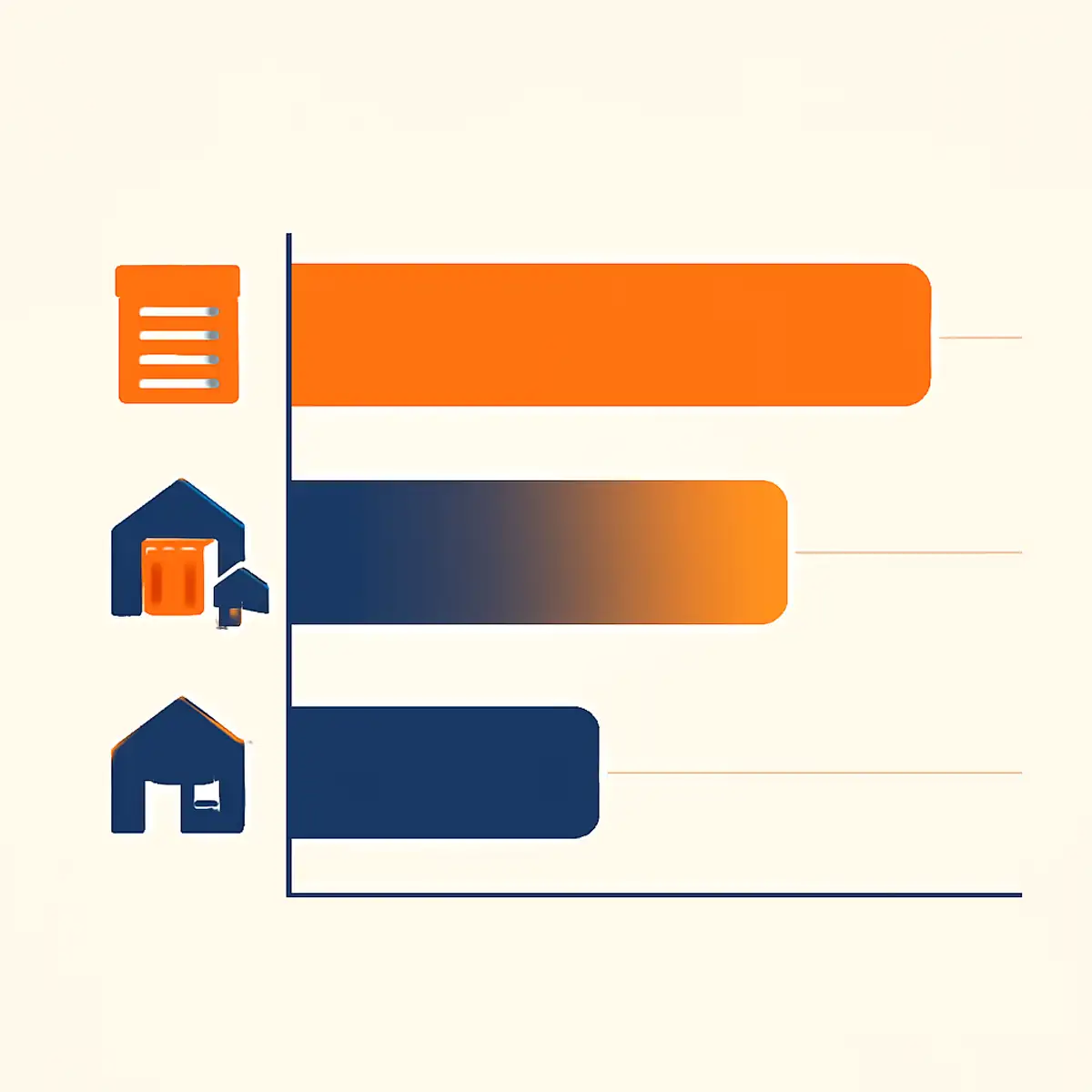
| Option | Headline rate | Effective per CBM | Best for |
|---|---|---|---|
| Self-storage (small unit, 5 m²) | AED 300-600/month | ~AED 100-150/CBM | Personal, very small business |
| Self-storage (medium unit, 15 m²) | AED 1,000-1,800/month | ~AED 60-110/CBM | Small ecommerce starting out |
| Mover/warehouse storage | AED 25-40/CBM | AED 25-40/CBM | Bulk storage, no daily access |
| 3PL dry storage (SamVertex) | AED 85/CBM | AED 85/CBM | Operational fulfillment |
| 3PL climate-controlled (SamVertex) | AED 120/CBM | AED 120/CBM | Sensitive SKUs |
| Direct industrial lease (Al Quoz Grade-B) | AED 58/sq ft/year | ~AED 12-18/CBM (vertical stacking) | High-volume operators |
The "effective per CBM" calculation for self-storage assumes a typical packing density of 70 percent of rated unit volume (most units are not stacked floor-to-ceiling efficiently because of access requirements). Warehouse/mover storage uses vertical stacking on industrial racking (6-8 meter ceilings) to push the per-CBM cost down dramatically.
The third row is the cost-of-convenience inversion: self-storage is more expensive per cubic meter than mover storage because it gives the customer 24/7 access, individual lock-and-key control, and a private room. The mover-storage operator stacks crates vertically and shares warehouse space across customers, achieving 3-4x the volume per square foot.
What Dubai's climate actually does to inventory
This is the section most sellers underweight and then regret six months in.
Dubai summer outdoor temperatures regularly exceed 45°C, with peak days hitting 50°C. In unventilated spaces, temperatures climb dramatically higher: garages routinely 55-60°C, sealed shipping containers 65°C+, non-cooled storage rooms 50-55°C. Humidity layers on top, regularly above 60 percent during summer months and spiking to 90+ percent in coastal areas.
What this does to common ecommerce inventory:
| SKU type | Damage at 45°C+ | Damage timeline |
|---|---|---|
| Electronics, phones, batteries | Battery swelling, capacity loss, circuit damage | Weeks to months |
| Cosmetics, skincare | Separation, melting, ingredient breakdown | Days to weeks |
| Pharmaceuticals, supplements | Active ingredient degradation | Weeks |
| Leather goods | Cracking, drying, color loss | Weeks |
| Wood furniture | Warping, joint failure | Weeks to months |
| Food products | Spoilage acceleration | Days |
| Apparel (cotton, synthetic) | Color fade, fabric weakening | Months |
| Books, paper goods | Yellowing, brittleness | Months |
| Plastic toys, household | Generally stable | Generally stable |
| Metal hardware | Generally stable | Generally stable |
For most ecommerce SKUs (electronics, beauty, fashion, food, supplements), climate-controlled storage is not an upgrade. It is a baseline requirement to avoid losing 5-15 percent of inventory to heat damage over a single summer.
The implications for the three options:
Self-storage facilities advertising climate control (SafeStorage, premium GetSpace units) maintain 18-25°C with active HVAC. The premium for climate-controlled units versus ambient self-storage runs about 15-25 percent. Most reputable self-storage providers in Dubai offer climate control on their main unit lines. Verify before booking.
Mover/warehouse storage is typically NOT climate-controlled by default. The high-ceiling industrial warehouses in Al Quoz, Ras Al Khor, and DIP are ambient (matching outdoor temperatures with airflow but no active cooling). Some movers offer climate-controlled options as a premium upgrade. For ecommerce inventory at scale, this is usually a constraint that pushes the math against mover storage.
3PL fulfillment offers both clearly priced. SamVertex publishes AED 85 per CBM dry (suitable for non-temperature-sensitive goods like apparel, hardware, books, metal goods) and AED 120 per CBM climate-controlled (for electronics, beauty, food, supplements, leather, wood). Sellers can split inventory between the two storage tiers based on SKU sensitivity, paying the climate premium only on the SKUs that need it.
For a typical UAE ecommerce seller running mixed inventory, the right approach is mostly dry storage for stable SKUs (60-70 percent of catalog by volume) with climate-controlled storage for the sensitive 30-40 percent. The combined per-CBM cost lands around AED 95-105, which is competitive with most options once climate damage risk is factored in.
Self-storage: when it is and is not the right call
Self-storage is the right tool for some specific Dubai ecommerce profiles and the wrong tool for others. The clean version of when each applies.
Use self-storage when:
- Monthly order volume is under 200, with stock that turns over slowly
- Direct, frequent access is operationally important (you grab inventory yourself, daily or weekly)
- You are transitioning between operational stages (just left your home, not yet at warehouse scale)
- Your SKU mix is small (under 50 SKUs) and easy to manage personally
- Your business is testing product-market fit and might wind down or pivot in 6-12 months
- You need flexibility on duration (truly month-to-month with easy termination)
- The unit's climate-control specifications match your SKU sensitivity
Avoid self-storage when:
- Volume is above 200-500 orders per month and rising (the per-CBM cost compounds badly at scale)
- You are picking, packing, or shipping inventory at high frequency from the unit (most self-storage facilities do not allow commercial packing operations on-site, and the access overhead destroys productivity)
- Your inventory volume exceeds 25 m² (you start paying premium pricing without the operational benefits of warehouse-grade space)
- Your SKUs are temperature-sensitive and the unit is not climate-controlled
- You need to receive deliveries from suppliers (most self-storage doesn't have proper loading docks, and the inbound process is awkward)
- Your goal is operational scale, not personal storage
Most ecommerce sellers who start with self-storage outgrow it within 6-12 months. The transition cost (moving inventory to a warehouse or 3PL) is real but typically pays for itself within 90 days through lower per-unit storage cost and the operational uplift of being able to actually run picking and packing professionally.
Mover/warehouse storage: the cheapest option (with caveats)
The cost advantage is real. AED 25-40 per CBM is dramatically below self-storage equivalents and meaningfully below 3PL storage. For sellers with bulk storage needs and infrequent access, this is the right option.
The trade-offs:
Limited or no self-access. Inventory sits in a shared industrial warehouse, often in Al Quoz, Ras Al Khor, or Dubai Industrial City. To retrieve items, you submit a request and the operator pulls them, typically within 24-48 hours. This works for storage between moves, seasonal stock, or bulk inventory you do not pick from frequently. It does not work for daily ecommerce operations.
Climate control is usually a paid premium. Default is ambient temperature. Adding climate control typically increases the per-CBM rate by 30-50 percent, which narrows the gap with 3PL storage.
No fulfillment services. Mover/warehouse storage is storage only. You still need separate operations for picking, packing, last-mile delivery, returns, and reverse logistics. The seller manages multiple operators or builds the operations internally.
Minimum periods often apply. Most mover/warehouse contracts require 1-month minimums; many incentivize 3-month or 6-month commitments with discounts. Less flexible than self-storage on the down side.
Volume billing nuances. Operators bill per CBM occupied, but the measurement methodology varies. Some bill on rated volume of the largest carton; some bill on actual stacked volume on industrial racking. Confirm the methodology before signing; the difference can be 20-40 percent on the same physical inventory.
When mover/warehouse storage works well: a Dubai-based ecommerce seller with 5-25 CBM of slow-moving inventory (excess stock, seasonal items, bulk supplies) needing storage at low cost without daily access. AED 25-40 per CBM is unbeatable for that profile.
When it does not: a seller running daily picking and shipping from the same inventory. The 24-48 hour retrieval cycle makes operational fulfillment impossible. At that point, the seller has to either bring inventory in-house (back to self-storage or a leased warehouse) or move to a 3PL.
3PL fulfillment storage: when storage is part of operations
3PL fulfillment storage looks more expensive on the storage line in isolation. AED 85 per CBM dry, AED 120 climate-controlled. Compared to AED 25-40 per CBM mover storage, that is a 2-3x premium on storage alone.
The math changes when operations are factored in. A 3PL is not a storage warehouse; it is a fulfillment operation that includes storage. The full price comparison includes:
- Storage (the headline AED per CBM number)
- Pick-and-pack (AED 3 per order at SamVertex; market range AED 3-8)
- Inbound receiving (handling supplier deliveries, putting away inventory)
- Last-mile delivery (AED 29 per order at SamVertex including COD handling and customs where applicable; market range AED 18-35 per order)
- Returns processing (free at SamVertex; market range AED 5-15 per return)
- Reporting and inventory visibility
- Customer service for delivery questions (handled by some 3PLs, not others)
For a seller running 1,000 orders per month with 10 CBM of inventory:
Worked comparison: 1,000 orders/month, 10 CBM inventory

Option A: Mover warehouse + own operations
─────────────────────────────────────────
Storage (10 CBM × AED 35):           AED 350
Climate premium (50% on 5 CBM):      AED 88
Own warehouse rent + utilities:      AED 4,000-8,000
Own staff (1 picker/packer):         AED 4,500-7,000
Own packaging/shipping supplies:     AED 1,500-3,000
Last-mile delivery (1,000 × AED 22): AED 22,000
Returns processing:                  AED 1,500-3,000
─────────────────────────────────────────
Total monthly:                       AED 33,938-43,438
Per order all-in:                    AED 33.94-43.44

Option B: SamVertex 3PL
─────────────────────────────────────────
Storage (10 CBM × AED 95 blended):   AED 950
Pick-and-pack (1,000 × AED 3):       AED 3,000
Last-mile delivery (1,000 × AED 29): AED 29,000
Returns processing:                  Free
─────────────────────────────────────────
Total monthly:                       AED 32,950
Per order all-in:                    AED 32.95
The two options come out remarkably close on total cost at this volume. The 3PL option wins on operational simplicity (one provider, one invoice, one accountability), zero capital tied up in own warehouse, no staff management overhead, and the ability to scale up or down without lease commitments.
Below 500 orders per month, the own-operations math sometimes wins because the 3PL per-order pricing carries minimum-order overhead. Above 2,000 orders per month, in-house operations sometimes win because the seller can negotiate better rates on staff, shipping, and supplies. Between 500 and 2,000 orders per month, the 3PL math typically wins on total cost while delivering operational simplicity.
How Dubai industrial zones affect the storage decision
Where the storage sits matters because trucking costs and customer access vary by location.
| Zone | Avg warehouse rent | Distance to central Dubai | Best for |
|---|---|---|---|
| Al Quoz Industrial 1-4 | AED 58-85/sq ft | 0-15 min | Premium central storage, fast last-mile |
| Ras Al Khor | AED 35-55/sq ft | 20-30 min | Mid-tier, designated warehouse zone |
| Dubai Investment Park (DIP) | AED 25-40/sq ft | 30-45 min | Cost-effective, industrial cluster |
| Dubai Industrial City (DIC) | AED 20-35/sq ft | 40-60 min | Cheapest, large-scale operations |
| Jebel Ali Free Zone (JAFZA) | AED 30-50/sq ft | 35-50 min | Re-export, customs-bonded operations |
| Dubai South / Logistics City | AED 25-45/sq ft | 45-60 min | Air freight integration, Al Maktoum proximity |
The zone determines two things that compound:
Last-mile delivery cost and time. A package leaving Al Quoz to a Dubai Marina address at 11 AM arrives by 1 PM. The same package leaving DIC arrives by 3 PM, and the courier's trip cost is meaningfully higher because of the additional drive time. For sellers offering same-day delivery, the storage location is a delivery-promise variable, not just a real estate variable.
Inbound receiving from sea/air freight. Cargo arriving at Jebel Ali typically transits 30-60 minutes to Al Quoz or Ras Al Khor and 60-90 minutes to DIC. Cargo arriving at DXB (Dubai International) or DWC (Al Maktoum) has different optimal storage proximity. Storage location matters for total inbound logistics cost, especially at scale.
For most UAE ecommerce sellers, the right balance is mid-zone storage (Ras Al Khor, DIP) that balances rent costs with last-mile speed. Premium central storage (Al Quoz) makes sense for high-velocity SKUs requiring same-day promises; cost-driven distant storage (DIC, Dubai South) makes sense for bulk slow-movers.
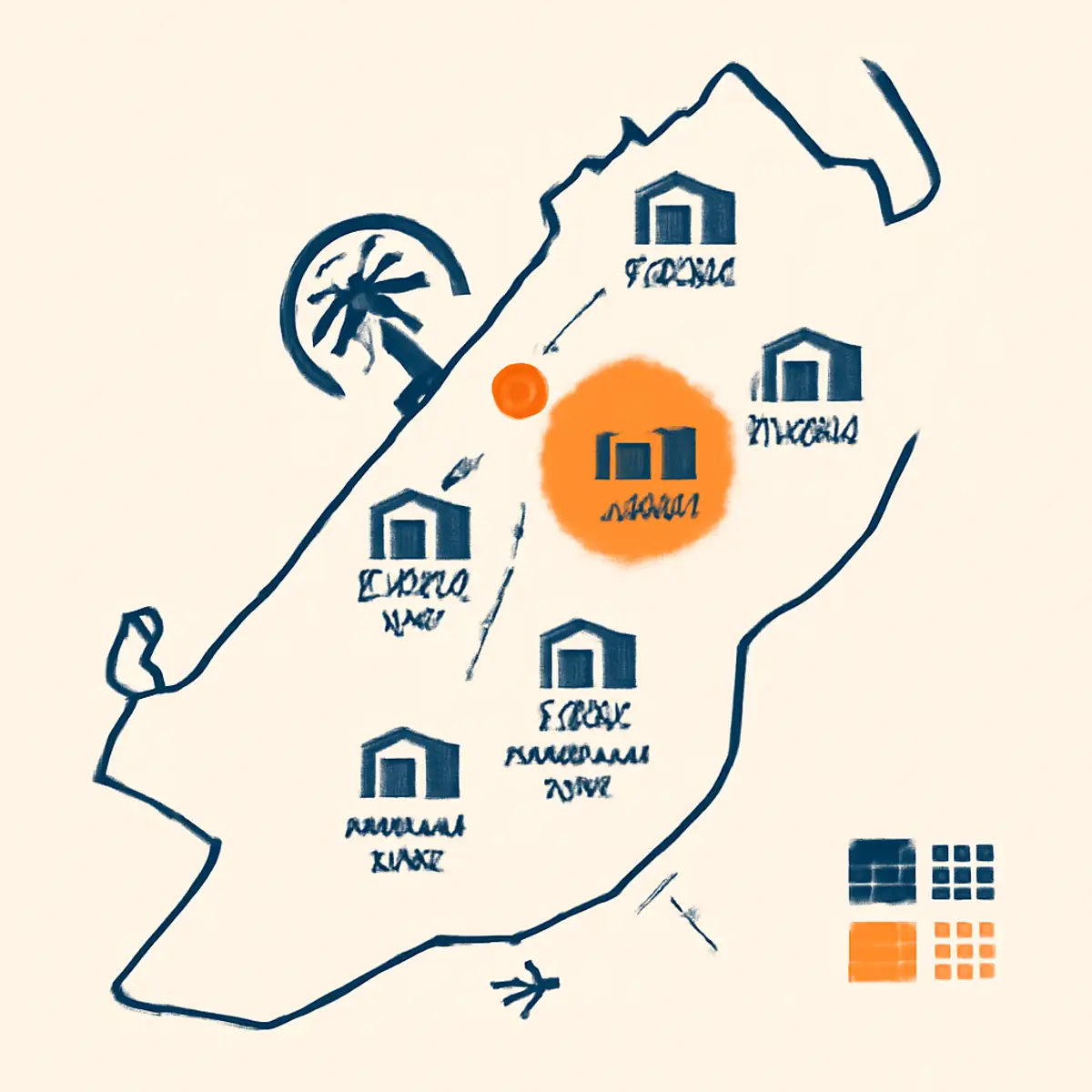
SamVertex operates from Ras Al Khor for the central-zone balance: 20-30 minutes to most Dubai delivery addresses, designated warehouse zone with proper licensing, mid-tier industrial real estate cost embedded in published rates.
How to think about scale transitions
Most Dubai ecommerce sellers move through three or four storage configurations as they grow. The signals to transition:
Phase 1: Home/garage storage. Under 50 orders per month. Inventory fits in a spare room or garage. Cost: effectively zero (sunk into housing). Constraints: climate damage during summer, no operational scaling, no professional packaging/shipping. Most sellers who try to skip this phase by going to self-storage too early end up paying premium for under-utilized space.
Phase 2: Self-storage. 50-300 orders per month. Inventory moves to a 5-15 m² climate-controlled self-storage unit. Cost: AED 600-1,800 per month. Constraints: 24/7 access requires regular trips to the unit, operational efficiency caps out around 10-20 orders per day, the space cannot scale beyond the unit footprint without paying for multiple units.
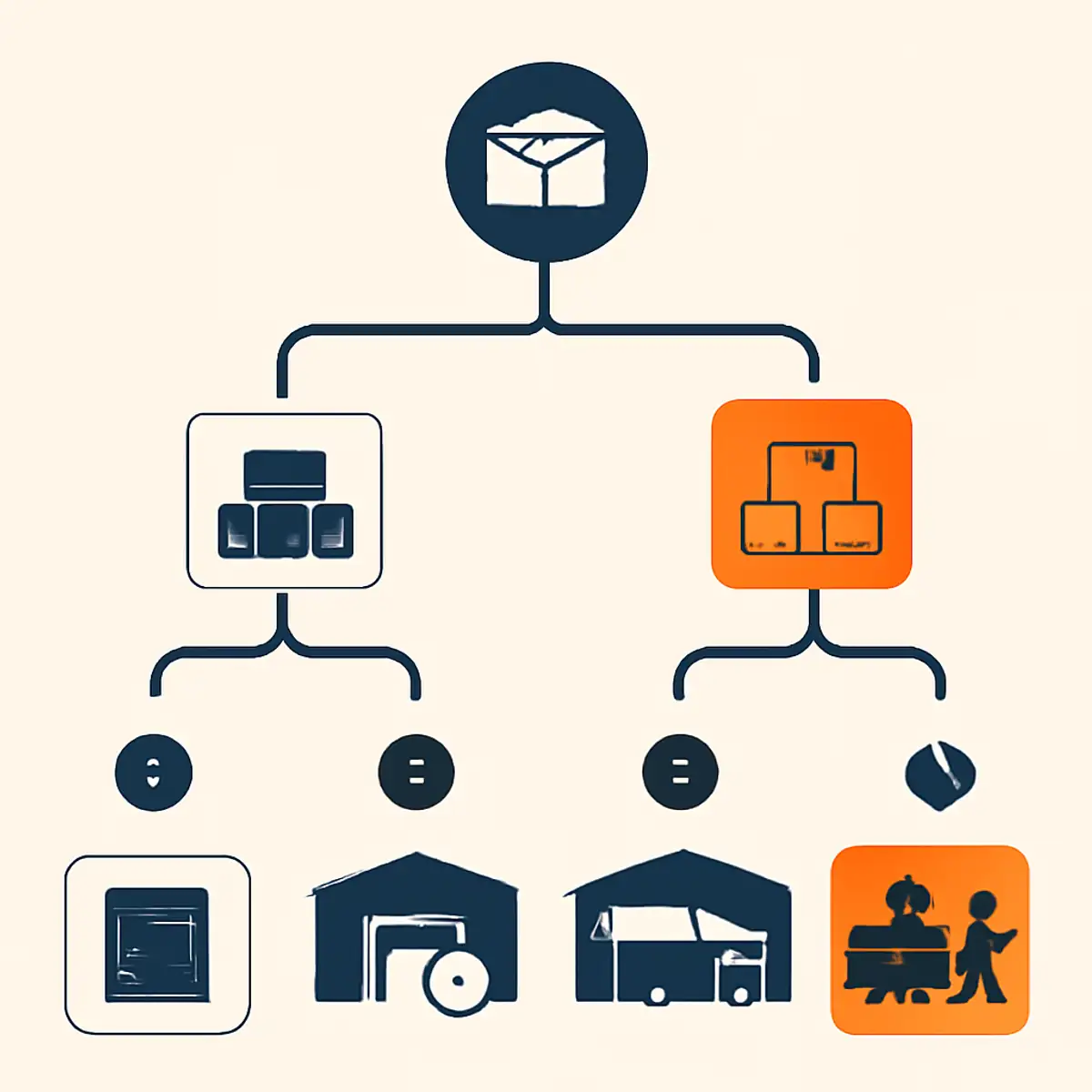
Phase 3: Mover/warehouse storage OR 3PL. 300+ orders per month. The decision splits based on whether the seller wants to keep operations in-house (mover storage + own staff) or outsource (3PL). Both are real options; the right choice depends on the seller's strategic preference and capital availability.
Phase 4: Direct warehouse lease + dedicated operations. 5,000+ orders per month. The seller leases their own warehouse (typically 5,000-15,000 sq ft), hires operations staff, builds in-house fulfillment. Cost: AED 200,000-1,000,000+ per year all-in. Constraints: large fixed cost commitment, requires operational expertise the seller may not have, locks in real estate exposure to UAE industrial market cycles.
The transition costs:
- Home → self-storage: AED 1,000-3,000 in moving costs, 1-2 weeks setup time
- Self-storage → mover storage: AED 2,000-5,000 in inventory consolidation and cataloging
- Self-storage or mover → 3PL: AED 1,000-3,000 in inbound batch handling, 2-4 weeks operational handover
- 3PL → own warehouse: AED 50,000-150,000+ in setup, hiring, equipment, ERP integration
Most successful UAE ecommerce sellers in 2026 stay in Phase 3 with a 3PL for years before considering Phase 4. The cost-of-capital tied up in Phase 4 is rarely justified below 5,000 orders per month, and the operational complexity scales faster than most teams expect.
How SamVertex storage compares
The operational specifics:
Storage rates. AED 85 per CBM per month dry storage, AED 120 per CBM per month climate-controlled. Sellers split inventory between tiers based on SKU sensitivity.
No setup fees, no monthly minimums, no contracts. Same-day onboarding for new sellers. Month-to-month billing. No exclusivity. Sellers can validate the workflow on a trial batch before committing volume.
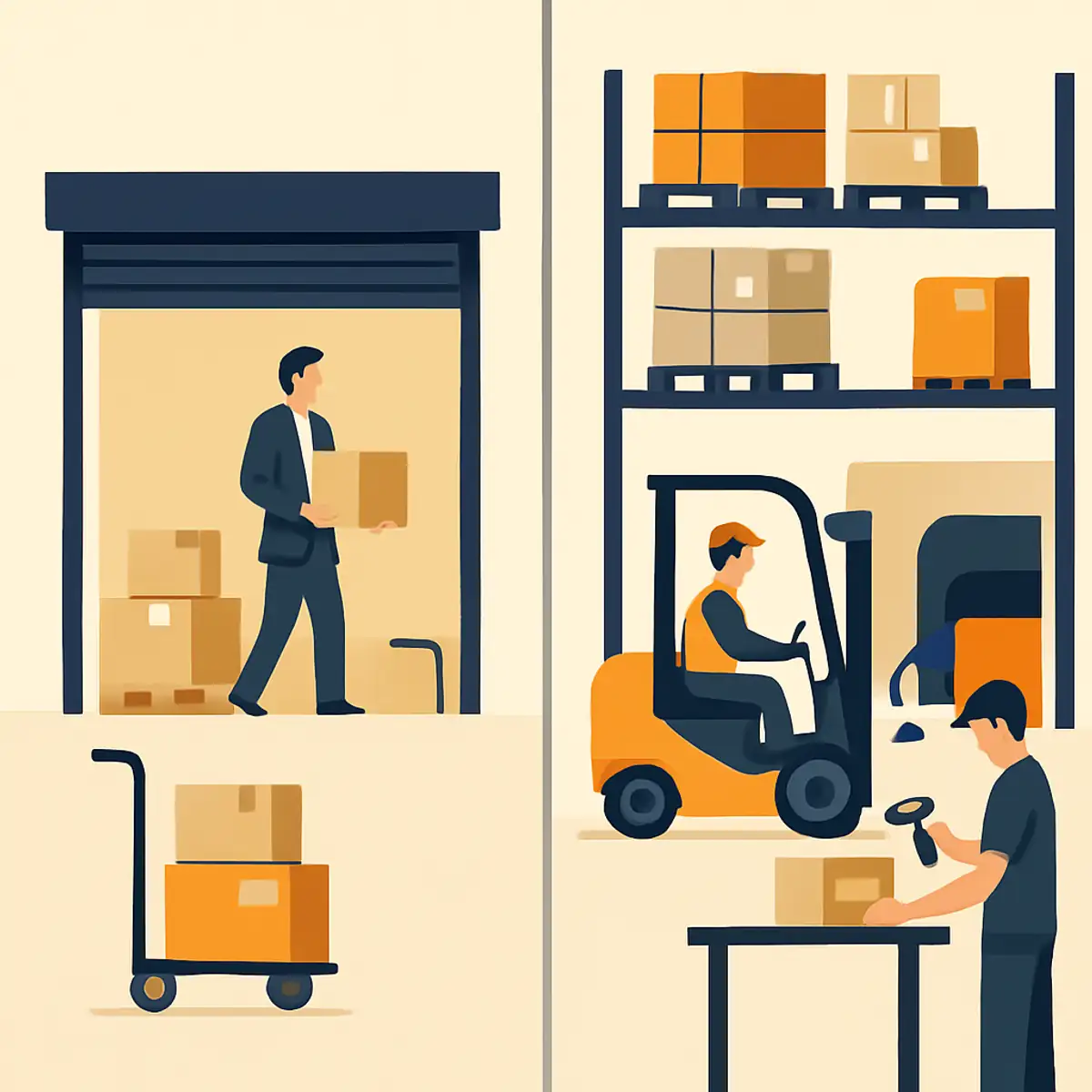
Operational services bundled. Pick-and-pack at AED 3 per order, last-mile delivery at AED 29 per order, returns processing free. Reporting and inventory visibility through real-time dashboard.
Same-day onboarding. Inventory arriving at SamVertex's Ras Al Khor facility is received, scanned, and added to available inventory same-day for orders received before 14:00.
Climate control where it matters. The dry/climate split lets sellers pay the climate premium only on SKUs that need it. A seller with 10 CBM of mixed inventory (6 CBM apparel/hardware, 4 CBM cosmetics/electronics) pays approximately AED 990 per month total, instead of paying climate-controlled rate on the full 10 CBM.
For sellers comparing options, the right total cost comparison is not just storage. It is storage + operational services, with climate damage risk and operational time-sink factored in.
Frequently asked questions
How much does self-storage cost in Dubai for ecommerce inventory?
AED 99 to AED 4,000 per month depending on unit size. Most ecommerce-relevant units (5-15 m²) run AED 300 to AED 1,800. Per CBM equivalent for a typically packed unit: AED 60 to AED 150 per CBM per month. Climate-controlled units carry a 15-25 percent premium over ambient.
What is the cheapest storage option in Dubai for an ecommerce business?
Mover/warehouse storage at AED 25-40 per CBM per month is the cheapest on the storage line alone, but offers no operational services and limited daily access. For sellers with bulk storage needs and infrequent access, this is the cost-optimal option. For sellers running daily fulfillment, the operational overhead of separating storage from fulfillment usually erases the cost advantage.
Do I need climate-controlled storage in Dubai?
For most ecommerce SKUs, yes. Dubai summer outdoor temperatures regularly exceed 45°C, and unventilated storage spaces hit 60°C+. Electronics, cosmetics, supplements, leather, wood, and food products suffer measurable damage at those temperatures within weeks. Apparel, hardware, books, and metal goods are generally stable in ambient storage. Climate-controlled storage is non-negotiable for the temperature-sensitive 60-70 percent of typical ecommerce catalogs.
What is the per-CBM cost of warehouse storage from a mover in Dubai?
AED 25 to AED 40 per CBM per month for ambient storage, billed on actual cubic meters occupied. Climate-controlled options typically run AED 35-60 per CBM. Most mover/warehouse storage operates from Al Quoz, Ras Al Khor, or Dubai Industrial City.
How does 3PL storage compare on cost?
3PL storage is more expensive per CBM (SamVertex publishes AED 85 dry, AED 120 climate-controlled) but bundles operational services that the seller would otherwise build separately. For sellers running 500-2,000 orders per month, the all-in cost (storage + pick/pack + last-mile + returns) typically lands lower with a 3PL than with mover storage plus self-managed operations, because of the operational overhead the seller avoids.
Where in Dubai is the best location to store ecommerce inventory?
Ras Al Khor and Dubai Investment Park balance cost (mid-tier industrial rents) with last-mile speed (20-45 minutes to most Dubai addresses). Al Quoz is faster for last-mile but premium-priced. Dubai Industrial City and Dubai South are cheapest but add 30-60 minutes to typical delivery routes. SamVertex operates from Ras Al Khor for this balance.
Can I run a commercial ecommerce operation from a self-storage unit in Dubai?
Most self-storage facilities do not permit commercial picking, packing, or daily shipping operations from their units. They are designed for personal storage and small-business overflow, not active fulfillment. Trying to run high-velocity ecommerce from a self-storage unit usually triggers facility complaints, eviction, or ineffective operations because of the access constraints.
What is the JLL Q2 2025 rate for Dubai warehouse rentals?
JLL Q2 2025 reported average Dubai warehouse rents at AED 46 per sq ft per year, up 19.9 percent year-over-year. Knight Frank H1 2025 reported Al Quoz Grade-A rents at AED 85 per sq ft, Al Quoz Grade-B at AED 58 per sq ft. Dubai Industrial City runs AED 20-35 per sq ft. These rates apply to direct industrial leasing, not self-storage or 3PL services.
At what order volume should I move from self-storage to a 3PL?
Approximately 200-300 orders per month, depending on SKU complexity and personal time availability. Below 200 orders per month, self-storage is workable for sellers willing to spend 10-20 hours per week on operations. Between 200 and 500, the math starts favoring a 3PL on total cost-of-ownership including the seller's time. Above 500 orders, a 3PL almost always wins.
Does SamVertex have a minimum monthly storage commitment?
No. SamVertex offers same-day onboarding with no minimums, no contracts, and no setup fees. Sellers pay AED 85 per CBM dry storage, AED 120 per CBM climate-controlled, billed on actual cubic meters occupied month-to-month.
See your real numbers
Storage is one of those decisions that looks simple at first (find a place to put inventory) and gets complex with scale (operational services, climate control, location, transition costs). The right answer at 100 orders per month is rarely the right answer at 1,000 orders per month, and most successful UAE ecommerce sellers move through self-storage, mover storage, and 3PL options as they grow.
SamVertex publishes storage at AED 85 per CBM dry, AED 120 per CBM climate-controlled, with operational services bundled and same-day onboarding. Send your monthly order volume, current inventory CBM, and SKU mix to /contact/ and we will share an all-in cost projection within 24 hours, including the right tier split between dry and climate-controlled storage for your specific catalog.
For sellers running parallel marketplace operations, our Amazon FBA prep guide and Noon NFC prep guide cover the marketplace-specific storage and fulfillment economics. For sellers managing freight from China, our sea freight and air freight guides cover the upstream side.
References
- SamVertex warehousing service page for the AED 85 per CBM dry and AED 120 per CBM climate-controlled rates
- SamVertex 3PL pricing guide for Dubai 2026 for the full UAE 3PL rate context
- JLL UAE Industrial Market Dynamics Q2 2025 (AED 46 per sq ft Dubai average, 19.9 percent YoY growth)
- Knight Frank UAE Industrial Market Review H1 2025 (Al Quoz Grade-A AED 85, Grade-B AED 58)
- SafeStorage Dubai pricing, https://safestorage.ae/blog/storage-prices-in-dubai-your-complete-2026-guide-to-affordable-self-storage
- GetSpace Storage pricing, https://getspacestorage.com/boxes-and-prices/
- MoveConnector, "Storage in UAE Guide 2026: Costs, Self-Storage and Warehousing," https://moveconnector.com/moving-tips/uae-storage-solutions-guide
- SAMA Movers, "Storage Costs Dubai: Price Comparison Guide," https://samadubaimovers.com/blog/storage-costs-dubai-comparison-guide
- eSelf Storage UAE, "Self Storage Cost in Dubai: Prices per Sq Ft and Unit Size," https://eselfstorageuae.com/how-much-does-self-storage-cost-in-dubai/
- KGRN Shipping, "Guide to Obtain a License for Warehousing in Dubai," https://kgrnshipping.com/a-guide-to-obtain-a-license-for-warehousing-in-dubai/
- Hayy.ai, "Warehouse for Rent in Dubai Industrial City 2025," https://www.hayy.ai/de/warehouse-for-rent-in-dubai/warehouse-for-rent-in-dubai-industrial-city
- Cargoz, "Cost of Renting a Warehouse in Dubai 2025," https://www.cargoz.com/blog/uae-1/warehouse-cost-dubai-131
Ready to stop reading and start shipping?
We run a real warehouse in Dubai and answer every message. Free consultation, no pressure, no commitment.
We reply within 4 hours during business hours.