
Table of contents13 sections
- Shopify UAE Fulfillment Setup: Payment Gateways, VAT, Multi-Channel Integration, and Operational Stack for 2026
- Answer summary
- The four operational layers
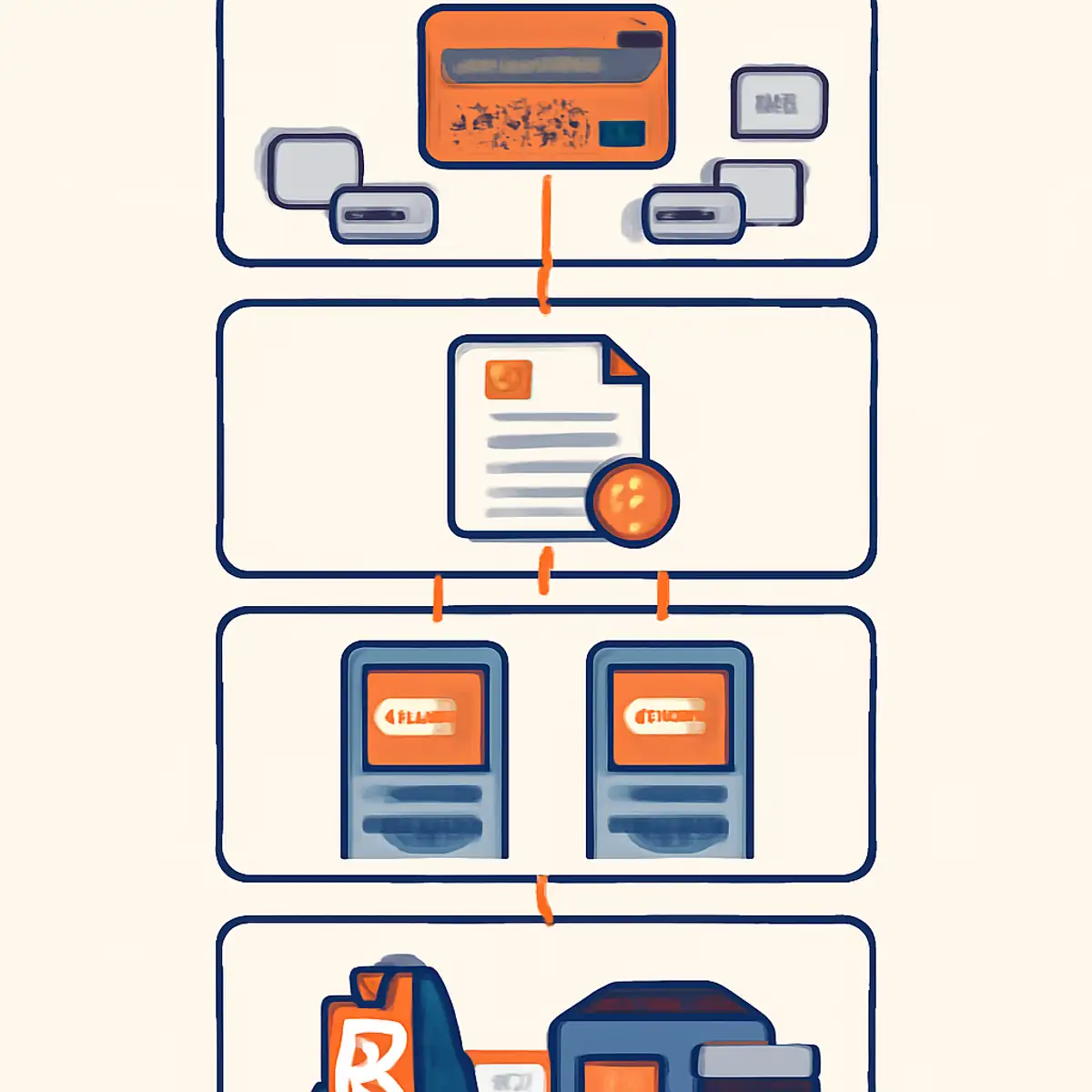
- Layer 1: Payment gateway selection
- The regional gateway options
- What every gateway needs from the merchant
- Alternatives worth knowing
- Layer 2: VAT and tax configuration
- Layer 3: BNPL integration with Tabby and Tamara
- Why BNPL works in the UAE
- Tabby setup on Shopify
- Tamara setup on Shopify
- BNPL fee economics
- Layer 4: Fulfillment integration
- What "native integration" means
- How SamVertex Shopify integration works
- What to verify before going live
- The order flow visualization
- Multi-channel inventory sync (Shopify + Amazon + Noon)
- How to choose a UAE 3PL for Shopify integration
- Frequently asked questions
- See your real numbers
- References
Shopify UAE Fulfillment Setup: Payment Gateways, VAT, Multi-Channel Integration, and Operational Stack for 2026
Shopify is the dominant ecommerce platform for direct-to-consumer brands in the UAE in 2026. The platform itself is excellent. The setup is not. Shopify Payments does not work in the UAE, the VAT logic catches first-time merchants, BNPL adds 20-40 percent to average order value but only if integrated correctly, and the fulfillment integration is where most operations break down once orders start shipping at volume.
This article is the practical setup guide for UAE Shopify merchants in 2026. The full operational stack: which payment gateways actually work, how VAT and TRN configuration interacts with displayed prices, why BNPL deserves its own integration line item, what fulfillment integration actually requires, and how to wire multi-channel sync between Shopify and your Amazon/Noon listings without overselling. None of these decisions are existential, but getting any of them wrong costs real money.
Answer summary
Shopify UAE fulfillment in 2026 requires four operational layers properly configured: a UAE-compatible payment gateway (Telr, Tap Payments, PayTabs, Network International, or Stripe with UAE business setup, since Shopify Payments does not operate in the UAE), VAT configuration with FTA Tax Registration Number (TRN) and tax-inclusive price display, BNPL integration via Tabby and Tamara native apps (driving 20-40 percent average order value uplift on orders above AED 300), and fulfillment integration via a 3PL with native Shopify app or API connection (avoid manual order export workflows).
The multi-channel sync layer matters once a Shopify seller adds Amazon UAE or Noon listings: inventory should sync from a single source of truth (typically the 3PL's warehouse management system, not Shopify itself) to prevent overselling across channels. UAE merchants running properly integrated Shopify + 3PL setups achieve approximately 30 percent faster fulfillment and reduce inventory discrepancies from 15 percent to near zero versus manual workflows.
SamVertex provides native Shopify integration via API for inventory sync, order routing, and last-mile delivery at AED 29 per order including COD handling. Same-day onboarding for UAE Shopify merchants, no minimums.
The four operational layers
Setting up a UAE Shopify store properly requires getting four independent layers right. Skip any one and the operation breaks at the seam.
| Layer | Decision | UAE-specific consideration |
|---|---|---|
| Payment gateway | Telr / Tap / PayTabs / Stripe / Network International | Shopify Payments unavailable; gateway needs UAE business license |
| Tax configuration | VAT 5%, TRN, tax-inclusive pricing | Mandatory above AED 375K revenue; voluntary above AED 187,500 |
| BNPL integration | Tabby + Tamara native apps | Drive 20-40% AOV uplift; consumer apps drive marketplace discovery |
| Fulfillment integration | Native 3PL app or API connection | Same-day shipping, multi-channel sync, no manual workflows |
The order matters. Payment gateway and VAT configuration are foundational; BNPL and fulfillment are scale layers that compound the foundation. Most failed UAE Shopify operations skip layer 4, then add it under emergency conditions when manual workflows break.
Layer 1: Payment gateway selection
Shopify's native Shopify Payments does not operate in the UAE. UAE merchants choose from regional gateways or international gateways with UAE business support.
The regional gateway options
Telr. Dubai-headquartered, MENA-focused, native Shopify integration takes about 15 minutes to install. Supports 30+ currencies, AED native, Arabic-language dashboard. Transaction fees typically 2.5-2.9 percent + AED 1 per transaction. Settlement 2-3 business days. Best for small-to-mid-sized UAE businesses wanting local support and fast onboarding.
Tap Payments. Built specifically for the GCC market. Clean Shopify integration, fast onboarding (2-3 days). Supports AED, USD, GCC currencies, plus Apple Pay. Particularly popular among startups and early-stage businesses. Competitive fees, approachable for smaller merchants.
PayTabs. Saudi-headquartered with strong GCC presence. Supports 168 currencies, multi-language. Native Shopify integration. Settlement 2-3 days. Competitive for cross-border GCC operations.
Network International. Oldest and most established UAE payment processor. Trusted by banks and large retailers. Setup more formal and slower (1-2 weeks), but reliability is unmatched. Best for businesses operating at significant scale or with existing UAE banking relationships.
Stripe (UAE). Stripe operates in the UAE with proper business setup (UAE trade license, TRN). Integration is excellent (Shopify Payments alternative). Higher fees than regional gateways (2.9 percent + AED 1.20). Best for international operations needing global card support.
The right choice depends on volume, settlement speed needs, and whether the merchant prioritizes regional support or international reach.
What every gateway needs from the merchant
- Valid UAE trade license (mainland or free zone)
- UAE bank account in the business name
- TRN if VAT-registered
- Business documents for KYC verification
- Two-factor authentication setup for the Shopify admin
The KYC process for UAE gateways typically takes 5-10 business days. Plan launch timelines accordingly; merchants who try to go live without an approved gateway end up paying for their first orders manually.
Alternatives worth knowing
COD (Cash on Delivery). Still 30 percent of UAE ecommerce orders. Enable as a payment option in Shopify; can be limited to orders under a certain value to manage RTO risk. See our COD logistics guide for the operational economics.
Apple Pay and Google Pay. Configure through your gateway. Apple Pay usage is high in the UAE; one-tap wallet payments reduce checkout friction substantially. Always test these before launch.
Direct bank transfer. Available in Shopify's manual payment methods. Used for high-value orders or B2B operations where customers prefer wire transfer. Adds 1-3 days to fulfillment cycle waiting for confirmation.
Layer 2: VAT and tax configuration
UAE VAT is 5 percent on most goods. Configuration is straightforward but the small mistakes are expensive.
TRN (Tax Registration Number). Required if annual revenue exceeds AED 375,000 (mandatory) or above AED 187,500 (voluntary). Issued by the Federal Tax Authority (FTA). Configure in Shopify Settings > Taxes and duties > United Arab Emirates > Tax registration ID.
Tax-inclusive price display. UAE consumers expect prices displayed inclusive of VAT (AED 100, not AED 95.24 + AED 4.76 VAT). Configure in Shopify Settings > Taxes and duties > Common > "Show prices with tax included." This affects how prices appear on collection pages, product pages, and at checkout.
VAT collection at checkout. Shopify automatically calculates VAT at checkout when the tax rate is configured. The total customer-paying amount is identical whether prices are tax-inclusive or tax-exclusive in storefront display, but the breakdown on the receipt changes. UAE merchants typically choose tax-inclusive display for storefront and have VAT line items appear on the order receipt.
Receipts and invoices. Shopify-generated order receipts must show the TRN, the VAT amount, and the gross total. Some merchants use third-party invoice apps (such as Sufio, Order Printer Pro, or DigiBills) for compliant tax invoices that meet FTA requirements for high-value B2B orders.
Quarterly VAT returns. Filed through the FTA e-Services portal. Shopify reporting can be exported for filing reconciliation. Records must be maintained for five years per UAE tax law.
Common mistakes:
- Forgetting to enable tax collection on shipping (UAE VAT applies to shipping charges)
- Configuring the TRN as a placeholder during setup and forgetting to update with the real TRN after FTA registration
- Not testing tax-inclusive display in the storefront language (Arabic and English versions need verification)
- Not separating VAT-applicable products from VAT-exempt categories (a small subset of educational and healthcare items)
Layer 3: BNPL integration with Tabby and Tamara
Buy-Now-Pay-Later in the UAE is mainstream consumer behavior, not a fringe payment option. Properly optimized stores adding Tabby or Tamara consistently report 20-40 percent higher average order values and significant cart abandonment reduction.
Why BNPL works in the UAE
UAE consumers, especially those aged 25-45, expect installment options at checkout for any purchase above AED 300. The cultural and demographic context: high-income but high-cost-of-living environment, strong mobile wallet adoption, comfort with split-payment models from gym memberships and education to retail.
The economic mechanics for the merchant: Tabby and Tamara handle credit risk and pay the merchant upfront (minus 4-8 percent merchant fee, varying by category and volume). The customer splits payment into 4 interest-free installments. The merchant receives full settlement at the order date, not 4 monthly payments.
Tabby setup on Shopify
Tabby has a direct Shopify Payment App that takes about 15 minutes to install. Operates in UAE, Saudi Arabia, and Kuwait. Processes payments in AED, SAR, KWD natively.
Setup steps:
- Apply at merchant.tabby.ai with UAE business license, TRN, bank details
- Approval typically 5-7 business days
- Install Tabby Payment App from Shopify App Store
- Connect API credentials from Tabby dashboard to the Shopify app
- Activate Tabby as a payment method in Shopify checkout
- Verify payment flow with test orders
- Optionally install Tabby promotional widgets on product pages (drives BNPL discovery)
The Tabby promotional widget on product pages typically lifts BNPL conversion further. Customers see "AED 100 or 4 payments of AED 25 with Tabby" directly on the product page, normalizing the split-payment expectation before checkout.
Tamara setup on Shopify
Tamara operates similarly to Tabby with stronger Saudi presence and growing UAE coverage. Native Shopify app, similar approval timeline, similar fee structure.
Most successful UAE Shopify merchants offer both Tabby and Tamara at checkout (let the customer choose) rather than picking one. The combined consumer-app discovery from both BNPL marketplaces drives meaningful incremental traffic.
BNPL fee economics
A typical UAE fashion seller running 1,000 orders per month at AED 250 average order value:
- Without BNPL: AED 250,000 monthly revenue
- With BNPL active: AED 320,000 monthly revenue (28% AOV uplift assumed)
- BNPL fees on the BNPL portion (typically 40-60% of orders, 5% merchant fee average): AED 6,400-9,600 monthly fees
- Net revenue uplift: AED 60,400-63,600
The BNPL math typically works strongly positive for orders above AED 300, neutral around AED 200-300, and slightly negative below AED 200 because the fee compresses too much margin. Configure BNPL as available for orders above AED 300 if margin sensitivity is high.

Layer 4: Fulfillment integration
The layer where UAE Shopify operations most often break. Manual order export from Shopify to a 3PL is the most common starting setup and the most common cause of overselling, lost orders, and inventory discrepancies.
What "native integration" means
A Shopify-to-3PL integration that works at scale has these properties:
- Real-time order sync. New orders appear in the 3PL's WMS within seconds, not in a daily batch.
- Real-time inventory sync. When a customer orders, Shopify decrements available inventory, then the 3PL ships, and the warehouse-actual count syncs back to Shopify.
- Automatic fulfillment status updates. When the 3PL ships an order, Shopify marks it fulfilled with tracking number automatically.
- Returns sync. When a customer initiates a return through Shopify's returns flow, the 3PL receives the return notification and processes inbound automatically.
- Multi-channel inventory. When the same SKU is also listed on Amazon UAE or Noon, the inventory count syncs across all channels from a single source of truth (typically the 3PL).
Without these, the seller manually exports orders, manually updates fulfillment, and manually reconciles inventory. At low volume (under 50 orders per week) this is workable; at higher volume it becomes the operational bottleneck that caps the business.
How SamVertex Shopify integration works
Native API connection to Shopify (not a manual workflow):
- Order created in Shopify → arrives in SamVertex WMS within seconds
- Pick-and-pack at SamVertex Ras Al Khor facility (same-day for orders received before 14:00)
- Last-mile dispatch at AED 29 per order with COD handling included
- Tracking number written back to Shopify automatically; customer receives Shopify-branded tracking notification
- Inventory count synced back to Shopify in real time; multi-channel sync to Amazon/Noon if those channels are configured
- Returns initiated through Shopify trigger automatic SamVertex return-receiving workflow
Setup time: approximately 1-2 business days for new merchants. No development required. The Shopify app is available in the Shopify App Store; merchants connect their Shopify store and SamVertex account, configure SKU mapping, and the workflow is live.
What to verify before going live
Six checks any UAE Shopify merchant should run before driving traffic to a freshly integrated store:
□ Test order placed end-to-end (Shopify → 3PL WMS → dispatch → tracking back)
□ Multi-currency display correct (AED primary, others if needed)
□ VAT calculation correct on tax-inclusive products
□ COD option appears at checkout for eligible orders
□ Tabby and Tamara appear at checkout for orders above threshold
□ Mobile checkout flow works without 3D Secure issues
□ Apple Pay test transaction successful
□ Order confirmation email sent in correct language (English/Arabic)
□ Inventory decremented in Shopify and 3PL after test order
□ Return initiated through customer flow triggers 3PL receiving
□ Multi-channel inventory sync if Amazon/Noon active
Most failed UAE Shopify launches trace to skipping one of these checks. The discipline of running each before launch saves the cost of refunding the first 50 confused customers.
The order flow visualization
CUSTOMER PLACES ORDER
        │
        ├──► Payment gateway (Telr/Tap/PayTabs)
        │       ├──► Card payment processed
        │       ├──► COD: order created without payment
        │       └──► BNPL: Tabby/Tamara approves credit
        │
        ├──► Shopify creates order record
        │       ├──► VAT calculated and recorded
        │       ├──► Inventory decremented
        │       └──► Customer receives order confirmation
        │
        ├──► Order syncs to 3PL WMS via API (within seconds)
        │       ├──► Pick task created
        │       ├──► Pack task created
        │       └──► Dispatch task scheduled
        │
        ├──► 3PL warehouse: pick → pack → dispatch
        │       ├──► Tracking number generated
        │       └──► Tracking number written back to Shopify
        │
        ├──► Last-mile delivery
        │       ├──► Customer receives tracking notification
        │       ├──► COD: courier collects cash
        │       └──► Delivery completed
        │
        └──► Reconciliation (next-day for COD)
                ├──► Daily report from 3PL
                ├──► Settlement on weekly cycle (Mondays)
                └──► Accounting entry in Shopify finance
This is what a properly integrated UAE Shopify operation looks like end-to-end. Each step happens automatically; the merchant intervenes only on exceptions.
Multi-channel inventory sync (Shopify + Amazon + Noon)
Most UAE Shopify merchants eventually add Amazon UAE and/or Noon as additional sales channels. The moment that happens, inventory sync becomes critical.
The problem: each channel has its own inventory tracking. Shopify shows 50 units available, Amazon FBA shows 50 units, Noon FBN shows 50 units. The actual physical inventory at the warehouse is 50 units. When 5 orders come in across all three channels in the same hour, the system that does not sync will oversell.
The fix: a single source of truth for inventory, with the channels syncing to it.
Option A: Shopify as source of truth. Works for sellers with low Amazon/Noon volume relative to Shopify. Apps like Trunk or Stockify sync inventory across channels with Shopify as the master. Cost: AED 100-400 per month depending on order volume.
Option B: 3PL WMS as source of truth. Works at higher volume. The 3PL's warehouse management system is the master inventory record; Shopify, Amazon, and Noon all sync to it. Most modern UAE 3PLs (including SamVertex) support this model. Cost: typically included in the 3PL service.
Option C: Dedicated inventory management system. For large operations (5,000+ orders per month across channels). Tools like Cin7, Ordoro, or Linnworks act as the central inventory hub with all channels as receivers. Cost: AED 500-3,000+ per month.
For most UAE Shopify merchants, Option B is the right answer. The 3PL is already touching the physical inventory; making it the master record eliminates the need for a separate sync layer and reduces sync errors.
The discrepancy reduction is dramatic: properly integrated UAE Shopify + 3PL setups achieve inventory accuracy of 99.5+ percent across channels, versus 85-90 percent on manual or partially-synced setups.

How to choose a UAE 3PL for Shopify integration
Six questions that surface a real Shopify-ready 3PL:
-
Do you have a native Shopify app or API integration? "We can do email exports" is not the right answer. "We have a Shopify app that connects in 15 minutes" is.
-
What is your same-day shipping cutoff? 14:00 is standard for UAE 3PLs. Anything later than 14:00 is competitive. Anything earlier (12:00 or before) is not.
-
What is your inventory accuracy across channels? Real operators answer with a number ("99.7 percent over the last 90 days"). Sales pipelines answer with adjectives ("very high").
-
How do you handle multi-channel returns? Returns initiated on Amazon UAE for an inventory-shared SKU should sync correctly without overselling on Shopify. The right answer involves WMS-level inventory locking on returns-in-progress.
-
Can I see a recent Shopify order processed end-to-end? A 3PL that can demo a real recent order (anonymized) on a Shopify store handles this every day. One that cannot, does not.
-
What is your published per-order pricing? SamVertex publishes AED 29 per order including COD handling. Operators that hedge on pricing are usually building margin into negotiated rates that surprise sellers later.
A 3PL that answers all six in writing within 48 hours is a real Shopify-ready operator. A 3PL that asks for a sales call before sharing rates is a sales pipeline.
Frequently asked questions
Does Shopify Payments work in the UAE?
No. Shopify Payments is not available in the UAE in 2026. UAE merchants use regional gateways (Telr, Tap Payments, PayTabs, Network International) or international gateways with UAE business setup (Stripe, Checkout.com).
Which payment gateway is best for Shopify in the UAE?
Telr for fast onboarding and MENA-native support, Tap Payments for startups wanting quick setup, PayTabs for cross-border GCC operations, Network International for established large-scale businesses, Stripe for international card support. Most UAE merchants use one regional gateway (for cards) plus Tabby and Tamara (for BNPL).
Do I need to register for VAT to sell on Shopify in the UAE?
Mandatory if annual revenue exceeds AED 375,000. Voluntary above AED 187,500. Below that threshold, VAT registration is optional but most established merchants register voluntarily for credibility and input VAT recovery. The TRN must be configured in Shopify's tax settings with tax-inclusive price display.
Can I integrate Tabby and Tamara with Shopify?
Yes. Both have native Shopify Payment Apps with direct integration. Setup takes about 15 minutes once approved. Tabby and Tamara approval typically takes 5-7 business days. Most UAE merchants offer both at checkout.
How much does BNPL increase average order value in the UAE?
20-40 percent typically, especially on orders above AED 300 in fashion, electronics, and home goods. The merchant fee is 4-8 percent of BNPL transactions, but the AOV uplift typically nets positive even after fees.
What is the best fulfillment integration for a UAE Shopify store?
A 3PL with native Shopify API integration. Avoid manual order export workflows, which become operational bottlenecks once order volume exceeds 50-100 per week. SamVertex offers native Shopify integration with order routing, inventory sync, and last-mile delivery at AED 29 per order including COD.
How do I sync inventory between Shopify, Amazon UAE, and Noon?
Use a single source of truth. The 3PL's WMS is the natural choice for sellers using a 3PL because the physical inventory is already tracked there. Apps like Trunk or Stockify also work for Shopify-as-master setups. Inventory accuracy across channels rises from 85-90 percent (manual) to 99.5+ percent (properly integrated) with a clear master record.
What is COD on a Shopify UAE store?
Cash on Delivery, where the customer pays cash (or card via mobile POS) on delivery rather than online at checkout. Still 30 percent of UAE ecommerce orders. Configure as a payment option in Shopify; can be limited to orders under a value threshold to manage RTO risk. See our COD logistics guide for the operational economics.
How long does Shopify UAE setup take from scratch?
Approximately 14-21 days end-to-end: 5-10 days for payment gateway approval, 5-7 days for Tabby/Tamara approval, 1-2 days for 3PL integration, 2-3 days for testing and go-live preparation. Faster paths exist (using Tap Payments and a 3PL with rapid onboarding) for merchants in a hurry, but the gateway and BNPL approval timelines are the binding constraints.
What are the most common UAE Shopify setup mistakes?
Going live before payment gateway is approved (unable to process orders), forgetting tax-inclusive price display (customer confusion at checkout), using TRN placeholder in production (FTA compliance issue), skipping fulfillment integration testing (overselling at first peak), and missing BNPL setup entirely (lost AOV uplift). The 11-item checklist in the "What to verify before going live" section above prevents most of these.
See your real numbers
UAE Shopify operations work cleanly when the four operational layers are properly configured. SamVertex provides native Shopify integration via API for inventory sync, order routing, and last-mile delivery at AED 29 per order including COD handling. Same-day onboarding for new Shopify merchants, no minimums, no contracts.
Send your Shopify store URL, monthly order volume, and current fulfillment setup to /contact/ and we will share an integration timeline and 90-day cost projection within 24 hours. The setup itself is 1-2 business days; the math comparison is faster.
For sellers also running marketplace channels, our Amazon FBA prep guide and Noon NFC prep guide cover the parallel operational economics. For sellers managing inbound from China, our sea freight and air freight guides cover the upstream side.
References
- SamVertex direct-sales fulfillment service page for the AED 29 per order rate
- SamVertex 3PL pricing guide for Dubai 2026 for full UAE 3PL rate context
- SamVertex COD logistics UAE guide for COD operational details
- SamVertex Amazon FBA prep guide and Noon NFC prep guide for marketplace channel operations
- Shopify Help Center, "Considerations for charging duties and import taxes at checkout," https://help.shopify.com/en/manual/international/duties-and-import-taxes/considerations
- Tabby Shopify Plugin documentation, https://docs.tabby.ai/e-commerce-platforms/shopify/shopify-plugin-installation
- ChampX Digital, "Shopify Can't Process Payments in the UAE: What to Use Instead," https://champxdigital.ae/blog/shopify-payments-uae
- Lucidly, "Shopify VAT UAE: 7 Steps for Taxes and Invoices," https://lucidly.ae/blog/shopify/uae-vat-shopify
- Ripple LLC, "Best Shopify Payment Gateways in UAE 2026," https://ripplellc.ae/best-shopify-payment-gateways-uae-2026/
- Titan Digital UAE, "How to Start a Dropshipping Business in the UAE 2026 Complete Guide," https://titandigitaluae.com/start-online-business-uae/how-to-start-a-dropshipping-business-in-the-uae/
- Global Media Insight, "Shopify UAE Store Setup: Step-by-Step Guide for 2026," https://www.globalmediainsight.com/blog/shopify-uae/
- eShopify Fulfillment, "Shopify Store Fulfillment in the UAE: A Complete Integration Guide," https://www.eshopifyfulfillment.com/post/shopify-store-fulfillment-in-the-uae-a-complete-integration-guide
Need help putting this into practice?
We run a real warehouse in Dubai and answer every message. Free consultation, no pressure, no commitment.
We reply within 4 hours during business hours.