
Table of contents11 sections
- Ramadan E-commerce Logistics in the UAE: The 2026 Operational Playbook for the Season's Surge
- Answer summary
- What changes in UAE consumer behavior during Ramadan
- The pre-Ramadan setup timeline
- During Ramadan: the operational rhythm
- The customs and supply chain implications
- Post-Eid recovery: the stabilization week
- How SamVertex handles Ramadan operations
- Frequently asked questions
- See your real numbers
- References
Ramadan E-commerce Logistics in the UAE: The 2026 Operational Playbook for the Season's Surge
Ramadan reshapes the UAE retail calendar more than any other event of the year. White Friday is bigger in dollar value, but Ramadan changes how customers shop, when they order, and which categories spike. The window from the last week of Sha'ban through Eid al-Fitr behaves as one continuous operational cycle, not four separate weeks of seasonal lift. Brands that treat it as a marketing campaign rather than an operational shift typically lose the season to brands that prepared three months earlier.
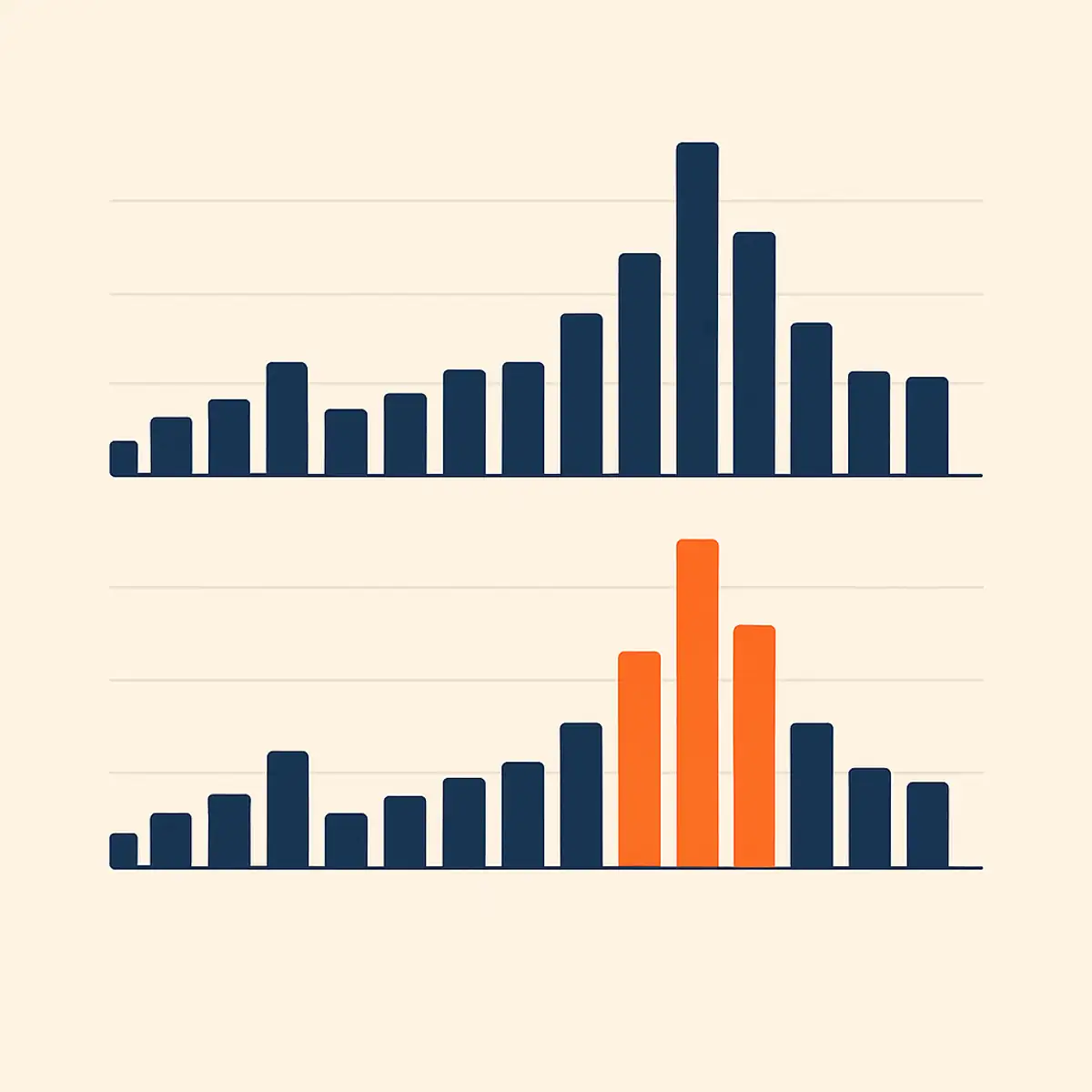
The numbers underline why preparation matters. UAE online marketplace spending climbed 143 percent year-over-year during Ramadan 2024. Redseer Strategy Consultants forecasts UAE retail spending around USD 10 billion for Ramadan 2026, with ecommerce taking a growing share. GCC-wide ecommerce surges 30-50 percent during Ramadan according to DHL data. Order volumes shift dramatically toward post-iftar hours, with 48 percent of daily movement happening after iftar versus 18-22 percent on regular days. The brands that operationally adapt to this rhythm capture the season; the brands that try to run normal operations against unusual demand burn out.
This article is the operational playbook for UAE ecommerce sellers preparing Ramadan logistics in 2026. The pre-Ramadan setup checklist, the during-Ramadan rhythm shifts, the post-Eid stabilization plan, and the supply chain decisions that decide whether the season pays for itself.
Answer summary
Ramadan in the UAE in 2026 begins approximately mid-to-late February (subject to lunar calendar confirmation) and runs about 30 days, ending with Eid al-Fitr. For ecommerce sellers, the operational impact lasts longer: roughly 6 weeks of altered demand patterns from the last week of Sha'ban through the post-Eid recovery window.
Three structural shifts define the season operationally. First, daily working hours reduce by two hours per day in the UAE private sector under the Ministry of Human Resources and Emiratisation (MoHRE) mandate, affecting warehouse staffing, customs processing, and customer service capacity. Second, order timing shifts dramatically toward evening and overnight hours, with peak demand windows at 4-5 PM (pre-iftar) and 10 PM-2 AM (post-iftar/pre-suhoor), and 4 AM grocery orders up 70 percent during Ramadan. Third, category demand patterns invert: dates, dried fruits, modest fashion, gift hampers, and home dining accessories surge while everyday categories see softer daytime volumes.
The pre-Ramadan operational setup runs a 90-day timeline: inventory forecasts and procurement at T-90, freight booking at T-60, warehouse staffing and dispatch schedule restructuring at T-30, communication templates and customer-service capacity at T-14. Brands that miss the T-60 freight window face inbound delays into the season; brands that miss the T-30 dispatch restructuring face order backlogs in week one of Ramadan.
SamVertex operates extended evening dispatch windows during Ramadan with same-day cutoffs adjusted to capture pre-iftar order spikes. Last-mile delivery at AED 29 per order with COD handling stays unchanged. The seasonal operational lift is built into the workflow, not a premium surcharge.
What changes in UAE consumer behavior during Ramadan
Three patterns reshape how UAE customers buy online during the holy month, each with operational implications.
The afternoon pre-iftar surge. Peak ordering shifts from the regular 7-8 PM window to 4-5 PM as customers place orders for delivery before iftar (sunset, around 6:30-7 PM in the UAE depending on date). Grocery and meal-related categories drive most of this volume. Operationally, this requires earlier dispatch cutoffs (typically 11 AM or 12 PM rather than 14:00) and concentrated afternoon delivery capacity to hit the iftar deadline.
The post-iftar evening peak. From roughly 8 PM through midnight, families return to leisurely shopping after breaking fast. This is when discretionary purchases happen: fashion, beauty, electronics, gifting items. Order volume holds high through 10 PM-2 AM, with a smaller pre-suhoor late-night peak around 4 AM for grocery essentials. Late-night dispatch windows become operationally meaningful; brands that close fulfillment at 6 PM miss the entire evening volume.
The Eid acceleration. The final 10-14 days of Ramadan show a sharp uptick in gifting categories: jewelry, premium fashion, beauty, electronics, home decor. This window often determines the season's profitability for non-grocery sellers. Inventory positioning, dispatch capacity, and last-mile reliability all stress-test during this period.
Beyond the timing shifts, category mix moves meaningfully. The strongest Ramadan-specific categories:
- Dates, dried fruits, traditional sweets (steady demand throughout)
- Modest fashion (kaftans, abayas, modest dresses for iftar gatherings)
- Home dining accessories (serving platters, tablecloths, decorative items)
- Gift hampers and curated bundles (Eid gifting cycle)
- Beauty and personal care (preparation for evening gatherings)
- Electronics (mid-Ramadan home improvement spike)
- Children's clothing and toys (Eid gift purchases)
- Fragrances and perfumes (cultural significance, peak Eid demand)
Categories that stay flat or dip slightly: alcohol-adjacent products, some impulse-purchase categories without cultural relevance, gym and fitness equipment (gym attendance shifts to post-10 PM windows but ecommerce purchases dip).

The pre-Ramadan setup timeline
A 90-day countdown for UAE ecommerce sellers preparing the season operationally. Each milestone has practical implications; missing any one of them creates downstream pressure.
T-90 (3 months before Ramadan): Inventory forecasting and procurement.
Review the prior year's Ramadan sales data. Identify the top 20 SKUs by Ramadan revenue, the top 5 by margin contribution, and any SKUs that underperformed expectations. Build the procurement plan around verified historical patterns rather than aspirational growth forecasts. Place orders with suppliers giving them 60-90 days of lead time for production and shipping.
For sellers sourcing from China, this is the freight booking window. Sea freight from China to UAE takes 25-38 days door-to-door; orders placed at T-90 arrive comfortably before the season starts. Orders placed at T-60 risk arriving in week one of Ramadan, when capacity at Jebel Ali tightens. Orders placed at T-45 or later typically miss the season for non-urgent SKUs.
T-60 (2 months before): Freight booking and capacity reservation.
Confirm freight bookings with forwarders. Sea freight capacity tightens during the pre-Ramadan inbound surge; rates can climb 15-25 percent versus normal periods. Air freight capacity also tightens; book early for any time-critical SKUs.
For sellers using SamVertex's sea freight service at AED 499 per CBM or air freight at AED 35 per kg, freight bookings made at T-60 typically lock the published rate; bookings made later face capacity-driven surcharges.
Customs preparation also matters at T-60. Verify trade license validity, MOFAIC attestation status, and HS code accuracy for incoming SKUs. The last week before Ramadan and the first week of Ramadan are operationally the busiest customs periods of the year at Jebel Ali; documentation issues that take 1 day to resolve in November can take 5-7 days during the Ramadan inbound surge.
T-30 (1 month before): Warehouse staffing and dispatch schedule restructuring.
Reduce daytime staffing slightly (matching the MoHRE 2-hour reduction). Extend evening shifts to cover post-iftar dispatch volume. Plan for split-shift operations in larger warehouses: morning team handles inbound and pre-iftar dispatch, evening team handles post-iftar dispatch and night picking.
Restructure same-day delivery cutoffs. The standard 14:00 cutoff misses pre-iftar urgency. Move the cutoff to 11:00-12:00 for guaranteed pre-iftar delivery, with a secondary 16:00-17:00 cutoff for post-iftar delivery (8 PM-midnight window).
Confirm carrier capacity for evening windows. Some last-mile operators reduce evening operations during Ramadan; verify which couriers continue normal evening hours. Brands relying on couriers that limit night operations need backup capacity.
T-14 (2 weeks before): Communication templates and customer service capacity.
Pre-write customer communications for the season: order confirmation messages mentioning iftar timing, dispatch updates aligned with delivery windows, post-iftar arrival expectations. Update the website with Ramadan-specific delivery schedules and any modified return windows.
Scale customer service capacity. Inquiry volume during Ramadan typically rises 30-40 percent due to delivery window questions, gifting questions, and Eid-related order tracking. Add evening shift coverage to customer service to match the demand rhythm.
For sellers running marketplace operations on Amazon UAE or Noon, verify that inbound shipment plans for the season have been submitted and approved. The marketplace inbound queues lengthen during Ramadan; an FBA shipment plan submitted at T-14 typically gets accepted at the FC, while one submitted at T-7 risks falling into the post-Eid backlog.
T-7 (1 week before): Final readiness check.
Verify all inventory is received and shelved. Run test orders end-to-end (place an order, follow it through pick-pack-dispatch-delivery) to confirm the operational changes work. Brief warehouse and customer service teams on Ramadan-specific schedules and customer messaging. Confirm 24-hour escalation paths with logistics partners for the inevitable peak-day issues.

During Ramadan: the operational rhythm
Once Ramadan begins, the warehouse operates on different timing patterns than the rest of the year. The structural shifts that matter most:
Daytime warehouse rhythm (6 AM to 12 PM). This is the productive window for pick-pack operations. Morning staff prepare orders for the pre-iftar dispatch wave. Inbound receiving from suppliers and freight forwarders happens here, before the afternoon temperature peaks. Customs processing for arriving cargo also happens during this window, though throughput slows due to the MoHRE 2-hour reduction in working hours.
Pre-iftar dispatch wave (12 PM to 5 PM). Highest density of last-mile dispatches in the day. Couriers race to deliver pre-iftar orders before sunset. Traffic congestion peaks around 5-6 PM as Dubai prepares for iftar. Operations that miss this window roll deliveries to post-iftar, which works for some categories (fashion, electronics) but fails for grocery and meal-related orders.
Iftar pause (around 6:30 PM-7:30 PM). Most operations pause briefly for iftar. Couriers, warehouse staff, and customer service teams take a 30-60 minute break. Some operators run skeleton crews during this window for emergency deliveries; most accept the pause as a structural feature.
Post-iftar evening peak (8 PM to 12 AM). The second productive window. Order intake spikes as customers shop after breaking fast. Late-evening dispatch waves serve same-night delivery on small parcels and next-morning queue building for everything else. This is where the operational difference between Ramadan-prepared and Ramadan-unprepared operators shows clearly: prepared operators run full evening shifts; unprepared operators close at 6 PM and watch their evening volume go to competitors.
Late-night and pre-suhoor (12 AM to 4 AM). Smaller volume but still meaningful for grocery and quick-commerce categories. Some operators run 24/7 during Ramadan; most run extended-evening shifts ending around 1-2 AM.
A practical rule for warehouse staffing: instead of a single 8-hour shift, run two overlapping 6-hour shifts during Ramadan. A morning team (7 AM-1 PM) and an evening team (5 PM-11 PM) covers the productive windows without exhausting staff. Friday evening typically sees the highest volume of the week; ensure full staffing.
The customs and supply chain implications
Beyond warehouse operations, the season affects every link in the supply chain.
Customs processing slows by approximately 20-40 percent. Reduced working hours at Jebel Ali, DXB, and other UAE customs facilities mean documentation review takes longer. A standard 1-3 day clearance can extend to 3-7 days during Ramadan, especially in the first week. Pre-clearance preparation (MOFAIC attestation, HS code verification, trade license currency) becomes critical.
Sea freight capacity tightens. Pre-Ramadan inbound surge and post-Eid restocking both compress capacity at Jebel Ali. Carriers prioritize forward-booked customers; spot bookings cost 15-25 percent above normal rates. Booking sea freight at T-90 to T-60 protects rate stability.
Air freight rates climb during the season. The 30-50 percent ecommerce surge plus general consumer goods imports drives air freight demand. Standard rates of USD 4-8 per kg from China can climb to USD 6-10 per kg during peak weeks. Hong Kong and Shanghai outbound capacity tightens first; Shenzhen and Guangzhou typically have more flexibility.
Last-mile capacity stretches. Major UAE couriers (Quiqup, Jeebly, iMile, Aramex, Fetchr) typically scale up by 30-40 percent during Ramadan. Smaller operators may struggle to maintain service levels. Sellers without 3PL relationships often experience delays as their on-demand courier capacity fills with higher-paying clients.
Eid public holiday creates a 3-7 day delay risk. UAE typically observes 4-5 days of public holiday for Eid al-Fitr. Customs processing pauses entirely. Last-mile operations slow significantly. Operators that fail to plan for this often face cascading 3-7 day delays after Eid as the backlog clears.
Post-Eid recovery: the stabilization week
The week after Eid al-Fitr is when most operations underperform. The pattern matters operationally because customer expectations don't reset just because the holiday ended.
Day 1-2 post-Eid: backlog processing. Customs catches up on documentation that piled up during Eid. Last-mile couriers work through backed-up deliveries. Customer service handles a wave of "where is my order" inquiries. Brands that communicated clear post-Eid delivery timelines beforehand get less of this load.
Day 3-5 post-Eid: normal-rhythm restart. Working hours return to standard schedules. The MoHRE 2-hour reduction ends. Demand patterns gradually shift back toward standard timing distributions, though some categories (fashion, beauty) sustain elevated volume from Eid gifting.
Day 7-14 post-Eid: returns wave. Post-Eid returns rates typically run 25-35 percent above normal months for fashion, beauty, and gifting categories. Customers received gifts they didn't want, sized incorrectly, or duplicated across multiple givers. Returns processing capacity needs scaling for this window. See our UAE returns fixes guide for the operational economics.
A practical recovery plan: maintain extended evening operations for 1 week post-Eid (matches consumer rhythm that hasn't fully reset), prioritize backlog clearance for the first 48-72 hours, then return to standard schedules around day 5.
How SamVertex handles Ramadan operations
The operational adjustments built into SamVertex's standard service during Ramadan:
Extended dispatch windows. Pre-iftar cutoff at 11:00 (rather than the standard 14:00) for guaranteed before-iftar delivery in Dubai and Abu Dhabi. Secondary 16:00 cutoff for post-iftar delivery windows (8 PM-midnight). Late-evening dispatch through midnight for same-night delivery on small parcels.
Split-shift warehouse operations. Morning team (7 AM-1 PM) handles pre-iftar dispatch wave and inbound receiving. Evening team (5 PM-11 PM) handles post-iftar dispatch surge. The split coverage ensures both demand windows get full operational support.
Customs handling pre-staged. For sellers importing inventory through SamVertex's freight services, MOFAIC attestation and HS code verification happen pre-Ramadan to avoid the seasonal customs slowdown. Documents are submitted before the season starts, even when the cargo arrives during the season.
Pricing unchanged. Last-mile delivery stays at AED 29 per order with COD handling. Storage at AED 85 per CBM dry, AED 120 climate. No Ramadan surcharges. The seasonal operational lift is part of the standard service, not a premium add-on.
Eid contingency planning. SamVertex's standard public holiday coverage maintains skeleton operations through Eid for emergency dispatches. Documentation pre-staging prevents the 3-7 day post-Eid customs backlog from affecting SamVertex-handled shipments.
For sellers running parallel operations on Amazon UAE and Noon, our Amazon FBA prep guide and Noon NFC prep guide cover marketplace-specific Ramadan inbound considerations. For sellers shipping inbound from China, our sea freight and air freight guides cover the upstream side.

Frequently asked questions
When does Ramadan 2026 start in the UAE?
Ramadan 2026 in the UAE begins approximately February 18-19, 2026, subject to lunar calendar confirmation by the UAE Moon Sighting Committee. The exact start date is announced 1-2 days before based on official moon sighting. Operationally, plan for an early-to-mid February start window.
How does Ramadan affect UAE ecommerce sales?
Ecommerce in the GCC surges 30-50 percent during Ramadan. UAE specifically saw a 143 percent year-over-year increase in online marketplace spending in Ramadan 2024. Categories that surge most: dates and traditional foods, modest fashion, gift hampers, home dining accessories, beauty and personal care, electronics during the mid-Ramadan home improvement window, and children's clothing and toys for Eid.
What time do UAE customers shop online during Ramadan?
Three peak windows replace the standard single evening peak. Pre-iftar (4-5 PM) for grocery and meal-related orders. Post-iftar (8 PM-2 AM) for discretionary categories like fashion, beauty, electronics. Pre-suhoor (around 4 AM) for grocery essentials, with 4 AM grocery orders up 70 percent during Ramadan.
What are the UAE working hours during Ramadan?
The Ministry of Human Resources and Emiratisation (MoHRE) mandates a 2-hour reduction in daily working hours for the UAE private sector during Ramadan. Standard 8-hour days become 6-hour days. The reduction applies to all employees, not only those fasting. Specific schedules vary by company; some apply the reduction to morning hours, some to afternoon hours, some split it.
How early should I prepare inventory for Ramadan in UAE?
90 days before Ramadan for inventory forecasting and supplier orders. 60 days before for freight booking confirmation. 30 days before for warehouse staffing and dispatch schedule changes. 14 days before for customer communication templates and customer service capacity. Brands that miss the T-60 freight booking window typically face capacity-driven cost surcharges and risk inbound delays into week one of Ramadan.
Should I extend warehouse operating hours during Ramadan?
Yes, especially for evening operations. The post-iftar shopping peak (8 PM-midnight) creates substantial dispatch demand that brands closing at 6 PM cannot capture. The practical pattern: split-shift operations with a morning team (7 AM-1 PM) and evening team (5 PM-11 PM) covers both productive windows. Some operators run 24/7 during Ramadan; most extend to 11 PM or midnight.
Why do customs slow down during Ramadan in the UAE?
UAE customs facilities operate under reduced working hours during Ramadan, matching the broader MoHRE 2-hour reduction mandate. Documentation review, physical inspections, and clearance approvals all take longer. Standard 1-3 day clearance can extend to 3-7 days, especially in the first week of Ramadan when pre-season inbound volume peaks and customs staff are still adjusting to the schedule shift.
How do I handle Eid public holiday delivery delays?
Communicate the holiday calendar clearly to customers 5-10 days before Eid begins. Set explicit cutoffs for Eid delivery and post-Eid delivery. Maintain skeleton operations through Eid for emergency dispatches. Plan capacity for a 3-7 day backlog clearance window post-Eid. SamVertex maintains coverage through Eid public holidays as part of standard service.
What is the post-Eid returns surge?
Returns rates spike 25-35 percent above normal months for fashion, beauty, and gifting categories in the 1-2 weeks after Eid al-Fitr. Customers received gifts that didn't fit, weren't wanted, or were duplicated. Returns processing capacity should scale for this window. See our UAE returns fixes guide for operational details.
Are there any UAE pricing controls during Ramadan?
Yes, for essential food categories. UAE authorities monitor 9 essential food items (rice, sugar, flour, cooking oil, poultry, dairy, etc.) for price stability during Ramadan. Price increases on these categories require prior approval from the Ministry of Economy. Non-food categories operate without these controls.
See your real numbers
UAE ecommerce during Ramadan rewards operational preparation. The 90-day countdown, the post-iftar evening rhythm, the customs lead time, the Eid contingency plan: each link adjusts the supply chain to match seasonal reality. SamVertex builds these adjustments into the standard service at AED 29 per order with COD handling included. No Ramadan surcharges, no minimum-volume gating.
Send your monthly order volume, top-selling Ramadan categories, and current operational setup to /contact/. Within 24 hours we share a season-specific operational plan covering inbound capacity, dispatch scheduling, and the calendar adjustments that matter for your specific catalog. The seasonal preparation runs cleanest when started at T-90; we onboard same-day.
For sellers managing parallel inbound from China, our sea freight and air freight guides cover the upstream timing decisions. For sellers running marketplace channels, our Amazon FBA prep guide and Noon NFC prep guide cover marketplace-specific seasonal operations. For post-Eid returns, our UAE returns fixes guide covers the four operational fixes that recover margin in the post-season returns wave.
References
- SamVertex direct-sales fulfillment service page for the AED 29 per order rate
- SamVertex 3PL pricing guide for Dubai 2026 for full UAE 3PL rate context
- SamVertex UAE returns fixes guide for post-Eid returns operations
- UAE Ministry of Human Resources and Emiratisation (MoHRE), Ramadan working hours guidance
- DHL UAE, "Ramadan: A Season of Opportunity within E-commerce," https://www.dhl.com/discover/en-ae/e-commerce-advice/e-commerce-trends/ramadan--a-season-of-opportunity-within-e-commerce
- Jeebly, "Delivery in Ramadan UAE: Shopping Shifts, Spikes, and Timing 2026," https://jeebly.com/blogs/delivery-in-ramadan-uae-shopping-shifts-spikes-and-timing/
- Middle East Briefing, "Ramadan 2026 in UAE Saudi Arabia: Best Practices, Compliance," https://www.middleeastbriefing.com/news/ramadan-2026-in-the-uae-and-saudi-arabia-compliance/
- MEmob, "How GCC Consumers Move, Shop, and Spend During Ramadan 2026," https://www.memob.com/how-gcc-consumers-move-shop-and-spend-during-ramadan-2026/
- Gulf News, "Ramadan 2026 in UAE: How shopping, screen time, travel change after iftar," https://gulfnews.com/business/retail/ramadan-2026-in-uae-how-shopping-screen-time-travel-change-after-iftar-1.500409947
- Sea Prince Logistics, "How Ramadan Affects Shipping in the UAE Middle East 2026 Guide," https://seaprince.ae/blog/how-ramadan-affects-shipping-in-the-u-a-e-middle-east-and-the-wider-muslim-world-14/how-ramadan-affects-shipping-in-the-u-a-e-middle-east-and-the-wider-muslim-world-22
- ProntoSys, "Ramadan Ecommerce Strategy Capitalize On 40 Percent Sales Spike," https://www.prontosys.ae/blog/ramadan-ecommerce-strategy-uae/
- CFG Logistics Blog, "Ramadan Logistics Planning 2026 Managing Demand Surges Across GCC Supply Chains," https://blog.cfglobal.co/ramadan-logistics-planning-2026-how-supply-chains-prepare-for-demand-surges-across-gcc-markets/
Need help putting this into practice?
We run a real warehouse in Dubai and answer every message. Free consultation, no pressure, no commitment.
We reply within 4 hours during business hours.